
Vandaag of morgen in huis

Kwaliteit gegarandeerd

Welkomstaanbiedingen ontgrendelen: GRATIS bezorging | Tot 80% korting | Gratis 30 dagen JoyPlus-proefperiode
Download de app
Baby feeding accessories can make daily life easier, but not every product suits every family situation. A bottle that works well for one baby may cause another to drink too quickly or too slowly. Similarly, a bottle warmer or steriliser can prove awkward if its capacity, cleaning method or compatibility doesn't fit with your routine.
As a Joybuy Product Recommendation Officer, I focus on verifiable features: capacity, age indication, material, compatibility, cleaning and safety instructions. That way, you avoid paying for a flashy marketing promise alone.
A 250 ml bottle isn't automatically suitable from birth. The teat supplied may, for example, be intended for babies from three months old. Always check the marking, such as 0m+, 3m+ or slow flow. According to the product information, the Difrax LOVI Mammafeel 250 ml bottle comes with a 3m+ Slow Flow teat. For use from birth, a separate 0m+ Mini teat is needed.
An anti-colic valve, S-shape or modified air intake can change the drinking process. That doesn't mean every baby will swallow less air or spit up less as a result. According to the Difrax product description, the S-Bottle is designed to reduce air mixing. See this as a product feature, not a medical effect or guarantee.
Also pay attention to extra parts. A bottle with a valve at the bottom must be fully disassembled for thorough cleaning. Check too that the valve is open and undamaged before each use.
A bottle warmer that the manufacturer claims heats in three minutes achieves that under certain conditions, such as a specific volume and starting temperature. The Philips Avent SCF355/09 states a heating time of three minutes, but the actual duration can vary depending on the bottle, volume and temperature.
More important than speed alone are even heating, a defrost function, automatic shut-off and compatibility with your bottles. Always check the temperature on the inside of your wrist before feeding.
Choose bottles and teats with a clear material declaration. Many models use polypropylene (PP) for the bottle and silicone for the teat. PP is lightweight and shatter-resistant; borosilicate glass is heavier but can withstand higher temperatures. Check that parts are BPA-free and follow the information on the packaging and in the instruction manual.
With electrical appliances, you also need to check which parts can and cannot be submerged. A base, plug or cable must not be immersed.
For newborns, a 150 ml or 170 ml bottle can be practical. A larger 250 ml bottle offers more room for growth but takes up more space in a changing bag. The shape also affects how easily you hold and clean the bottle.
Look out for:
If you're combining breastfeeding and bottle feeding, a wide, soft teat can feel more natural. According to the product description, the Difrax LOVI Mammafeel uses a dynamic teat made of medical-grade silicone. The claim that the teat mimics the mother's breast comes from Difrax's product information and should not be taken as a guaranteed feeding outcome.
A bottle steriliser doesn't replace a pre-wash. Milk residue must first be removed with a bottle brush or bottle cleaner. A narrow brush reaches the neck and bottom of bottles better than a wide washing-up brush.
With an electric steam appliance, capacity and drying time are relevant. The Philips Avent SCF291/00 states space for up to six Avent bottles and a sterilisation cycle of around ten minutes. The full cycle including drying takes approximately forty minutes according to the product information. The manufacturer also mentions a 99.9% reduction of bacteria; this is a claim from the Philips product description and depends on correct use, pre-cleaning and keeping the appliance closed.
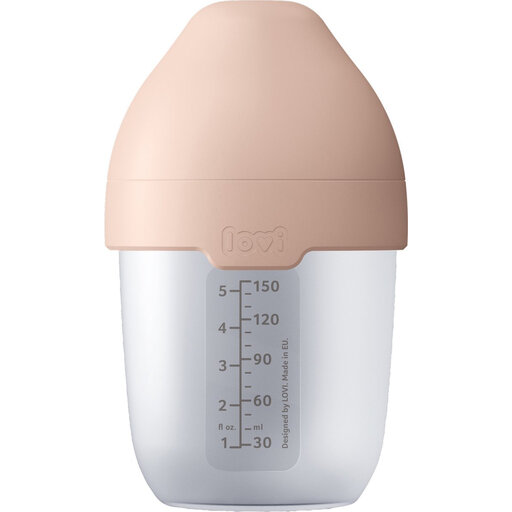
Why it fits the profile: The 150 ml capacity and included 0m+ Mini teat are suited to the first feeding stage. Handy if you want to start with one bottle and first see which teat your baby accepts.
The age indication of the teat is clearly stated. This means you're not just buying a larger bottle with a teat that's too fast for a newborn.
150 ml capacity, 0m+ Mini teat, PP bottle and parts that are suitable for dishwasher and sterilisation according to the product information.
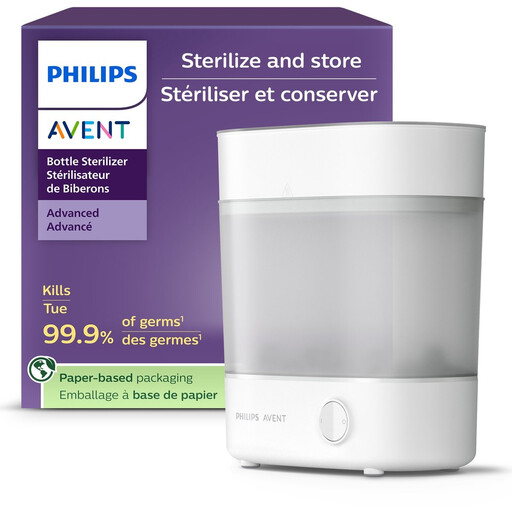
Why it fits the profile: For households that clean several bottles, teats or breastfeeding accessories daily, this model offers a permanent spot and a predictable steam cycle.
The capacity and cycle duration are specified. You can therefore assess in advance whether six bottles and accessories are enough for your household.
Steam function, drying function, automatic shut-off and space for up to six Avent bottles according to the product information.
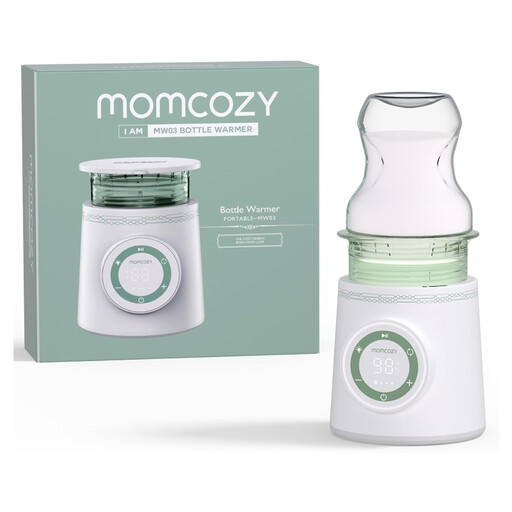
Why it fits the profile: A portable bottle warmer is aimed at parents who are often on the go, for example during car journeys, visiting family or a day out.
The built-in battery means you're not solely reliant on a mains socket. Do check the adapter requirements for your brand of bottle in advance.
Portable design, built-in battery, double leak protection and included adapter for multiple bottle brands according to the product information.
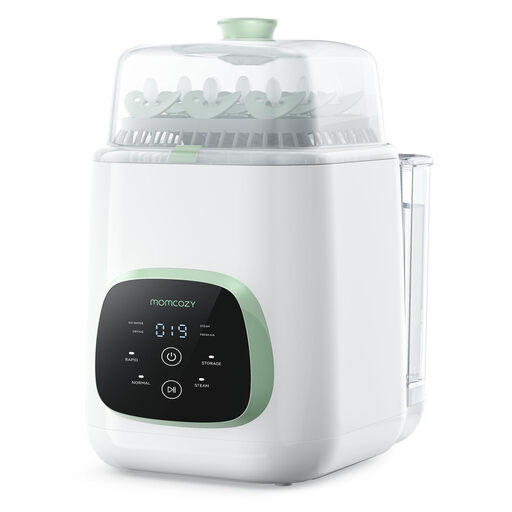
Why it fits the profile: This is intended for those who want to combine several tasks and have space for a larger appliance next to the sink.
The product information states a capacity of up to four bottles, 26 spray nozzles and nine combinations. This allows you to compare the practical output with manual cleaning.
Automatic washing, steam sterilisation and drying; plus a quick wash mode of 19 minutes according to the product description.
We've put together a full, up-to-date list of products that fully meet these strict selection criteria and current European safety regulations.
For a simple start, the following is often enough:
A bottle steriliser, portable bottle warmer or automatic bottle washer is especially useful when you prepare several feeds a day, combine breastfeeding and bottle feeding, or are often on the go. Don't buy features in advance that you're unlikely to use.
Check the bottle, teat and valve before each use. Replace parts if you see cracks, stickiness, discolouration, deformation or wear. For dummies, product instructions often recommend a replacement interval of around four to six weeks; always follow the instructions on your model's packaging.
No. A bottle warmer is a convenience product. It can be handy for even heating and defrosting, but it's not necessary if you use another safe method according to the feeding and product instructions. Do not heat milk unattended and always check the temperature before feeding.
In addition to the purchase price, you need to factor in electricity, water and descaling maintenance. A steam steriliser typically uses water per cycle; a washer may also require cleaning tablets or filters. So compare not just features, but also capacity, maintenance and the number of cycles you actually use per day.
