
Vandaag of morgen in huis

Kwaliteit gegarandeerd

Welkomstaanbiedingen ontgrendelen: GRATIS bezorging | Tot 80% korting | Gratis 30 dagen JoyPlus-proefperiode
Download de app
Finding the right baby diapers may seem straightforward—until you have to choose between newborn diapers, disposable diapers, diaper pants and monthly boxes. The wrong size can cause leaks, red pressure marks or unnecessary waste. A larger pack is not automatically better value when your child is growing quickly.
As a Joybuy Product Recommendation Officer, I assess product information based on practical criteria: weight range, fastening type, pack size, materials and stated certifications. Brand claims about absorbency or skin comfort are treated as manufacturer information, not as guaranteed results for every child.
The age range shown on a pack is a guideline. Your child’s weight and body shape are more important. For example, a six-month-old baby may still wear size 3, while another baby may already need size 4. Always check the stated weight range.
A monthly box of diapers can be convenient in terms of cost per diaper, but start with a smaller pack when trying a new brand. Check for leaks around the legs, marks around the waist and how often the diaper needs changing. A large pack in the wrong size offers little value.
Terms such as “leak-proof diapers”, “silky soft” or “suitable for sensitive skin” generally describe design choices or brand claims. According to Pampers’ own product information, certain models are dermatologically tested, free from EU fragrance allergens and OEKO-TEX Standard 100 certified. This provides information about the stated product properties, but does not prevent skin reactions or leaks for every child.
BC Babycare lists features including a pH 5.5 surface, an absorbent core and 360° leak protection. These are also specifications from the product description. Stop using the product if irritation persists and seek medical advice if necessary.
The available sizes in the range span from size 1 diapers to size 7 diapers. Weight indications vary by brand and model. Examples from the product information include:
A good fit sits securely without feeling tight. Pay particular attention to the leg cuffs and the space around the back. A diaper that leaks frequently is not necessarily insufficiently absorbent; the cause may also be the wrong size or an incorrectly fastened diaper.
Classic disposable diapers generally have adhesive tabs and are convenient for a baby who is lying down. Diaper pants are pulled on like underwear. They are well suited to children who move around a lot or are starting toilet training.
When changing diaper pants, you can usually tear open the sides, roll them up and secure them with the adhesive strip. This is practical when you are out and about, while a tab-fastened diaper may allow more precise adjustment for newborns.
Look at the construction rather than relying solely on a claim on the front of the pack. Product descriptions may mention:
According to Pampers’ own product information, some Baby Dry models feature a Stop & Protect pocket and wider protective edges. BC Babycare lists an SAP core and a 360° design for its Royal Nappies. Also compare the number of diapers per pack and the price per diaper.
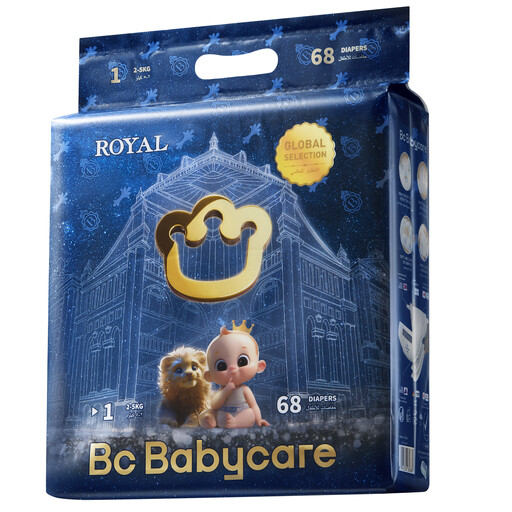
Why it fits: A pack of 68 newborn diapers for parents who want to try a first size without immediately committing to a large monthly box.
The 2–5 kg weight range is clearly stated, allowing you to check the fit before buying a larger supply.
The product information lists an absorbent core with SAP, wetness indicators and an umbilical-friendly fit for size 1.
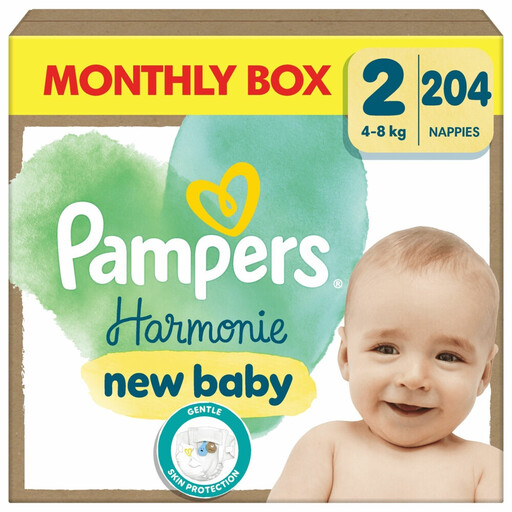
Why it fits: For parents who want to maintain a reliable supply while considering product information about fragrances, lotion and materials.
The manufacturer states that the diapers contain 0% perfume and lotion, have hypoallergenic properties and are OEKO-TEX Standard 100 certified. Check the current packaging for complete information.
The product description mentions FSC-certified cellulose, a wetness indicator and a Stop & Protect pocket.
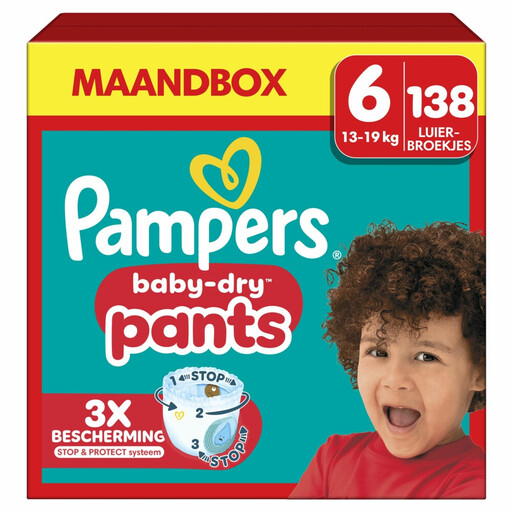
Why it fits: Diaper pants are practical for children who crawl, walk and move around a lot during changes.
According to Pampers, the 360° waistband and wider leg cuffs are designed to support a secure fit while the child is moving. The fit still depends on the child’s weight and body shape.
The pants pull on in one smooth movement and include an adhesive strip for rolling them up after use.
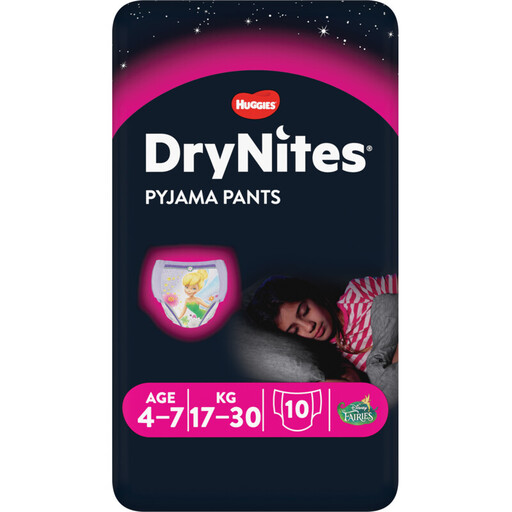
Why it fits: These night-time pants are designed for children who are dry during the day but still need protection at night.
The packaging clearly states the age range of 4–7 years, weight range of 17–30 kg and pack size of 10 pieces. This helps distinguish them from standard baby diapers.
According to the product information, the model features an elasticated waistband, leak-resistant edges and an absorbent core.
Browse a current selection of baby diapers, diaper pants and other sizes, with verifiable product information and pack formats.
Look for recurring leaks, red marks around the legs or waist and difficulty fastening the diaper. Then compare your child’s weight with the brand’s size chart. A larger size is not automatically necessary after a single leak.
That depends on the number of pieces, the pack price and how often you change them. Diaper pants can save time with active children, while standard diapers are often easier to adjust precisely for young babies. Calculate the price per diaper rather than looking only at the total price.
Follow the usage instructions on the packaging and change the diaper as soon as it is soiled. More frequent changes are common for newborns. Product claims such as “up to 12 hours” come from the manufacturer and are not a general guideline for every child. Used diapers belong in household waste, not in the toilet.
