
Vandaag of morgen in huis

Kwaliteit gegarandeerd

Welkomstaanbiedingen ontgrendelen: GRATIS bezorging | Tot 80% korting | Gratis 30 dagen JoyPlus-proefperiode
Download de app
Choosing baby care products seems straightforward until you have to pick between different nappy sizes, wet wipes, baby soap and nappy balm. A large pack isn’t automatically good value if your baby will soon grow out of that size. And words such as “mild” or “natural” only tell you so much: it’s also worth checking the ingredients, certifications and instructions for use.
This guide helps parents and carers in the Netherlands compare products more effectively. The product information below is based on the available specifications and manufacturers’ descriptions.
For baby nappies, weight matters more than age alone. Pampers size 2 is designed for a lower weight range than size 4 or 7. Before buying a large monthly box, check:
A nappy that’s too small may leak because it doesn’t fit properly. So a large supply in a size that’s almost too small can end up going to waste.
A product described as hypoallergenic or dermatologically tested provides useful information, but it doesn’t guarantee that every baby’s skin will react in the same way. According to the product descriptions, some brands’ nappies and baby wipes have been dermatologically tested. It’s also worth checking the ingredients list and, if your baby has sensitive skin, choosing fragrance-free baby products without unnecessary colourings.
If redness, irritation or sores persist, it’s best to speak to your GP or health visitor. A cosmetic product is no substitute for medical advice.
Some baby wipes are made from plant fibres or described as plastic-free. That doesn’t mean you can flush them down the toilet. The product information for the wipes mentioned here advises putting used wipes in household waste. Disposable nappies should never be flushed either.
When choosing baby nappies, look at the size, recommended weight, stretchy sides and leak guards. A nappy with an absorbent core may spread moisture more quickly, but fit is still key to how well it works. Pampers describes a so-called Stop & Protect pocket at the back as helping to prevent leaks; this is a claim made by the brand, not a guarantee for every situation.
A monthly box of nappies is especially practical when you’re using the same size consistently. Always compare the price per nappy, not just the total price of the box.
When choosing baby wipes, consider the following:
According to the product information, BC Babycare wipes contain 99% purified water, have an unscented formula and carry OEKO-TEX certification. The pack contains 12 packs of 80 wipes, making 960 in total. Pampers also offers options such as Sensitive, 99% Water and Soft Touch. If you’re buying a large supply, check that your baby gets on well with the wipes before opening several boxes.
You don’t always need several products for everyday care. A mild baby wash or baby soap may be enough for bath time and showers. Check:
According to the product description, Johnson’s New Baby Bath is dermatologically tested, pH-neutral and free from soap, alcohol, sulphates, parabens, phthalates and colourings. NAÏF Cleansing Wash Gel is described as a soap-free wash gel without SLES or microplastics, but its ingredients list does include fragrance. This distinction matters if you’re specifically looking for fragrance-free baby products.

Why it suits this profile: The pack contains 198 disposable nappies for babies weighing around 10 to 15 kg. This makes it a practical monthly box when size 4+ fits well and you’d like to order nappies less often.
The size and weight information helps you avoid buying a large supply in the wrong size. Check the fit before ordering another monthly box.
198 nappies, stretchy sides and an absorbent core. Pampers says a Stop & Protect pocket helps reduce leaks at the back.
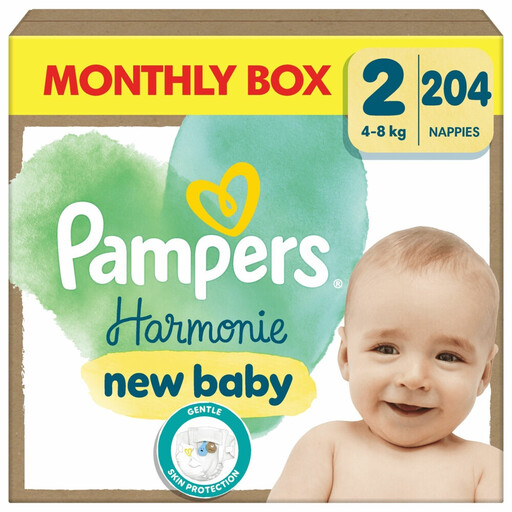
Why it suits this profile: This option is for parents who consider materials, fragrances and certifications when choosing nappies for young babies.
The product description states that it contains 0% perfume and lotion, so you can weigh these points up alongside the size and fit.
204 nappies, a wetness indicator and an OEKO-TEX Standard 100 listing. Pampers describes the nappy as hypoallergenic and dermatologically tested.

Why it suits this profile: With 960 wipes, this bulk pack is suitable for families who change nappies frequently and want to stick to a regular routine.
The wipes are unscented and the pack can be resealed. Keep each pack closed to help prevent the wipes from drying out.
According to the product information, they contain 99% purified water and plant fibres, carry OEKO-TEX certification and are fragrance-free. Do not flush them.
For bath time, Johnson’s New Baby Bath 500 ml is an option with a pH-neutral formula, according to the product description. If you prefer a solid baby soap, you could consider Zwitsal Baby Cream Soap 4 x 90 g; the description mentions calendula, a skin-friendly pH and no SLES sulphate. Do note that this soap has a mild Zwitsal fragrance.
For nappy-area care, WELEDA Calendula Nappy Change Cream and the Baby Essentials Bundle Set are options to compare for ingredients such as zinc oxide, calendula and chamomile. Weleda’s product description mentions the NATRUE label and natural ingredients. However, essential oils and wool wax may not suit some skin types. Test the product on a small area of skin first and follow the instructions on the pack.
We’ve put together a complete, up-to-date list of products that meet these strict selection criteria and the applicable European safety regulations.
For the basics, nappies, baby wipes or cotton cloths, a mild wash and, if needed, a nappy balm are enough. Add extra products only if you need them as part of your daily routine.
Follow the expiry information on the pack and reseal each pack straight after use. Heat, sunlight and an open pack can cause wipes to dry out or become less hygienic. Don’t flush them down the toilet.
The cost mainly depends on how many nappies you use each day, the size you choose, the brand and the pack size. Work out the price per nappy and per wipe. A large pack is only good value if you use it all before your baby moves on to another size or formula.
