
Vandaag of morgen in huis

Kwaliteit gegarandeerd

Welkomstaanbiedingen ontgrendelen: GRATIS bezorging | Tot 80% korting | Gratis 30 dagen JoyPlus-proefperiode
Download de app
The first few months with a baby involve lots of little care routines: cleaning up after a feed, drying damp skin, trimming tiny nails or packing a bag for going out. There’s a wide range of baby care products to choose from, but not every product will suit your routine or your home.
So don’t focus only on soft packaging, a long list of features or the word “premium”. Check what you actually get, how to care for the product and whether its dimensions suit the way you plan to use it.
A baby care set may seem convenient, but some sets include items you’ll rarely use. Check exactly what’s included: is there a baby nail file, thermometer, comb, baby nasal aspirator or storage box? Also check whether electrical parts need batteries and whether these are included.
Marketing terms don’t tell you much without information about the materials. For textiles, 100% cotton, the number of layers, dimensions and washing instructions are more useful points to check. For care products, the material, age recommendation and need for supervision matter more than general claims about comfort.
You should also treat claims about a product’s performance as claims made by the brand. According to the manufacturer’s product description, certain materials may be soft, breathable or absorbent; this doesn’t guarantee that every child or parent will have the same experience.
A bottle steriliser, baby bottle washer or dryer can save time, but it needs space on your worktop, electricity and regular maintenance. So check the capacity, programmes, water use, cleaning requirements and dimensions. An appliance that holds eight bottles isn’t automatically practical if you only use a few bottles a day.
For cloths, towels and a baby hooded towel, a soft, breathable fabric is important. Check whether the product is made from cotton, how many layers it has and whether it can be washed according to the instructions. Wash new textiles before first use and follow the temperature on the label. The cloths mentioned are listed as suitable for 40 °C machine washing; bleaching, dry cleaning and tumble drying are not recommended.
Also look out for loose threads, scratchy labels and decorations that could come loose. A cloth should be large enough for its intended use, but not so large that it becomes awkward to carry in a changing bag.
A 50 × 25 cm cloth is practical as a muslin cloth, small towel or cloth for taking out with you. A 70 × 140 cm bath towel offers more coverage after a bath. Check sets carefully to see whether you’ll receive one large towel and one small cloth, or several items in the same size.
Dimensions and capacity are just as important for care appliances. According to the product information, the Momcozy 8-in-1 steriliser holds up to eight bottles and accessories and measures approximately 36,2 × 32,5 × 19,7 cm. The Momcozy BS03 bottle washer is larger and heavier, with a stated weight of 5,44 kg. So measure the space beside your sink or socket before buying.
Check whether parts need to be washed by hand, whether they’re dishwasher-safe and how often filters or water tanks need maintenance. According to the product information, the Momcozy colostrum collection set isn’t dishwasher-safe and must be thoroughly cleaned after every use.
Electrical appliances aren’t toys. Use them on a stable, dry surface, follow the instructions and keep cords out of children’s reach. A baby nasal aspirator, electric baby nail file and thermometer are tools for adults to use. For questions about feeding, colostrum or physical symptoms, seek medical advice from a midwife, GP or other healthcare professional.

Why it suits this profile: A set of five cotton cloths is handy for spills, changing and keeping in your changing bag.
The contents and size are clearly stated: five cloths measuring 50 × 25 cm. So you’re not paying for accessories you don’t know about.
According to the product information: 100% cotton, six layers, reusable and suitable for washing at 40 °C.
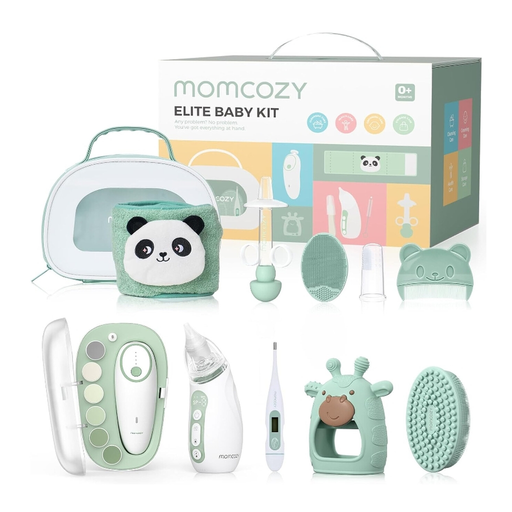
Why it suits this profile: A good choice for carers who want to keep several everyday essentials neatly organised in one storage case.
The product description lists the contents, including an electric nail file, nasal aspirator, thermometer, comb and brush. Check the full contents before buying.
Storage case, several care accessories and battery-powered electrical parts, according to the product information.
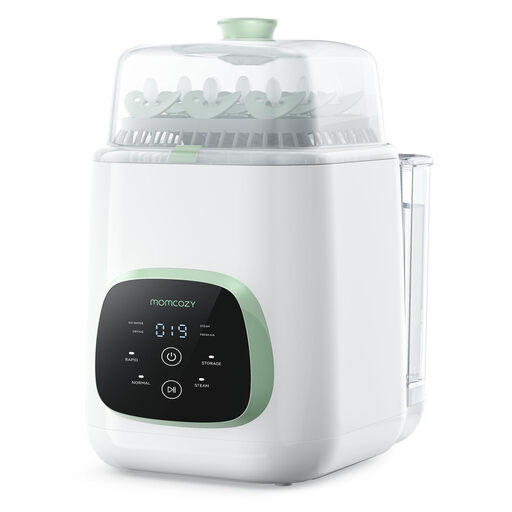
Why it suits this profile: An option for households that clean several bottles and breast pump parts every day.
The capacity and maintenance requirements are clearly described: up to four bottles per cycle, a water tank, a waste-water tank and regular cleaning.
According to the product description: 26 spray nozzles, nine settings that can be combined, and wash, steam sterilisation and drying functions.
Not every family needs the same products. Think about your routine and consider these categories:
We’ve put together a complete, up-to-date list of products that meet these strict selection criteria and the applicable European safety regulations.
Start with reusable cloths, a few baby towels, gentle skincare, a nail file or nail clippers and a thermometer. Add a baby nasal aspirator, hooded towel or care set if it suits your daily routine. A bottle washer or bottle steriliser is most useful if you regularly use formula or expressed milk.
Lifespan depends on the material, how often you wash the product and how well you maintain it. Cotton cloths can last a long time if you follow the washing instructions and check them for wear. Electrical appliances will last longer if you clean their filters, water tanks and accessories according to the instructions. Replace any parts straight away if they’re torn or damaged, or if a cord is faulty.
For textiles, the main ongoing costs are washing and drying. Appliances use electricity and water, and may also need cleaning tablets or replacement parts. So compare more than just the purchase price: consider capacity, how often you’ll run a programme, maintenance and the cost of accessories. This will give you a more realistic idea of the total cost.
