
Vandaag of morgen in huis

Kwaliteit gegarandeerd

Welkomstaanbiedingen ontgrendelen: GRATIS bezorging | Tot 80% korting | Gratis 30 dagen JoyPlus-proefperiode
Download de app
The right baby bottles and bottle accessories make everyday feeding easier. Yet many parents buy products that prove less practical after a few weeks. A bottle may be difficult to clean, a teat may have too fast a flow, or a bottle warmer may not be compatible with the bottle you use.
As a Joybuy Product Recommendation Officer, I filter the most important product information down to practical considerations. This helps you quickly see which features matter and which marketing claims should be treated with some caution.
A bottle’s capacity does not automatically indicate the age it is suitable for. Teat size and flow rate are at least as important. For example, a 250 ml bottle may come with a teat suitable from three months, while a newborn may need a separate 0m+ teat.
Therefore, look out for:
A flow that is too fast can make feeding unsettled, while one that is too slow can be frustrating. This varies from one baby to another, so there is no guarantee that a particular model will work in the same way for every child.
An anti-colic baby bottle often contains a valve or has a special shape that, according to the manufacturer, is designed to improve airflow. This can be practical, but it will not automatically prevent colic, burping or spit-up.
According to Difrax’s product description, the S-Bottle is designed to limit air mixing thanks to a valve at the bottom. For the LOVI Mammafeel, Difrax’s own product information refers to a natural drinking motion and unrestricted nasal breathing. Consider this a design feature rather than a medical effect. Your baby’s feeding position, flow rate and individual response remain important.
An electric bottle steriliser, bottle washer or baby bottle dryer can save time, but only when the parts fit properly and are easy to maintain. Check in advance:
An appliance with lots of features but which is difficult to clean may be less convenient in practice than a simple bottle brush and a good drying rack.
Many bottles are made from polypropylene (PP), glass or silicone. PP is lightweight and resistant to breakage. Borosilicate glass is heat-resistant, but heavier and more vulnerable if dropped. Medical-grade or food-grade silicone is often used for teats and valves.
Check that the product information clearly states:
Always follow the manufacturer’s instructions. Before every use, check the teat and valve for cracks, stickiness, deformation or wear.
For newborns, a smaller bottle of around 150 to 170 ml can be easier to manage. A 250 ml bottle provides more room as feeds increase. The shape determines how easy the bottle is to hold and clean.
A Difrax baby bottle with an S-shape and removable base may appeal to parents who want easy access to the valve. A wide or soft teat may be suitable for families looking for a baby bottle for breastfeeding and formula feeding. Do not focus only on appearance; pay particular attention to the parts and whether they can be replaced.
A bottle warmer is useful if you regularly warm milk or baby food. According to the product information, the Philips Avent Bottle Warmer SCF355/09 has a power rating of 300 W, a defrost setting and a warming time of around three minutes. The actual time depends on the quantity, starting temperature and shape of the bottle.
A steam baby bottle steriliser only works properly when bottles have been cleaned beforehand. According to the product description, the Chicco 2 in 1 Steriliser and Bottle Dryer combines steam sterilisation and drying, with capacity for up to six bottles and small accessories. When using steam, hot surfaces and the risk of scalding are important considerations.
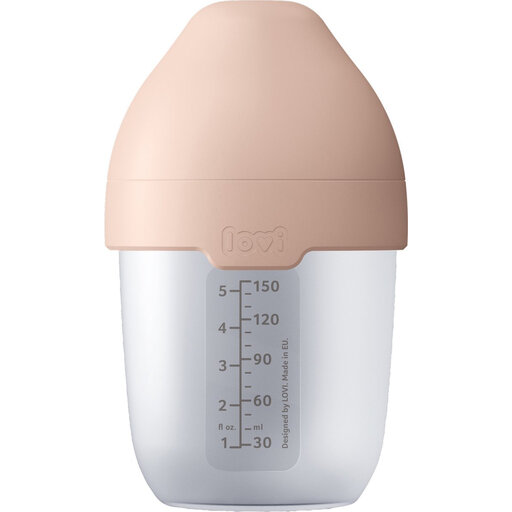
Why it suits this profile: This 150 ml bottle comes with a 0m+ mini teat and, according to the product information, has a soft silicone teat and lightweight PP bottle body. This makes it easy to manage for everyday use from birth.
The age indication for the included teat is clearer than with a large bottle supplied with an older teat. However, always check that the flow rate suits your baby.
150 ml capacity, 0m+ mini teat, medical-grade silicone teat according to the product description, and dishwasher compatibility.
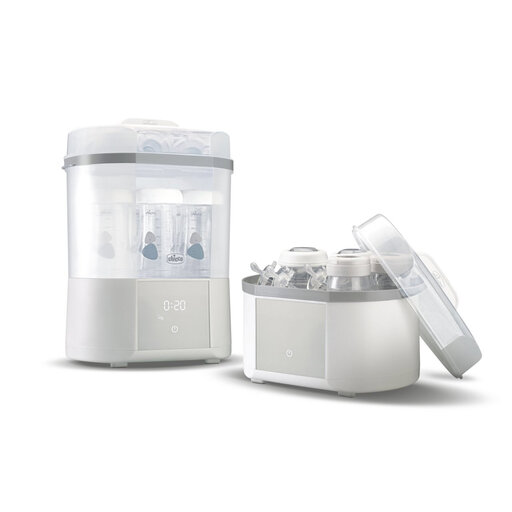
Why it suits this profile: For households using several bottles a day, this appliance combines steam sterilisation and drying in a single cycle. It offers compact and full modes.
It does not combine cleaning with sterilisation: bottles must first be washed thoroughly. This makes it clear which steps the appliance does and does not perform.
Capacity for up to six bottles, compact or full mode, and integrated drying according to the product details.
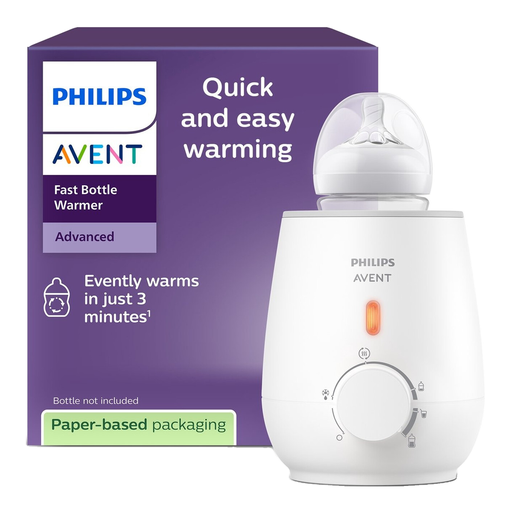
Why it suits this profile: Suitable for parents who regularly warm milk or baby food and want a dedicated solution alongside the microwave.
The product information mentions gradual defrosting and warming without so-called hotspots. Always check the milk temperature yourself before feeding.
300 W power, defrost function and, according to the product details, suitability for bottles and baby food.
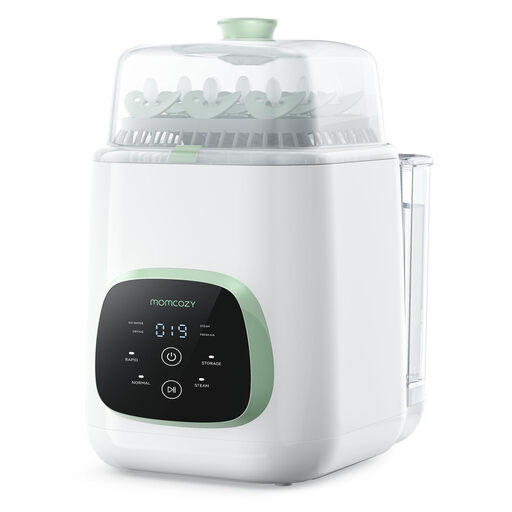
Why it suits this profile: An option for households that need to process several bottles and breast pump parts a day and are looking for automated programmes.
According to the specifications, its capacity is limited to a maximum of four standard bottles per cycle. This prevents unrealistic expectations in larger households.
26 spray nozzles, nine combinable programmes, and washing, steam sterilisation and drying in one appliance according to the product description.
A good bottle brush reaches the base and narrow neck without causing scratches. The Bottle Brush York HC 01016 has flexible bristles and a stand for drying between uses. For travelling, sets with a teat brush, straw brush and folding drying rack are practical.
A portable bottle warmer is particularly useful during car journeys or days out. With these models, always check the power source, compatible bottle sizes and the time needed to bring a feed up to temperature. For breastfeeding, milk storage bags, a cool bag or a portable breastfeeding accessory set may be more useful than extra bottles.
We have put together a complete, up-to-date list of products that fully meet these strict selection criteria and the applicable European safety regulations.
Replace a bottle if it develops cracks, deep scratches, discolouration or a persistent smell. Teats and valves generally wear out sooner. Check them before every use and follow the brand’s replacement guidance.
It depends on the power rating, usage time and number of feeds. A bottle warmer uses electricity, while a microwave often runs for less time. The choice is therefore mainly about even heating, convenience and temperature control. Always check warmed milk before giving it to your baby.
Clean bottles and teats after every feed according to the instructions for use. Whether additional sterilisation is needed, and how often, depends on your baby’s age, the advice of your midwife or health visitor and the manufacturer’s instructions. A steriliser does not replace cleaning.
