
Vandaag of morgen in huis

Kwaliteit gegarandeerd

Welkomstaanbiedingen ontgrendelen: GRATIS bezorging | Tot 80% korting | Gratis 30 dagen JoyPlus-proefperiode
Download de app
Finding a suitable bottle seems simple until you have to choose between different sizes, teat shapes, valves and accessories. This is especially true when combining breastfeeding with bottle-feeding, as small differences in shape and flow rate can be noticeable in everyday use.
Don’t just focus on terms such as “natural”, “anti-colic” or “suitable from birth”. Always check which parts are actually included, what age the teat is intended for and how easy the bottle is to take apart.
A 150 ml baby bottle is practical for small feeds and newborns. A 170 ml baby bottle provides a little more space without immediately becoming large and heavy. A 250 ml baby bottle is more convenient as the amount of milk increases, but the included teat may be intended for an older age group.
A 250 ml bottle is therefore not automatically suitable from birth. Some models require a separate 0m+ teat. So check the combination of bottle capacity and teat size, rather than just the age indication on the packaging.
An anti-colic baby bottle may have a valve or ventilation system which, according to the product description, supports airflow. This does not mean that every baby will no longer experience wind, spit-up or discomfort as a result. Your baby’s feeding position, teat size, feeding speed and individual response also play a part.
According to Difrax product information, the S-bottle has a valve at the base designed to help separate air from the feed. Treat this as a verifiable product feature, not as a medical effect or guaranteed result.
A dynamic bottle teat, spare valve or sealing ring will not necessarily fit every bottle. A bottle warmer or baby bottle steriliser may also have limitations when it comes to wide-neck bottles, glass models or parts from a particular brand.
Make a quick checklist before buying:
Choose the capacity based on how you plan to use the bottle. A 150 ml bottle is compact for the first few weeks or for a small feed. A 170 ml bottle is a practical mid-size option. A 250 ml bottle is suitable when you need more capacity.
Also pay attention to the teat flow. A slow-flow teat is not the same as a medium-flow teat. The age indication is a guideline; also consider your baby’s drinking pace and cues. A flow that is too fast can cause distress, while a teat that is too slow can be frustrating.
For a dynamic bottle teat, Difrax product information states that the teat can move in response to the baby’s sucking rhythm. This is particularly relevant for parents who use a Difrax baby bottle alongside breastfeeding. When replacing a teat, always check that you have the correct size and connection.
Many baby bottles are made from polypropylene (PP). This material is lightweight and resistant to breakage. Silicone teats are flexible and are often described as BPA-free. Check the product specifications yourself, as material information varies by model.
A bottle with several separate parts can be cleaned more thoroughly, but it also requires more work. A screw-off base, as found on certain S-bottles, makes filling and cleaning more straightforward. Wash bottles immediately after use and allow them to dry completely before storing them.
A bottle brush with narrow, flexible bristles is useful for cleaning the base and neck. A small detail brush may be needed for valves and thin tubes. Replace brushes when the bristles start to come loose or the brush becomes damaged.
For expressed milk, a milk storage bottle or portable breast milk cooler is practical when you are out for the day. The Momcozy cooler in the product selection comes with a pre-freezable ice pack and two bottles. According to the product description, the ice pack must be completely frozen to achieve the stated cooling performance. Always follow the applicable guidelines for storing breast milk and do not use the bottles in a microwave.
A baby bottle steriliser can save time when you use several bottles every day. Check whether the appliance combines steaming, drying, defrosting and heating, and how many bottles it can hold at once. A bottle warmer is particularly useful if you regularly want to bring feeds to the right temperature, but check that the shape of your bottle fits inside the appliance.
Be aware of the difference between baby accessories and kitchen products. A coffee milk jug or milk-frothing jug is designed for pouring or frothing milk, not for preparing baby feeds. For example, a transparent De'Longhi milk container is a replacement part for specific coffee machines. Similarly, a reusable water bottle for travelling is not automatically suitable for milk or baby food.
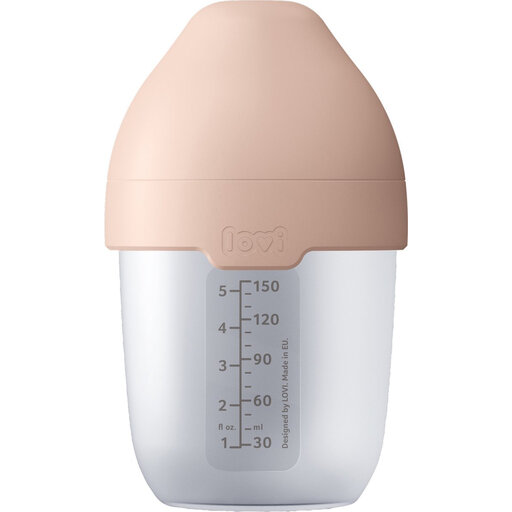
Why it suits this profile: The compact capacity and included 0m+ Mini teat are suited to early feeds, making it possible to start small.
The product information clearly states the capacity, the 0m+ teat and suitability from birth. This means you do not immediately have to buy a larger bottle with a teat that flows too quickly.
150 ml capacity, medical silicone teat according to the product specification, and dishwasher-safe parts according to the product description.
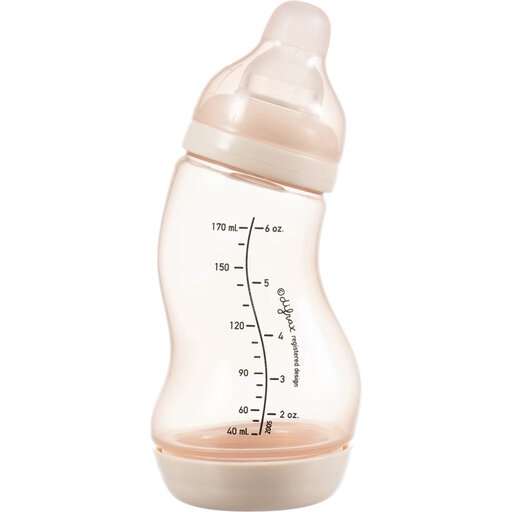
Why it suits this profile: The S-shape, screw-off base and S-size teat are designed for parents who value ergonomics, easy maintenance and a consistent flow.
The separate base makes the inside easier to access for cleaning. However, check before every use that the valve is clear and the ring is securely fastened.
170 ml capacity, PP bottle and, according to the product information, an anti-colic valve and dishwasher-safe parts.
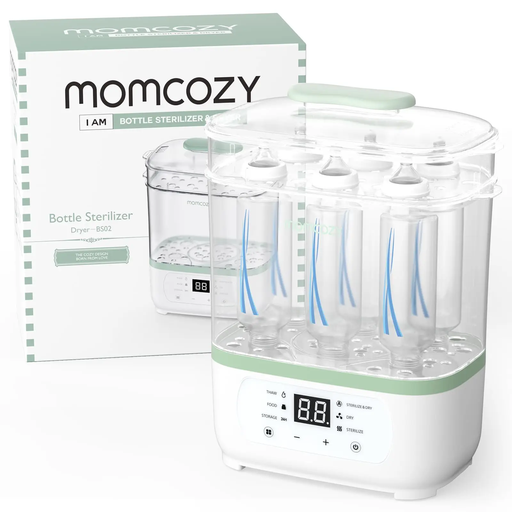
Why it suits this profile: For households with several feeds a day, one appliance for sterilising, drying, defrosting and heating can bring more structure to the routine.
The capacity for up to eight bottles reduces the number of separate cycles. Check the available space, water level and whether your bottle shapes will fit beforehand.
8-in-1 functions, space for up to eight bottles and a stated weight of 2.68 kg.
A bottle brush is almost always useful, but an electric steriliser is particularly worthwhile if you use several bottles frequently. For days out, a portable cooler may offer more value than an extra-large bottle. If you only take water with you, you can use a separate water bottle for travelling; do not fill it with milk unless the manufacturer explicitly allows this.
For hot liquids, use only accessories designed for that purpose. A 350 ml stainless steel milk-frothing jug is suitable for coffee, frothing milk and latte art, but not for heating baby food in the microwave. Always check the material, temperature limits and cleaning instructions.
We have put together a complete, up-to-date list of products that fully meet these strict selection criteria and the applicable European safety regulations.
Look at the combination of bottle and teat. A model with a 0m+ or S-size teat is generally intended for the first few months, according to the product information. A 250 ml bottle can be used from birth if you add a suitable 0m+ teat, where indicated by the manufacturer.
Replace a bottle or teat if you notice cracks, deformation, discolouration, stickiness or a valve that is not working properly. Check silicone parts before every use. The service life depends on the material, cleaning frequency and the instructions on the packaging.
Not always. Thorough cleaning and allowing the bottle to dry completely remain important. A steriliser can mainly save time when you use several bottles and breast pump accessories each day. Choose an appliance based on its capacity, functions, maintenance requirements and compatibility with your bottles.
