
Vandaag of morgen in huis

Kwaliteit gegarandeerd

Welkomstaanbiedingen ontgrendelen: GRATIS bezorging | Tot 80% korting | Gratis 30 dagen JoyPlus-proefperiode
Download de app
A baby bottle warmer might seem straightforward: pop the bottle in, set the temperature, and you’re done. In reality, models vary significantly in heating method, compatibility, and ease of use. Choosing the wrong one could leave you with an appliance that doesn’t fit your kitchen, won’t work with your bottles, or proves awkward on a car journey.
Pay particular attention to three common pitfalls:
An electric bottle warmer typically uses a water bath, steam, or another electric heating element. Gentle warming is practical for breast milk, as you don’t want to expose it to unnecessarily high temperatures. According to the product description for the Chicco Bottle Warmer Home, this model has separate programmes for baby bottles, breast milk, and food jars. It also features a defrost function and a keep-warm setting for up to one hour.
Always treat any claimed speed as a guide. Philips Avent states a heating time of around three minutes for model SCF355/09, but the result depends on the conditions. Always check the temperature on the inside of your wrist before feeding. This doesn’t replace the instructions on the formula packaging or the user manual.
Check before you buy:
A portable baby bottle warmer often works with an adapter or screw fitting. According to the product information, the Momcozy Travel Series Portable Bottle Warmer comes with an adapter for multiple brands. Certain Dr. Brown’s bottles have specific requirements, so always check the compatibility list before ordering.
A double leak-proof design is especially relevant when you’re on the move. Even so, correct attachment is essential. A bottle that isn’t fully secured can leak or heat unevenly.
For home use, a mains-powered model is often simplest. For travel, you can choose a device with a built-in battery, USB charging, or a 12V car adapter. According to the product description, the Chicco Travel Bottle Warmer With Car Mount comes with a 12V car adapter. Do not use the appliance while driving; set it up and operate it before you set off, or ask a passenger to do it.
Also consider maintenance. Milk residue can build up around a seal, adapter, or heating plate. A baby bottle dryer or steriliser with a drying function can simplify your daily routine, but always check which parts are dishwasher-safe.
An anti-colic baby bottle, meanwhile, has nothing to do with the warming function. According to the product description, the Difrax S-bottle Natural uses a valve at the bottom and an S-shape. This design is intended to support airflow during feeding. It doesn’t replace safe preparation, correct temperature checks, or supervision during feeding.
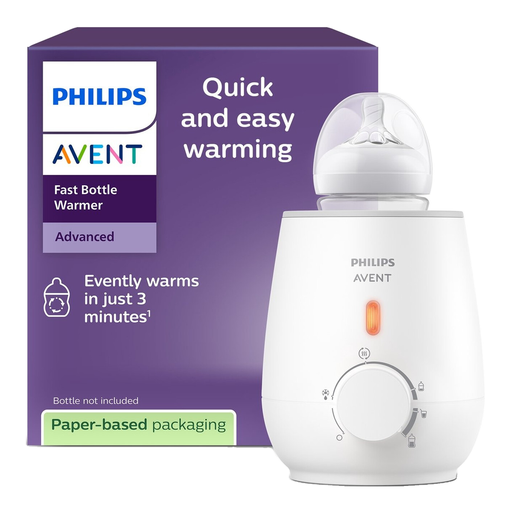
Why it fits the profile: A straightforward electric bottle warmer for parents who mainly want to heat bottles and baby food at home without lots of extra features.
The product information mentions a defrost function and use for baby food. Do check yourself whether your bottle shape fits, and treat the stated three minutes as a guide.
300 W power according to the product data, compatible with Avent bottles, and features gentle defrosting.
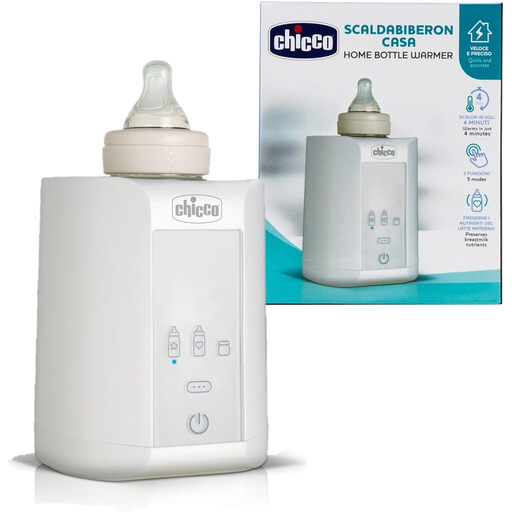
Why it fits the profile: Ideal for parents who want to heat different types of food and value programmes, timer settings, and a keep-warm function.
The three programmes make the difference between bottle, breast milk, and jar clearer. Still, always check the temperature manually and don’t leave the appliance unattended.
According to the product data: touch controls, timer up to two hours, defrost function, and automatic switch-off after one hour.
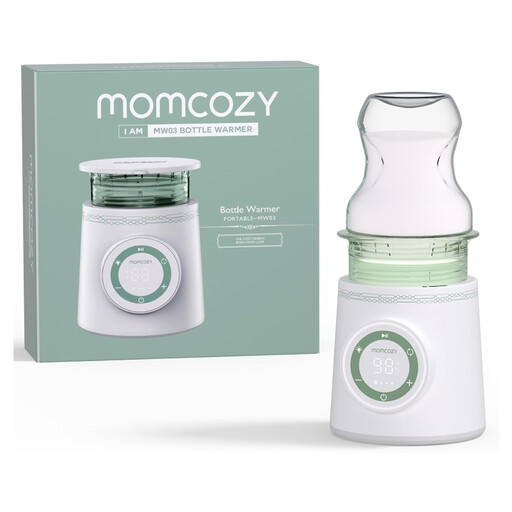
Why it fits the profile: A practical choice for parents who often go for walks, travel, or need to warm formula or breast milk on the go without a plug socket.
The built-in battery removes reliance on mains power. Attach the correct adapter carefully and check beforehand whether your bottle is compatible.
According to the product information: built-in battery, portable design, adapter for multiple brands, and double leak-proof connection.
A baby bottle warmer is designed for temperature, not hygiene. If you use several bottles a day, you might want to consider a separate baby bottle steriliser or baby bottle dryer. According to the product description, the Chicco 2 in 1 Steriliser and Bottle Dryer combines steam sterilisation and drying, with space for up to six bottles and accessories. The Philips Avent SCF291/00 states a capacity of up to six Avent bottles and a drying function within a cycle of around forty minutes.
With such appliances, always check the manual for water quantity, descaling, and cooling instructions. Steam and heating elements can cause burns. Do not open the lid during a cycle, and keep electrical appliances out of children’s reach.
Place the bottle according to the manual, select the correct programme, and don’t leave the appliance running unattended. Gently shake or swirl the bottle if the instructions allow. Always test a few drops on the inside of your wrist before feeding. Do not reheat breast milk or formula repeatedly.
The lifespan depends on usage, descaling, cleaning, and the quality of the cables, seals, and adapters. Replace the appliance if it becomes damaged, leaks, has a frayed cable, or shows unreliable temperature control. Check wearable parts on bottles separately; a teat or valve may need replacing sooner than the warmer itself.
A model with a battery doesn’t use mains power while heating, but it does need to be charged. A home appliance uses electricity and can remain more efficient with regular descaling. So don’t just compare the purchase price; also consider battery life, charging options, maintenance, and which accessories are already included.
We’ve put together a full, up-to-date list of products that fully meet these strict selection criteria and comply with current European safety regulations.
