
Vandaag of morgen in huis

Kwaliteit gegarandeerd

Welkomstaanbiedingen ontgrendelen: GRATIS bezorging | Tot 80% korting | Gratis 30 dagen JoyPlus-proefperiode
Download de app
A baby bottle warmer can make night feeds and bottle-feeding on the go easier. However, not every model is designed for the same situation. A compact appliance for home use, for example, works differently from a portable milk warmer for babies with a rechargeable battery. And a short warming time means little if the bottle doesn’t fit properly or the temperature isn’t distributed evenly.
So, look out for these common pitfalls before buying a baby bottle warmer:
An electric bottle warmer with an adjustable temperature or programmes gives you more control than a model with just an on/off switch. Check whether you can select settings for:
A digital temperature display, as found on the Beurer BY52, makes the selected temperature easier to see. This means you don’t have to rely on timing alone. Always test the milk by placing a few drops on the inside of your wrist. The temperature in the middle of the bottle may differ from that at the edge.
A bottle warmer for expressed breast milk or bottle warmer for formula needs to fit the bottles you already use. So check:
A basket included with the warmer is useful for small jars and means you don’t have to touch a hot item directly. Use the appliance only as described in the instructions and place the base on a stable, heat-resistant surface.
A bottle warmer with a keep-warm function is useful when you’re not sure exactly when your baby will want a feed. Check how long the function stays on and whether the appliance switches off automatically. According to the product information, the Chicco Bottle warmer Home keeps milk warm for up to one hour and then switches off automatically.
A separate defrost function is useful for frozen milk or food. Defrosting gradually usually takes longer than warming something from room temperature. The water reservoir also needs to be emptied and descaled regularly. Water left inside can cause limescale to build up, especially in hard water areas.
A bottle warmer with a steriliser combines two functions, but usually takes up more space. Also check whether the parts are dishwasher-safe. The main base, plug and cable must not be submerged in water.
The following selection is based on specifications that can be verified in the product information. Brand claims about nutritional value or reducing bacteria, for example, are not presented as independently proven results. According to Chicco’s product information, the sterilising function uses steam to remove up to 99.9% of certain household bacteria; always follow the instructions when using it.
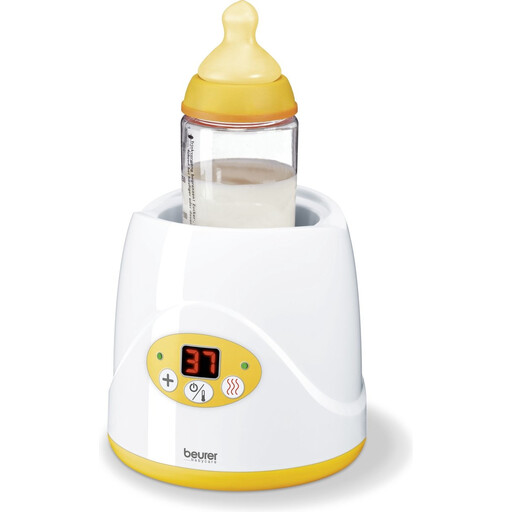
Why it suits this profile: The digital controls and compact design make it a good choice for everyday use on a kitchen worktop or bedside table.
The temperature can be set from 35 to 85 °C, and the warming time from 3 to 18 minutes. This means you’re less reliant on a fixed timer.
LED display, automatic keep-warm function and suitable for standard bottles and jars.
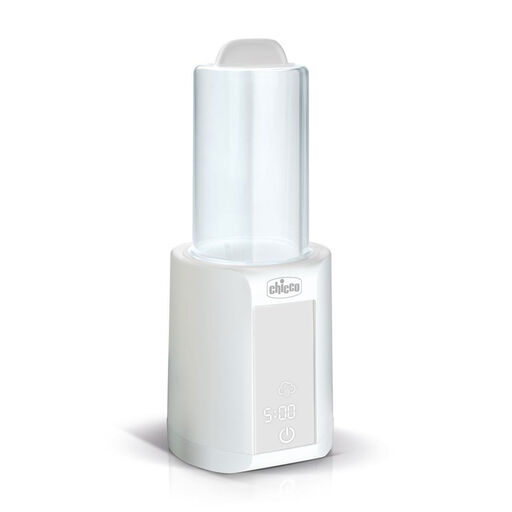
Why it suits this profile: This model is designed for families who want to warm, defrost and steam-sterilise in one place.
The 21 programmes take factors such as food type, starting temperature and bottle size into account. This gives you more settings to choose from than a single universal programme.
Warming time of around three minutes under the stated conditions, a timer of up to two hours and a steam function.
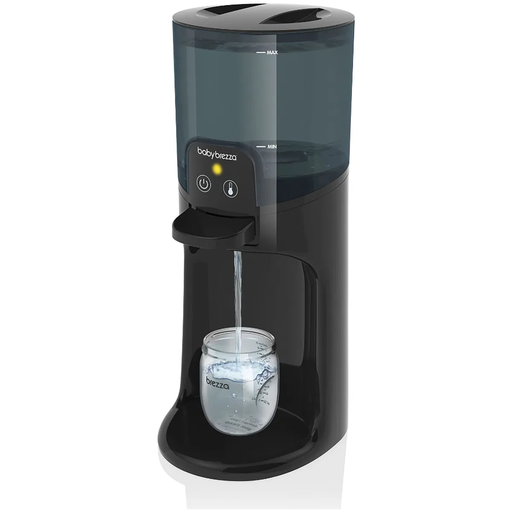
Why it suits this profile: Particularly suitable for families who often prepare formula and want warm water ready to use.
The system warms water rather than a filled bottle. Always check the water temperature and prepare the feed according to the instructions.
1.5-litre reservoir, three temperature settings and lever operation. This model is designed to warm water for preparing baby feeds.
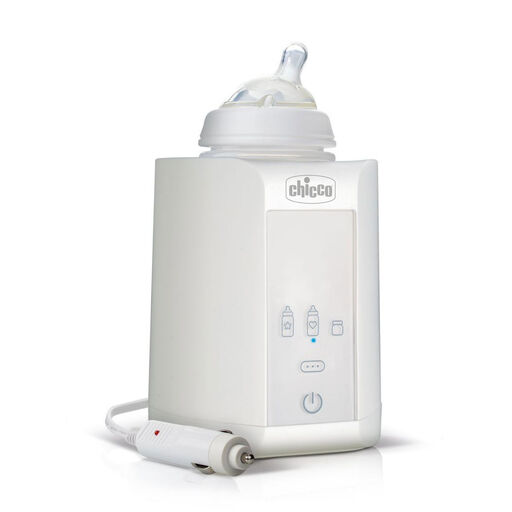
Why it suits this profile: The combination of mains power and the included 12V car adapter makes it suitable for journeys, holidays and days out.
The travel function is more than just a marketing label: a 12V car adapter is included. Check that your car has a suitable socket.
Three programmes, a warming time of around four minutes according to the product information, and keeps milk warm for up to one hour.
We’ve put together a complete, up-to-date list of products that meet these strict selection criteria and the applicable European safety requirements.
Place the bottle or jar in the basket as instructed and add the recommended amount of water. Then select the right programme or temperature. Gently stir or swirl the contents if the instructions allow, and test a few drops on your wrist before feeding.
Its lifespan depends on how it’s used, cleaned and descaled. Don’t leave water in the reservoir for long periods, clean the parts after use and regularly check the cable, plug and casing. Stop using the appliance if it’s damaged or doesn’t work as it should.
Electricity consumption depends on the appliance’s power rating and how long each cycle runs. A short warming cycle generally uses less energy than keeping milk warm for a long time. A model with a timer or automatic shut-off can help reduce unnecessary use.
