
Family who want to fill one jug
Makes several breakfast portions at once and wants to know how much smoothie will actually fit in a single blending cycle.


Start by checking the usable capacity: a blender with an effective capacity of 1 litre may require an extra round for a larger family batch, while some models list a usable capacity of 1.5 litres. Then consider the ingredients you use and how the jug, lid and blades need to be cleaned. Wattage alone is no guarantee of a better smoothie, according to the Dutch Consumers' Association. Before buying, also check that the specific appliance meets the applicable CE and food-contact requirements; a product listing alone is not proof of this.
Makes several breakfast portions at once and wants to know how much smoothie will actually fit in a single blending cycle.
Wants fewer separate parts to wash after blending, so compares the cleaning requirements and blade design of each model.
Sometimes uses frozen fruit or ice and wants to check the guidance for ingredients with the chosen model, rather than relying on wattage alone.
First, work out how much you want to make for the family in one go and compare it with the usable capacity. Then consider the ingredients, cleaning requirements and the space available in your kitchen.
| What to consider | What should you check? | Who is this important for? |
|---|---|---|
| Usable capacity | Compare the total amount you need for breakfast with the effective or usable capacity of the exact model. | I want to make the whole breakfast batch in one go; around 33% of consumers say usable jug capacity is their top priority. |
| Cleaning up after breakfast | Check whether each part can be removed and is dishwasher-safe. | If I use the blender every day, I want the jug and blades to fit into my washing-up routine. Around 27% of consumers prioritise ease of cleaning. |
| Thicker or frozen ingredients | Check the guidance for the exact model and the ingredients you want to blend; don't compare wattage alone. | I also want to use frozen fruit or ice, so I check the instructions for these ingredients. This is the top priority for around 20% of consumers. |
| Controls and functions | Compare speeds, pulse settings and programmes once you've decided on your batch size and ingredients. | I want controls that suit the smoothies I make, without paying for functions I won't use. Around 13% of consumers look at this first. |
| Kitchen or cupboard space | Measure the space where you plan to store it and compare it with the dimensions of the exact model. | If storage space is limited, I want to know in advance whether a jug blender will fit; around 7% of consumers prioritise compact storage. |
The Philips HR2041/00 has a maximum capacity of 1.9 litres, which is greater than its stated effective capacity of 1 litre. The largest measurement doesn't automatically tell you how much smoothie you can make in one go.
Compare the measured amount you need for your family with the effective or usable capacity of the exact model.
A smaller usable capacity may mean an extra blending cycle and a delay at breakfast when you're making a family batch.
The Dutch Consumers' Association notes that power doesn't tell you everything about blending performance; results and ease of use are assessed separately.
Take your ingredients and the model-specific instructions into account when choosing. Treat manufacturers' claims as such, rather than as independent comparative test results.
Cleaning instructions and blade design can vary from model to model. A dishwasher-safe jug doesn't automatically mean the blades can go in the dishwasher or be removed.
Check the instructions for the jug, lid and blades separately.
The HR2041/00 is a jug blender worth comparing if an effective capacity of 1 litre suits the way you use it.
The PerfectMix+ BL871D31 may be worth considering if you’re looking at a stated usable capacity of 1.5 litres and how the parts are cleaned.
The VitaPower Serie 4 MMB6141B is an option to compare if storage space and cleaning requirements matter to you.
The PowerBlend 1 JB1051BK is a jug blender worth comparing if you also want to factor in the included travel bottle.
These Joybuy product picks are jug blenders suited to making smoothies for a family breakfast. Check the usable capacity, instructions and applicable product requirements for each model.
 No image available
The stated jug capacity of 1,5 l suits anyone who wants to make several smoothie portions at once.
1300 W, two speeds, pulse function and four blades; the title also mentions ice crushing.
 No image available
The stated jug capacity of 1,5 l is worth considering if you want to make several portions for the family.
Two speeds.
 No image available
The stated usable capacity of 1,5 l is worth considering if you're making a smoothie for several family members.
1200 W; the product information lists a smoothie programme and a pulse function.
 No image available
The stated working capacity of 1,5 l may suit anyone making a smoothie for several family members at once.
1000 W and three speeds; the product information lists removable blades and dishwasher-safe parts.
 No image available
The product information lists a 1,75 l jug for family-sized smoothies; check that the usable capacity suits your batch.
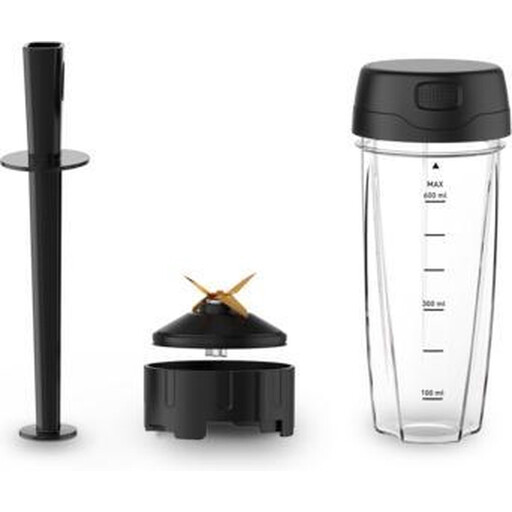
1600 W, 35.000 RPM and a Tritan jug. The product information lists five automatic programmes and a 600 ml travel cup.
Usable capacity is what matters when working out how many breakfast portions you can make. Philips lists an effective capacity of 1 litre for the HR2041/00, with a maximum capacity of 1.9 litres; Tefal lists a usable capacity of 1.5 litres for the BL871D31, with a 2-litre jug.
Yes. According to the Netherlands Nutrition Centre, you can freeze avocado mashed or in pieces and then use it in smoothies. Its texture will change, though, so also follow your blender's instructions for frozen ingredients.
No, don't assume the same rules apply to every model and part. Tefal lists a dishwasher-safe glass jug and removable blades for the BL871D31. Bosch lists dishwasher-safe parts for the MMB6141B, but its blade is not removable. Check the instructions for your chosen model before cleaning it.
According to the Dutch Food and Consumer Product Safety Authority (NVWA), CE marking is mandatory for electrical products. Parts intended to come into contact with food must also meet requirements for food-contact materials. A product listing alone does not prove that a specific item meets both requirements.
No, wattage alone doesn't tell you how well a blender will make your smoothie. The Dutch Consumers' Association notes that power isn't everything and assesses blending results and ease of use separately. Also consider the ingredients you use and the instructions for the exact model.