What should you consider when choosing?
Jug blender
Choose this option: if your recipe contains enough liquid and the full quantity fits within the usable capacity.
Bear in mind: a small or thick batch may be less practical; a larger jug also takes up more space and needs washing up.
Hand blender with a suitable beaker
Choose this option: if you want to blend a small batch, for example in a tall beaker.
Bear in mind: the Consumentenbond notes that a hand blender may produce a less even result than a jug blender. Also check that the beaker is compatible with the model you choose.
| What to consider |
What should you check? |
Who should pay particular attention? |
| Quantity per batch |
Compare the quantity in your recipe with the usable or effective jug capacity. Philips lists an effective capacity of 1 l for the HR2041/00, with a maximum capacity of 1.9 l; Tefal lists a usable capacity of 1.25 l for the BL435831, with a total capacity of 1.75 l. |
If I want to blend everything for the gathering in one go, I need to know whether my recipe will fit in the jug. Around 31% of consumers put batch size first. |
| Small or thick batch |
Consider the size and thickness of your recipe, and compare a jug blender with a hand blender and suitable beaker. |
For a small or thick batch, I want an appliance that suits the quantity, without relying on extra liquid that isn’t in the recipe. Around 31% of consumers say this is their main consideration. |
| Cleaning |
Check the manual for each part. Tefal states that the BL435831 has a removable blade holder and that the jug without the blades, lid and measuring cap are dishwasher-safe. |
After serving, I want to know which parts are easy to clean and which need to be washed by hand. Around 23% of consumers prioritise ease of cleaning. |
| Purchase and aftercare |
Check which accessories you actually need and read the terms of any additional warranty alongside your existing rights. |
I only want to pay for features and aftercare that suit the way I’ll use the appliance. Around 15% of consumers make purchase and aftercare their main consideration. |
For an electrical appliance, also check the CE marking on the specific model and whether the parts that come into contact with the dressing are suitable for food contact. The product title alone does not confirm this.
Joybuy products to help you choose
This selection includes kitchen appliances described in their product titles as blenders or hand blenders. Before choosing one for your recipe, check the exact type of appliance, its relevant capacity and whether the parts that come into contact with food are suitable for your chosen model.
 Image unavailable
Emerio BL-124816.7 blender, 1.5 l, 2 speeds
The product title lists a 1.5 l blender; compare its capacity with the amount of dressing you want to make.
The title specifies two speeds.
View at Joybuy
 Image unavailable
Emerio HB-130492 hand blender set, chopper and whisk
A hand blender may suit a small batch; check whether the set includes the beaker you need for your recipe.
The product title lists a chopper and whisk. For hot preparations, follow the instructions for small batches in the manual.
View at Joybuy
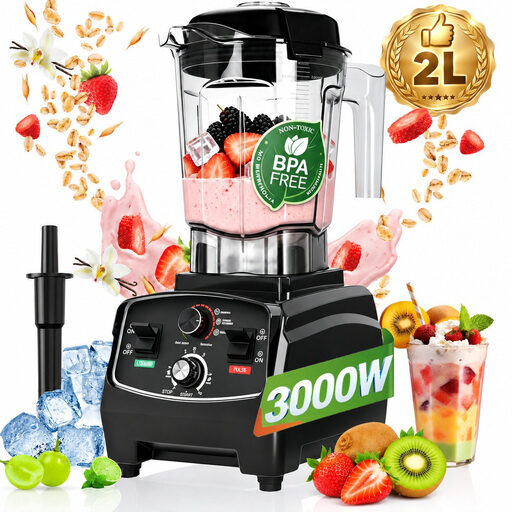 Image unavailable
Slow Juicer 2026, 3000 W, 2 l shaker
The product title describes it as a slow juicer, food mixer and blender; check the exact type of appliance and whether it’s suitable for avocado dressing before ordering.
The title lists 3000 W and a 2 l shaker. These details alone don’t confirm how well the appliance will handle dressing.
View at Joybuy
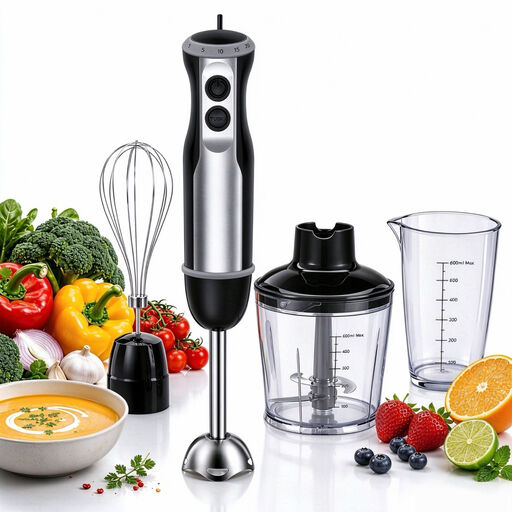 Image unavailable
Hand blender, 6 speeds and turbo function
A hand blender may be an option for smaller quantities; check whether your chosen model includes a suitable beaker or any other accessories you need.
The product title lists six speeds and a turbo function.
View at Joybuy
 Image unavailable
ochama multifunction blender, 600 W, 1.5 l, 3 speeds
The product title lists a 1.5 l blender; compare its capacity with the quantity you want to make.
The title lists 600 W and three speeds. The instructions state that at least 300 ml of liquid must be added during use.
View at Joybuy
Frequently asked questions
Do you always need the largest blender jug when serving a group?
No. Work out the quantity in your recipe and compare it with the usable capacity. For example, Philips lists an effective capacity of 1 l for the HR2041/00, with a maximum jug capacity of 1.9 l.
How do you clean the blender after making dressing?
Follow the manual for each part. The Consumentenbond says removable parts can often, but not always, go in the dishwasher, so check the instructions for the jug, lid and blades separately.
How should you store leftover dressing?
The Voedingscentrum advises covering cooked leftovers and storing them in the fridge at 4 °C, leaving them out of the fridge for no longer than 2 hours and eating them within 2 days. This is general advice for storing leftovers, not a product-specific guarantee of how long every recipe will keep.
Do you need an additional warranty when buying a blender online?
Not necessarily. According to the Rijksoverheid, the seller must provide a solution if a product is faulty; the Netherlands has no fixed statutory warranty period. Compare the terms of an additional warranty with your existing rights to see whether it gives you any extra cover.
Which product requirements matter when buying in the Netherlands?
For the specific electrical appliance, check the relevant product safety information and CE marking. For parts that touch the dressing, check the information about food contact materials. The Rijksoverheid explains CE marking for electrical appliances, while the European Commission outlines EU requirements for food contact materials. A product title alone does not confirm that a particular model meets the applicable requirements.


