
Small portions
If you want to make one small portion of avocado dressing, you could compare a stick blender with a large blender jug. The Consumentenbond considers a stick blender suitable for small portions.


For a small, thick portion of avocado dressing, a stick blender is a sensible place to start: you can blend it in a suitably sized jug or bowl. The Consumentenbond considers a jug blender most suitable for larger quantities or liquid mixtures. If you choose a jug blender, remember to factor in the space it takes up and the washing-up.
If you want to make one small portion of avocado dressing, you could compare a stick blender with a large blender jug. The Consumentenbond considers a stick blender suitable for small portions.
If your holiday cottage has little worktop or storage space and you’d prefer less washing-up, factor the dimensions and detachable parts into your choice. The Consumentenbond outlines how blenders and stick blenders differ in these respects.
If you want to prepare herbs or nuts as well as dressing, check whether the model you’re considering includes a chopper. For larger quantities of liquid mixtures, a jug blender is another option. The Consumentenbond presents these uses as different factors to consider when choosing.
When making avocado dressing in a holiday cottage, key factors include portion size, available space, other uses and how much liquid you’re blending.
Choose this option: if you usually make a small portion and want to blend it in a suitably sized jug or bowl.
Bear in mind: the result may be less smooth than with a blender. A chopper for herbs or nuts is a separate accessory, so check whether it’s included.
Choose this option: if you also regularly make liquid mixtures and want to use a smaller, sealed blending cup.
Bear in mind: a blender may be less suitable for a very small or thick portion. Check the cup size and minimum working quantity.
Choose this option: if you usually make enough liquid dressing or other liquid mixtures for several people.
Bear in mind: the jug takes up more worktop space and creates more washing-up. It’s not necessarily the most convenient choice for a small, thick portion.
| Factor to consider | What to look for when buying | Who might this matter more to? |
|---|---|---|
| Blending a small, thick portion | Check that the blending foot fits in your jug or bowl and that the model includes a measuring jug. | If I’m making one small, thick portion, I want to blend it in a suitably sized jug. Around 42% of consumers in this situation prioritise suitability for small portions. |
| Space and washing-up | Compare the dimensions, number of detachable parts and cleaning instructions for the exact model. | In a small holiday kitchen, I want to be able to store the appliance easily and avoid cleaning lots of unnecessary parts after use. Around 33% of consumers prioritise space and washing-up. |
| Preparing other ingredients | Check whether a chopper is included and which ingredients the manufacturer says it can process. | If I also want to prepare herbs or nuts, I check whether the model I’ve chosen includes a chopper for the job. Around 17% of consumers prioritise being able to prepare other ingredients too. |
| Larger quantities of liquid | Compare the usable jug capacity and intended number of portions with what you actually make. | If I’m making dressing for several people, I want to be able to blend enough liquid in one go. Around 8% of consumers in this situation prioritise larger quantities of liquid. |
A large jug isn’t necessarily practical for a small portion or a thick dressing. The Consumentenbond considers a blender most useful for larger quantities or mixtures with more liquid.
Compare the amount you actually make with the suitability of a stick blender or the minimum working quantity of a compact blender.
A large jug takes up more worktop space and can mean more washing-up after use.
A blending foot, chopper and whisk are designed for different tasks. Models in the same product range may also come with different accessories.
Check the full model code and the contents of the box for the version you’re considering.
In the Netherlands, your statutory rights if a product is faulty are separate from any manufacturer’s guarantee or paid-for extended cover. The Dutch government explains that there is no fixed statutory guarantee period.
Check exactly what additional rights extended cover gives you. If a product is faulty, you can contact the seller.
The ErgoMaster MSM4B610 and MSM4B620 are stick blenders for preparing small portions. The accessories supplied vary by model.
The MultiQuick 7 MQ7025X is a stick blender set for anyone who wants to use accessories as well as blend.
The Blend Up BL19H4F0 is a compact blender option for anyone who also wants to make liquid sauces or drinks in the bottles supplied.
The 5000 Series HR2683/00R1 is a stick blender model offered by Philips as a refurbished product.
These product picks are stick blenders for anyone who mainly wants to blend small portions of avocado dressing in a holiday cottage.
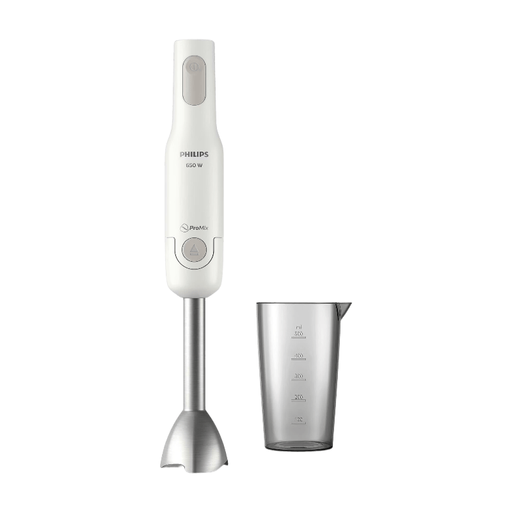 No image available
A stick blender option for anyone who wants to blend small portions. The product information lists a 600 ml measuring jug; check whether that capacity suits your portion.
According to the product information, the appliance should not be run continuously for more than 1 minute.
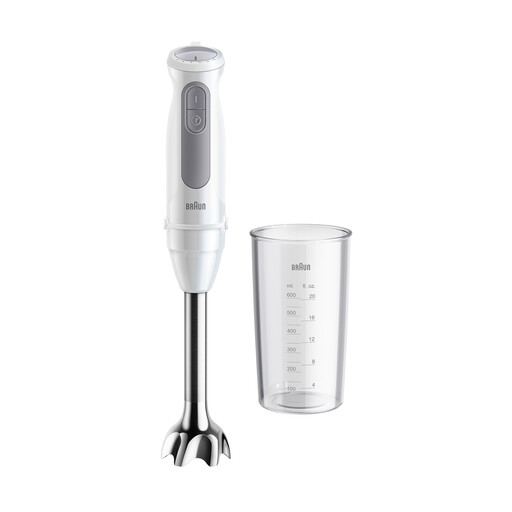 No image available
The product information lists a mixing beaker for small portions, including dressing. Check the beaker capacity and which parts are included with this version.
 No image available
A hand blender for anyone considering a stick blender for small portions. Check the cleaning instructions for the detachable parts of the version you choose.
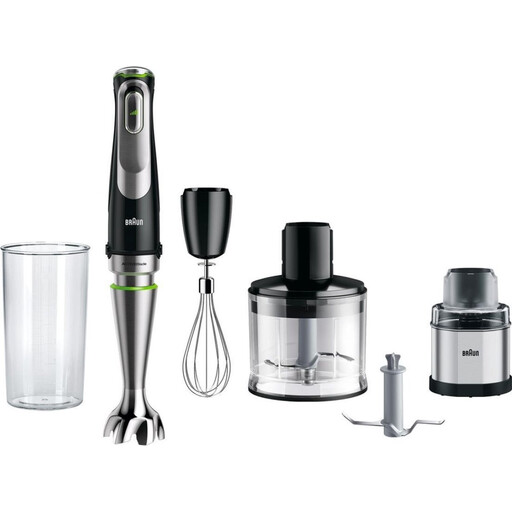 No image available
A stick blender set for anyone who wants to prepare other ingredients as well as dressing. The product information lists a chopper and herb mill; check which parts are included in this set.
According to the product information, only selected parts are dishwasher-safe.
 No image available
The beaker capacity is listed as 700 ml and the chopper holds 500 ml. Compare these capacities with how you’ll use the appliance and the storage space you have.
The product name lists a maximum of 1200 W. According to the product information, you can use the blender continuously for up to 1 minute, then leave it to rest for 1 minute. Dishwasher-safe accessories should be washed below 60 °C, according to that information.
For a small, thick portion, a stick blender is a sensible place to start; for larger or more liquid quantities, a blender jug is an alternative. Choose a beaker or jug to suit the amount you actually make.
Check that there’s a suitable socket and enough worktop space, and follow the instructions for the exact appliance. Only clean detachable parts as instructed in the manual; not every part is necessarily dishwasher-safe.
Cover homemade dressing and put it in the fridge within 2 hours of making it. The Voedingscentrum recommends keeping your fridge at 4 °C. Don’t use this as a basis for assuming a specific shelf life for your recipe.
Not automatically. In the Netherlands, you’re entitled to a product that works properly, and the seller must offer a solution if it’s faulty. The Dutch government says there is no fixed statutory guarantee period, so consider exactly what extra rights a paid-for option provides.
According to the Netherlands Food and Consumer Product Safety Authority (NVWA), electrical equipment covered by the Dutch Commodities Act Decree on Electrical Equipment must carry a CE mark. For low-voltage rules, the NVWA specifies nominal voltages of 50–1000 V AC or 75–1500 V DC. Manufacturers, importers and distributors each have their own responsibilities. Check the marking and safety information for the exact model.