
Cook making a small batch of dressing
You’re making dressing for a meal, but don’t necessarily want to use a full jug. A StudioKOOK recipe suggests using either a blender or a hand blender.


If you mainly make a small batch of avocado dressing, a personal blender or a hand blender in a tall cup may be more practical than a large blender jug. A jug blender gives you more room if you also make larger quantities of sauce or other recipes, but check its usable capacity, the amount it blends effectively and the cleaning instructions. A high wattage rating is not, by itself, a proven requirement for soft avocado.
You’re making dressing for a meal, but don’t necessarily want to use a full jug. A StudioKOOK recipe suggests using either a blender or a hand blender.
You want to use the appliance for larger quantities of sauce or, for example, smoothies as well as dressing. The Consumers’ Association recommends considering how you’ll use a blender, and comparing its usable capacity with what you actually make.
You often make fresh dressing and want to know how to clean the jug, cup and blades. The Consumers’ Association recommends checking the manual to see which parts are dishwasher-safe.
A good fit if: you mainly make a modest amount and want a compact cup. nutribullet lists a 700 ml cup as included with the Original NB603DG.
Bear in mind: the cup’s capacity doesn’t tell you how much of your recipe it will blend effectively; check the recommended fill level.
A good fit if: you make larger quantities of sauce or other recipes as well as dressing. Philips lists a maximum capacity of 1.9 l and an effective capacity of 1 l for the HR2041/00.
Bear in mind: a large jug doesn’t guarantee that it will blend a small portion effectively; check the model’s minimum working quantity.
A good fit if: you mainly make one small portion and don’t need a separate blender jug. StudioKOOK suggests a hand blender as an alternative to a blender in its recipe.
Bear in mind: you’ll be blending in an open cup, so choose a suitably tall one and work carefully to minimise splashing.
| What to consider | What to look for | Who is it important to? |
|---|---|---|
| Blending a small portion | Compare the recipe size with the recommended fill level and check whether the ingredients reach the blades properly. | If I’m only making a small amount of dressing, I don’t want it left sitting in a large jug. Around 36% of consumers prioritise blending small portions effectively. |
| Usable capacity | Compare the size of your largest usual batch with the usable capacity, not just the jug’s total capacity. | If I make larger quantities of sauce or other recipes as well as dressing, I want to know how much the jug can actually hold. Around 29% of consumers prioritise this extra capacity. |
| Cleaning | Check the manual for each part to see whether it is dishwasher-safe and how to clean the blades and seals. | After making dressing, I want to know how many parts need to be washed by hand. Easy cleaning is a priority for around 21% of consumers. |
| Other, tougher jobs | Check which ingredients and usage times the exact model allows; only then consider its power and extra features. | If I also regularly blend tougher ingredients, I want to know whether the model is designed for them. These extra uses are a priority for around 14% of consumers. |
The stated maximum capacity may differ from the effective or usable capacity. A large jug also doesn’t tell you whether it will blend a small portion effectively.
Compare the usable capacity with the quantities you usually make. For small portions, check the model’s minimum working quantity.
If your recipe won’t fit in one batch, you may need to blend it in several rounds.
The Consumers’ Association mainly associates power blenders with tougher jobs. That doesn’t prove that soft avocado needs a particular minimum wattage.
First decide whether you really want to blend tougher ingredients. Then compare the features and instructions for the models you’re considering.
Cleaning instructions can vary between parts. For example, nutribullet gives separate instructions for the blades and cup of the NB603DG.
Check the manual for the exact model, including instructions for the jug or cup, lid, seals and blades.
Parts that aren’t dishwasher-safe will need to be washed by hand.
The 3000 Series HR2041/00 is a jug blender worth comparing if you want to make other blended and puréed recipes as well as dressing.
The VitaPower Serie 4 MMB6141B is a jug blender worth comparing if you’re planning to make other or larger batches too.
The Original NB603DG is a personal blender supplied with a 700 ml cup, making it an option to consider if you mainly prepare smaller quantities.
The Blendforce II BL435831 and PerfectMix+ BL871D31 differ in their stated capacity and features; compare each model against what you actually need.
This selection of Joybuy products includes a hand blender, compact blenders and jug blenders for sauce or dressing. Focus on how much you want to make, how the blender operates and how easy it is to clean.
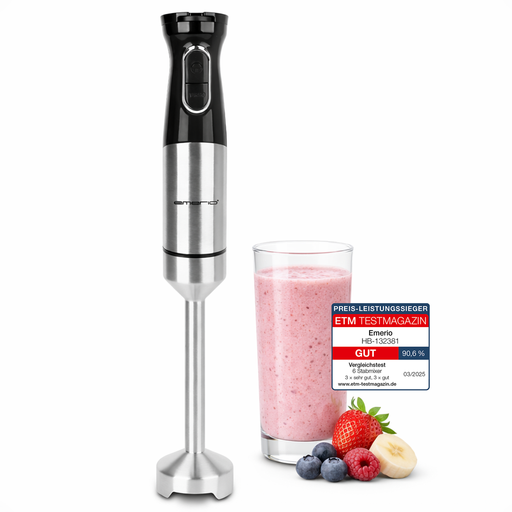 Image unavailable
A hand blender to consider for sauces and purées, with an adjustable speed setting.
The blending foot is removable and made from stainless steel. According to the instructions, the appliance can run continuously for up to 1 minute; allow the motor to cool between uses.
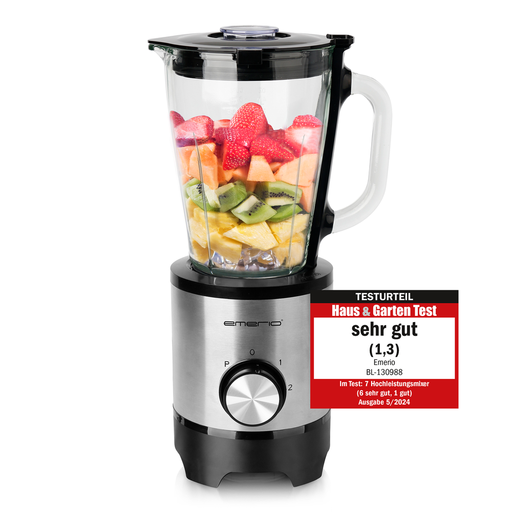 Image unavailable
A jug blender to consider if you make sauces or dips for family meals as well as dressing.
The description lists two speeds, a pulse function and a 1.5 l glass jug. The jug, lid and blades are described as dishwasher-safe. The glass jug is heavy and fragile, so handle it with care.
 Image unavailable
A jug blender to consider if you want to make other recipes as well as dressing.
The product name lists 600 W, a 1.5 l jug and three speeds. The description mentions purées and baby food among its uses.
 Image unavailable
A compact blender to consider for sauces if you’re looking for a smaller jug.
The product name lists 0.6 l and 350 W. The description mentions two speeds plus pulse and removable dishwasher-safe parts.
 Image unavailable
A jug blender to consider if you want to make dressing and other recipes; check that it blends smaller portions effectively.
Philips lists a maximum capacity of 1.9 l and an effective capacity of 1 l, 450 W and one speed plus pulse. The instructions state that it can run continuously for up to 2 minutes.
No. A StudioKOOK recipe using one avocado suggests either a blender or a hand blender. Choose based on the portion size and what else you want to make with the appliance.
Follow the instructions for each part in the manual for the exact model. The Consumers’ Association recommends checking which removable parts are dishwasher-safe; clean the motor housing according to the instructions.
Don’t assume that the storage life for another avocado product applies to dressing with different ingredients. The Netherlands Nutrition Centre advises keeping opened guacamole made from 100% avocado in the fridge for two days. Check storage guidance that applies to all the ingredients in your dressing.
Not necessarily. According to the Dutch Government, you’re entitled to a product that works properly, but there is no fixed statutory guarantee period in the Netherlands. Any manufacturer’s guarantee is a separate arrangement; compare the terms and contact the seller if there’s a problem.
According to the Netherlands Food and Consumer Product Safety Authority (NVWA), CE marking is compulsory for electrical products covered by the relevant regulations. For electrical equipment covered by the Low Voltage Directive, the NVWA specifies a rated voltage of 50 to 1000 V AC. CE marking is a declaration by the manufacturer, not proof that each individual appliance has been independently tested; also follow the model’s usage restrictions.