
Detail seeker by the canal
You want to preserve the texture of leaves and fine branches in a wide shot or crop. Compare the lens and sensor, and consider whether you can get close enough to your subject.


Start by considering how far away the trees are and the light you usually photograph in. A fixed wide-angle lens suits broad scenes and cropping, while optical zoom helps when you can’t walk to the other side. Also compare the lens speed at the focal length you use, and check the exact model’s protection if you’ll be out in the rain; more zoom doesn’t guarantee finer detail.
You want to preserve the texture of leaves and fine branches in a wide shot or crop. Compare the lens and sensor, and consider whether you can get close enough to your subject.
You can’t walk over to the trees and want to frame an individual tree or branch. Pay attention to the optical zoom range.
You also take photos as the autumn light fades, and want to weigh lens speed against zoom range and portability.
Choose this if: you mainly want to capture a wide scene with trees, leaves and façades.
Trade-off: you can’t optically zoom in on a tree on the opposite bank.
Choose this if: you want to photograph both wide views and closer branches on a walk, even as the light fades.
Trade-off: check that the telephoto range is sufficient for the distance to the opposite bank.
Choose this if: you want to frame individual trees or branches from one bank.
Trade-off: compare sensor size and lens speed at the telephoto end; zoom range alone doesn’t tell you how much detail will be retained.
Choose this if: protection from rain or splashes matters more to you than resolution or a long telephoto range.
Trade-off: check the protection offered by the exact model and compare its range and resolution with your needs.
| What to consider | What to look for when buying | Who should prioritise this? |
|---|---|---|
| Fine detail in leaves and branches | Compare the sensor, lens and framing options; assess images taken in similar light rather than looking at megapixels alone. | If I want to preserve fine leaf texture and branches in a wide shot or crop, I compare the sensor and lens, as well as how close I can get. Around 28% of consumers put fine detail first. |
| Trees on the opposite bank | Check the optical range in 35mm-equivalent focal lengths and the maximum aperture at the telephoto end. | When I can’t walk over to the trees, I want to frame them properly from the opposite bank. Around 22% of consumers prioritise range for distant trees. |
| Taking photos as the light fades | Compare sensor size, aperture at the focal length you’ll use and image stabilisation; moving leaves may require an appropriate shutter speed. | On a late walk, I want to capture detail as the light fades without losing sight of range and portability. Around 22% of consumers prioritise usable photos in low light. |
| Reflections in the water | Decide whether you want to preserve reflections, then check whether a suitable filter can be attached to the exact camera model. | If I want to control reflections or reduce glare, I check which filter attachment is compatible with my camera. Around 17% of consumers prioritise control over reflections on water. |
| Taking photos in wet weather | Check the stated protection and usage conditions for the exact model; don’t assume a camera is waterproof based on the brand name. | For a walk in the rain or around splashing water, I want to know whether the protection offered by my chosen model suits how I’ll use it. Around 11% of consumers prioritise protection in wet weather. |
A high zoom factor doesn’t guarantee fine detail. The Consumers’ Association points out that a high zoom range can come with a smaller image sensor and a trade-off in photo quality.
Choose the range you actually need, and compare sensor size and lens speed too, especially at the telephoto end.
An ND filter and a polarising filter serve different purposes. Nikon describes a polarising filter as a way to reduce reflections; Canon lists a built-in ND filter on the PowerShot G7 X Mark III.
Decide what effect you’re looking for and check filter compatibility with the exact camera before choosing accessories.
You may need a separate filter and, possibly, a model-specific attachment.
The protection specified by OM Digital Solutions for the Tough TG-7 applies to that model and shouldn’t automatically be assumed to apply to other cameras.
Check the stated protection and usage conditions for the model you choose; protect a camera from rain if its protection hasn’t been confirmed.
The GR IV is a compact camera with a fixed wide-angle lens, suited to broad scenes and the details within them.
The X100VI suits photographers who prefer a fixed focal length, manual controls and room to crop their shots.
The PowerShot G7 X Mark III has a short, fast zoom for wide views and closer detail on walks.
The RX100 VII is a pocket-sized camera with a longer optical telephoto range.
The LUMIX TZ99 is a travel zoom for framing a range of shots from one bank.
The Tough TG-7 is a rugged compact camera for anyone who wants to take photos in wet conditions.
This Joybuy selection includes compact cameras that can help you frame distant subjects. Check whether the zoom listed for each model is optical or digital: digital zoom doesn’t offer the same optical framing.
 No image available
The stated optical zoom is useful if you want to frame a tree on the opposite bank; check that the range suits the distance.
Listed features: 12× optical zoom, 4K, 64 MP and Wi-Fi.
 No image available
The stated optical zoom may be useful if you want to frame a tree from the opposite bank; match the range to your viewpoint.
Listed features: 8× optical zoom, 5K, 64 MP and dual lens.
 No image available
The stated optical zoom is designed for framing distant subjects; check that the focal length suits the trees you’re photographing.
Listed features: 10× optical zoom, 5K, 56 MP and front and rear cameras.
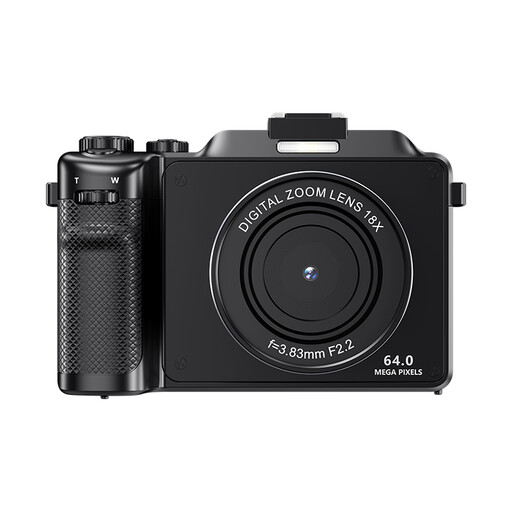 No image available
This camera lists digital zoom for distant subjects; the product description warns that it may reduce image quality.
Listed features: 4K, 64 MP, autofocus and 18× digital zoom.
 No image available
The listed 16× zoom is digital; bear this in mind if you want to frame subjects on the opposite bank.
Listed features: pocket camera, 4K, 44 MP and 16× digital zoom.
No. Optical zoom helps you frame a distant tree, but the Consumers’ Association notes that a high zoom range can come with a smaller sensor and a trade-off in photo quality. Also compare lens speed at the zoom setting you’ll use.
First decide whether the reflection is part of your photo. A polarising filter can reduce reflections on water; check whether there’s a suitable attachment for your exact camera model.
Choose a shutter speed that suits the movement of the leaves and the available light. Stabilisation helps reduce camera shake, but it won’t automatically prevent moving leaves from appearing blurred.
According to the Dutch government, you’re entitled to a product that works properly in the Netherlands, and you should generally contact the retailer if something goes wrong. There’s no fixed statutory warranty period; what you can reasonably expect depends, among other things, on the product and normal use. Damage you cause yourself isn’t automatically covered by free repairs.
Taking photos for private use isn’t the same as publishing them more widely or using them for business. According to the Dutch Data Protection Authority, an exception applies to private images that you keep to yourself or share with a very limited circle at most. Consider publication separately: this isn’t blanket permission to publish every photo.