
Vandaag of morgen in huis

Kwaliteit gegarandeerd

Welkomstaanbiedingen ontgrendelen: GRATIS bezorging | Tot 80% korting | Gratis 30 dagen JoyPlus-proefperiode
Download de app
A busy job, a weekend getaway, or simply the desire for a more consistent routine; there are plenty of reasons why managing your pet's feeding schedule can be a challenge. You want to be sure your cat or dog gets the right amount of food on time, even when you're not there. An automatic pet feeder can be a practical solution.
But with so many options on the market—from a simple feeder with a timer to an advanced app-controlled feeder—the choice isn't always easy. This guide is designed to help you. We'll highlight the most important features and provide concrete recommendations so you can find a model that truly fits the needs of you and your pet.
Before you make a choice, it's wise to consider a few key features. These will determine how well the feeder fits into your daily life.
The way you program the feeder is one of the biggest differences between models.
Some feeders offer extra features that contribute to your pet's health.
The material of the food bowl itself is important for hygiene and durability. Stainless steel is a popular choice because it's non-porous, doesn't retain odours, and is easy to clean in the dishwasher. Ceramic is also a good, hygienic option. Plastic is lighter but can develop scratches over time where bacteria can accumulate.
Based on functionality and ease of use, we've selected a few interesting models for you.
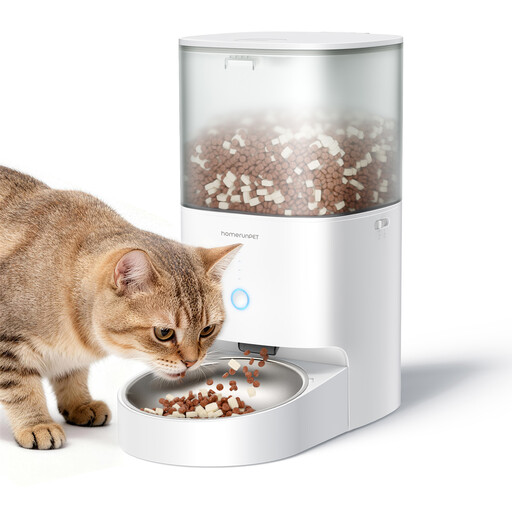
Why it stands out: This model combines smart technology with a focus on freshness. The app control makes scheduling feedings remotely a breeze, while the design is engineered to keep kibble crisp.
Key Features:
Who is it for? For pet owners who value remote control, data on their pet's eating habits, and maximum food freshness. Ideal if you have an irregular schedule or travel frequently.
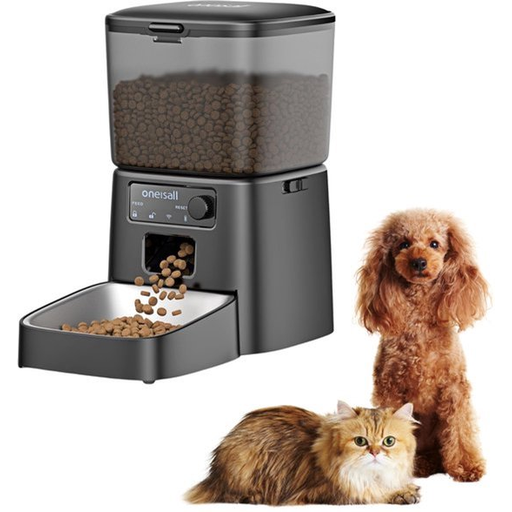
Why it stands out: Its simplicity and reliability. This automatic feeder for dogs and cats works without Wi-Fi or an app; you set everything directly via the control panel.
Key Features:
Who is it for? For anyone looking for a reliable timer-based feeder without the complexity of an app. Perfect for those who want a 'set-it-and-forget-it' solution that just works.
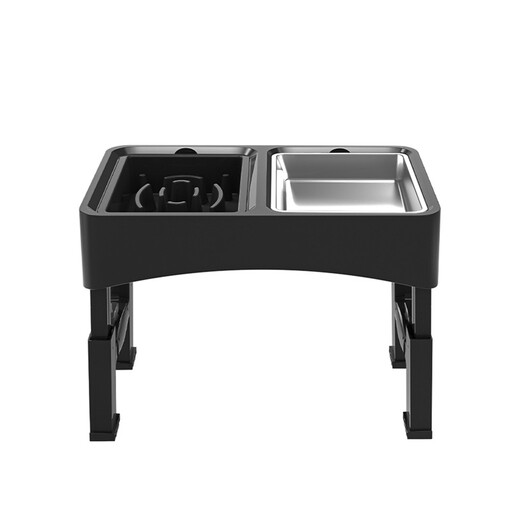
Why it stands out: This isn't an automatic feeder, but a smart solution for two common problems: eating too fast and poor eating posture. It combines a slow feeder bowl with an elevated feeder.
Key Features:
Who is it for? For owners of dogs or cats that gobble down their food. Also an excellent choice for pets that benefit from a better eating posture, such as larger breeds, senior pets, or animals with joint problems.
These recommendations are a starting point. Every pet and every situation is different. Are you looking for a different type of automatic cat feeder, a simpler model, or one with a larger capacity? For a wider range of pet bowls, from simple stainless steel dishes to other automatic models, you can browse our full category.
Are automatic feeders suitable for wet food? Most automatic feeders are designed for dry kibble. Wet food can clog the mechanisms and does not stay fresh for long at room temperature. Always check the manufacturer's specifications, but as a rule, assume they are for dry food only.
How do I know the correct portion size? The right portion size depends on the type of food, as well as your pet's age, weight, and activity level. The pet food packaging often provides a good guideline. Start with this recommendation and adjust the amount based on your pet's condition. When in doubt, it's always wise to consult your veterinarian.
Why is a stainless steel bowl a popular choice? Stainless steel is a popular material because it is very hygienic. Its surface is non-porous, making it difficult for bacteria to adhere to. Additionally, it is strong, durable, and usually dishwasher-safe. For cats, it can help prevent 'feline acne', a condition sometimes associated with plastic food bowls.
