
Attentive vinyl listener
You want to play classic records at your leisure and can make room for a separate, flat and sturdy surface for your turntable. Audio-Technica recommends placing the turntable away from speaker vibrations.


First, choose a turntable that works with your existing speakers or amplifier and can be placed somewhere free from vibration. An automatic model with a switchable phono preamp can simplify connections and operation; a manual model takes more hands-on attention but offers more adjustment options. If you also have 78 rpm records, check separately that the speed, stylus and setup are all suitable.
You want to play classic records at your leisure and can make room for a separate, flat and sturdy surface for your turntable. Audio-Technica recommends placing the turntable away from speaker vibrations.
You want to check that the turntable is compatible with your active speakers or amplifier, and find out what kind of phono preamp your setup needs. The Consumers’ Association points out that not every amplifier has a phono preamp.
You want to start a record without having to position the tonearm yourself each time, and are weighing up that convenience against manual operation and adjustment options.
Start by considering where you’ll put it, then check the connections before choosing between automatic operation and manual adjustments. Only factor in 78 rpm if you own records that play at that speed.
| What to consider | What should you check? | Who is this important to? |
|---|---|---|
| Positioning and vibration | Measure the available space and check that the turntable can sit level on a sturdy surface, rather than on the same surface as your bookshelf speakers. | I want to place the turntable on a sturdy, level surface in my small living room, separate from the speakers; around 36% of consumers give a stable setup their highest priority. |
| Connecting to existing equipment | Make a note of the inputs on your amplifier or active speakers. If the turntable has a switchable phono preamp, check that it’s set correctly for the input you’re using. | I want to use my existing setup without overlooking the need for a phono preamp; around 29% of consumers prioritise compatibility with their existing equipment. |
| Automatic or manual | Check whether you want playback to start and the tonearm to return automatically, and which parts of the specific model can be adjusted or replaced. | I want to start a record without positioning the tonearm myself; around 21% of consumers value ease of operation above all. |
| Historic records and maintenance | Check the record material and playing speed. Shellac records also need a suitable stylus and the right setup. | I actually own 78 rpm records and want to know whether both the turntable and stylus are suitable; around 14% of consumers prioritise historic formats. |
A built-in phono preamp isn’t the same as a complete amplifier and speaker system. So check the whole signal chain, from output and input to amplification and speakers.
Depending on your existing setup, you may also need a phono preamp, an amplifier or suitable active speakers.
Make a note of the connections on your amplifier or active speakers in advance, and check which phono or line setting is appropriate.
Speaker vibrations can affect how the turntable works.
First, plan a separate, flat and sturdy place for it, allowing enough room to operate the turntable.
According to Audio-Technica, a standard LP stylus isn’t suitable for shellac and could damage both the record and the stylus.
Before playing a 78 rpm record, check the record material, speed, stylus and setup separately.
You may need a separate, suitable stylus for shellac records.
According to the Dutch government, the Netherlands has no fixed statutory guarantee period. If a product is faulty, the seller must provide a solution.
Read any additional warranty terms, but consider your statutory rights separately.
The PS-LX3BT is worth considering if you’re looking for automatic operation, Bluetooth streaming and a switchable phono output.
The AT-LP70XBT is an automatic wireless option; the AT-LP120XUSB is a separate manual model with adjustable features.
The DP-300F is worth considering if you want automatic operation and the option to choose between its built-in phono preamp and an external one.
The Planar 1 Plus is a manual turntable with a built-in MM phono stage for connecting to a suitable line input.
The LBT-188 combines manual operation with Bluetooth streaming, USB and a switchable phono preamp.
These Joybuy picks are Sony Bluetooth turntables relevant to this topic. Compare each model’s operation and connections with your own setup.
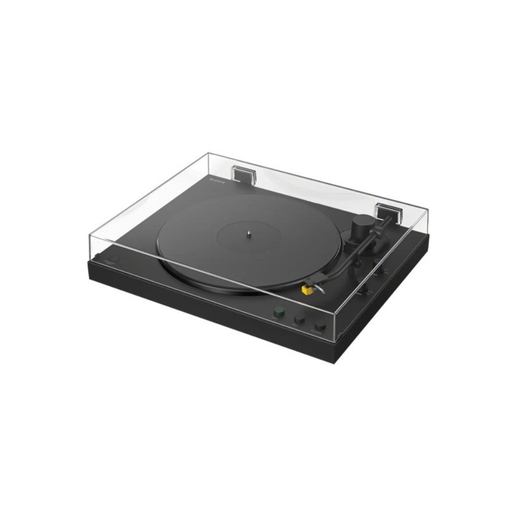 No image available
An option to compare if you’re looking for a Sony Bluetooth turntable; check that this version’s features and connections suit your setup.
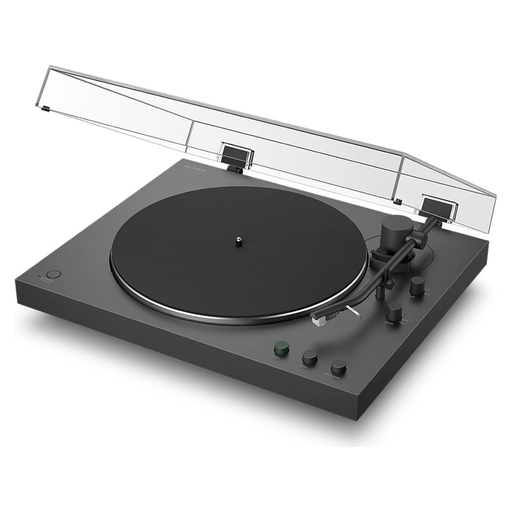 No image available
Ideal if you want to play records automatically and Bluetooth streaming is important to you. Sony specifies automatic start and return, 33⅓ and 45 rpm, and a switchable phono output.
Sony lists the PS-LX3BT’s dimensions as 430 × 117 × 366 mm. Measure the available space and leave room to operate the turntable.
According to Sony, this model doesn’t play 78 rpm records.
You’ll need suitable amplification and speakers to hear the music. If neither the turntable nor the amplifier has a phono preamp, you may need a separate one. Check the inputs on your own setup.
Place it on a sturdy, level surface, preferably not on the same surface as your bookshelf speakers. Rega and Audio-Technica recommend this positioning to help minimise the effects of vibration.
Not if it’s a shellac record. Check that the turntable supports 78 rpm and use a suitable stylus with the correct setup. Audio-Technica warns that an LP stylus could damage both the record and the stylus.
Check the stylus for dust and clean it according to its care instructions. Audio-Technica warns that a build-up of dirt can reduce sound quality and may damage the stylus assembly.
For eligible distance purchases, you generally have 14 days to change your mind, although there are exceptions; the Dutch government includes purchases from a private individual among them. You’re also entitled to a product that’s fit for purpose. The Netherlands has no fixed statutory guarantee period; if a product is faulty, the seller is your point of contact.