
Vandaag of morgen in huis

Kwaliteit gegarandeerd

Welkomstaanbiedingen ontgrendelen: GRATIS bezorging | Tot 80% korting | Gratis 30 dagen JoyPlus-proefperiode
Download de app
As a cat owner, you know the drill: cleaning the litter box is a daily chore you'd rather skip. An automatic litter box promises an end to daily scooping and unpleasant odours. But the market is flooded with models that cause more problems than they solve. Many owners fall into marketing traps, ending up with an expensive device their cat refuses to use, or one that breaks down after just a few months.
Before you invest, it's crucial to know what to look for. We'll outline the three most common pitfalls and explain how to choose a model that truly works for you and your cat.
A common complaint is that the cleaning mechanism (the rake or rotating drum) gets jammed with clumps or becomes soiled. The result? You spend more time disassembling and scrubbing complex parts than you ever did with a simple scoop. A well-designed model is easy to take apart for periodic deep cleaning.
Cats are sensitive animals. A loud motor can scare your cat away, causing it to ignore the box entirely. Even worse are unreliable sensors that start the cleaning cycle while the cat is still nearby. This is not only stressful but also unsafe. A cat that doesn't feel safe will find another spot in the house.
Some manufacturers lock you into their ecosystem. They require specific, often expensive, types of cat litter or special waste bags. What seemed like a one-time purchase becomes a recurring expense that can add up significantly.
To avoid the problems above, there are a few technical specifications you should always check. These determine whether an electric litter box becomes a helpful assistant or a source of frustration.
A self-cleaning litter box typically works with a rake that sifts through the litter or a drum that rotates to separate clumps. Rotating drums often have fewer moving parts that can get stuck. Check how easily the drum or mechanism can be removed for a thorough cleaning. A model with dishwasher-safe or easily rinsable main components will save you a lot of hassle in the long run.
The size of the internal waste bin determines how often you need to empty it. For a single-cat household, a smaller capacity might suffice, but for a litter box for multiple cats, a large collection bin is essential. A capacity of 10 litres or more means you might only need to empty the bin once every 1 to 2 weeks. Also, check if the box works with standard waste bags; this prevents the hidden costs of branded refills.
A smart litter box needs to be genuinely smart when it comes to safety. Look for models with multiple sensors, such as weight sensors and infrared or motion sensors. These ensure the device will never operate when your cat is inside or nearby. The noise level, expressed in decibels (dB), is also important. A model quieter than 40 dB is generally considered very quiet and is less likely to startle your cat. Furthermore, a good odor-control litter box will have a sealed waste compartment to effectively contain smells.
Based on these objective criteria, we have selected a few models that suit different types of cat owners.
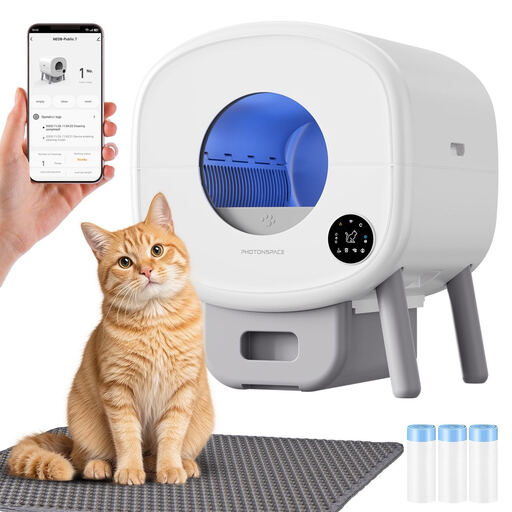
Why it's a match: With a very large drum (95L) and a 15L waste bin, you won't have to empty the box for up to 15 days, even with multiple cats. This is ideal for those with little time who are seeking maximum autonomy.
This model tackles pitfall 3 (hidden costs). According to the manufacturer, it is compatible with all common types of clumping cat litter, so you aren't locked into expensive, proprietary options.
The XXL capacity and hands-free design minimise daily interaction with the litter box.
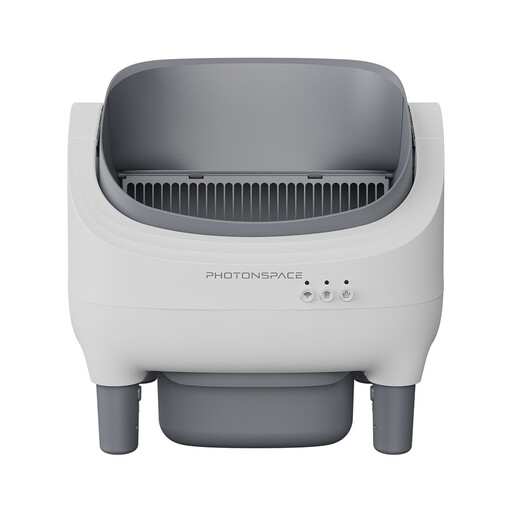
Why it's a match: The open-top design is perfect for cats that feel confined in a covered box. The app-controlled litter box gives you full control and insight into your cat's bathroom habits, wherever you are.
This model addresses pitfall 2 (safety and comfort). The built-in motion sensors pause the cycle immediately if the cat approaches, and the open design gives an anxious cat a sense of control and visibility.
The open-top design combined with app functionality offers a balance between the cat's comfort and the owner's convenience.
Why it's a match: The ergonomic design is taller, so you don't have to bend down to change the waste bag. This makes it an excellent choice for seniors or people with limited mobility who want to avoid physical strain.
This model addresses pitfall 1 (complex maintenance). The hands-free design and large capacity ensure that daily and weekly tasks are minimal and simple, without complicated disassembly.
The ergonomic design makes emptying the bin and general maintenance less physically demanding.
An automatic litter box is a specific solution. If you're looking for other types of litter boxes or storage options, we've put together a broader range for you.
The acclimation period varies per cat. A common method is to place the new box next to the old one, but don't turn it on yet. Let your cat use the new box as a normal litter box first. Once it is comfortable, you can enable the automatic cleaning function. This process can take anywhere from a few days to a couple of weeks.
The lifespan depends on the build quality and maintenance, but a good model should last for several years. The running costs mainly consist of electricity consumption (usually very low), cat litter, and any waste bags. Choose a model that works with standard litter and waste bags to keep costs down.
Not always. Most automatic litter boxes work best with high-quality clumping cat litter. This type of litter forms hard, compact clumps that the cleaning mechanism can easily pick up and remove. Non-clumping litter, paper pellets, or some types of crystal litter are often unsuitable. Always check the manufacturer's specifications.
