
Vandaag of morgen in huis

Kwaliteit gegarandeerd

Welkomstaanbiedingen ontgrendelen: GRATIS bezorging | Tot 80% korting | Gratis 30 dagen JoyPlus-proefperiode
Download de app
If you want to replace halogen bulbs with LEDs, the choice might seem straightforward: pick a bulb with a high lumen rating, a cool colour temperature and a plug-and-play connection. In practice, problems often only appear after installation. The bulb may not fit properly, trigger a dashboard warning or cast light differently from the original halogen bulb.
Use this LED car bulb buying guide to check the most important details before you buy. That way, you can narrow down your options and find the right H7, H4, H11, H1, 9005 or 9006 LED bulb.
A figure such as 20,000 lumens sounds impressive, but always check whether it applies to one bulb or a pair. Lumens also don’t tell you everything about how the light is distributed on the road. The shape and position of the LED chip also help determine whether the beam is correctly directed by the reflector.
According to product descriptions from various retailers, some models are described as “300% brighter” than halogen bulbs. This is a claim made by a brand or seller, not a universal measurement. Treat the lumen rating as one point of comparison, not your only buying criterion.
An H7 bulb only fits an H7 socket. An H4 bulb typically combines main-beam and dipped-beam functions, while H8, H9 and H11 bulbs are often used for fog lights or dipped beams. Check the fitting in your vehicle handbook, on the old bulb or in a reliable vehicle catalogue.
“Suitable for 99% of vehicles” also doesn’t mean that the bulb will work in every model without modification. Sensitive vehicle electronics may cause a warning message, flickering or radio interference. CANbus LED bulbs are designed to reduce this risk, according to the product description, but some European vehicles may still need an additional decoder.
LED chips generate heat. A bulb with a cooling fan actively dissipates that heat, but it needs enough space behind the fitting. Check whether the original dust cap can still be fitted and whether the fan can spin without touching any cables or components.
An aluminium housing, fan and stated IP68 waterproof rating are useful product specifications. However, IP68 doesn’t guarantee trouble-free operation in every installation. A poor seal, moisture inside the headlight or insufficient ventilation space can still cause problems.
Start by choosing the right connection:
A product title listing several fittings doesn’t always mean that all versions are included in one pack. Check which model you’ve selected and how many bulbs are included before ordering.
A colour temperature of 6000K cool white or 6500K produces a bright white to slightly bluish light. This can give your car a modern look, but colour temperature doesn’t automatically determine light output or whether the bulb is road legal.
An extremely blue light isn’t always practical for fog lights in rain or mist. Focus on the combination of beam pattern, fitting and intended use. Also check whether your bulb and headlight combination is permitted on public roads under Dutch traffic regulations.
A correctly directed beam is more important than a high lumen rating alone. Look for a 1:1 design, an adjustable bulb base or clear instructions for positioning the LED chips horizontally. Some products recommend setting the chips at approximately the 3 and 9 o’clock positions.
Plug-and-play LED bulbs are designed to connect to the original plug without extra wiring. Switch off the lights and let the old bulb cool down before you start. Product descriptions warn that bulbs can get very hot during use, so wearing gloves is a sensible precaution.
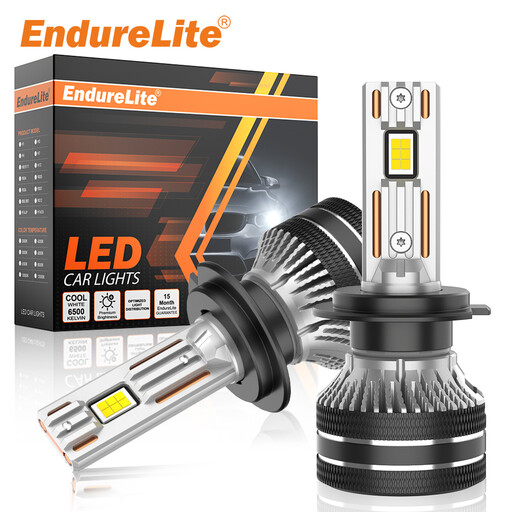
Why it suits this driver: A straightforward H7 set for anyone looking to replace their original halogen bulb with one that connects directly.
The product description mentions a 1:1 size, plug-and-play installation, CANbus support and IP68. Be sure to check that your car has an H7 fitting.
6500K cool white light, aluminium housing, built-in fan and a pack of two, according to the product information.
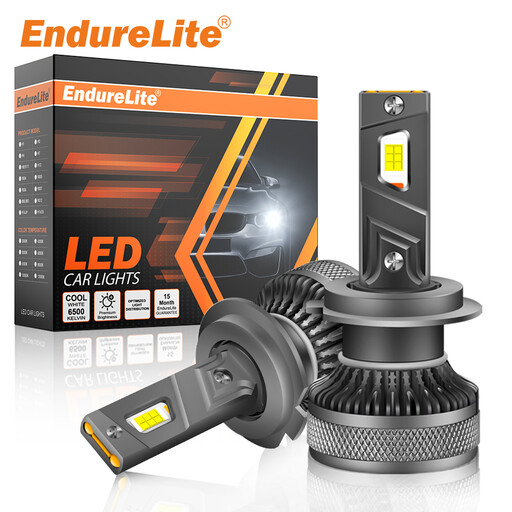
Why it suits this driver: Suitable for drivers with an H4 system that combines main and dipped beam in one bulb.
The description lists a compact design, adjustable beam position, cooling fan and CANbus-ready driver. Check that there’s enough room under the bulb cover.
20,000 lumens per product listing, 6000K cool white, IP68 and a stated lifespan of 50,000 hours.
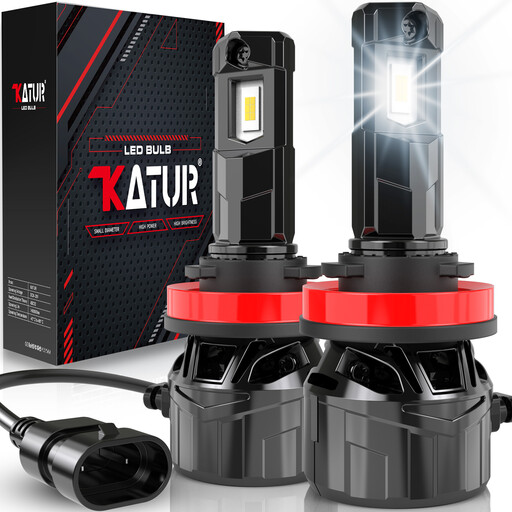
Why it suits this driver: An H11, H8 and H9 option for drivers who spend a lot of time on the road after dark or want to upgrade their LED fog lights.
The product information lists 1:1 dimensions, CANbus decoding and a 16.000 RPM fan. Warning messages may still occur in vehicles with sensitive electronics.
According to the product description: 30,000 lumens per pair, 6000K, 9–32 V, aluminium housing and a stated lifespan of 60,000 hours.
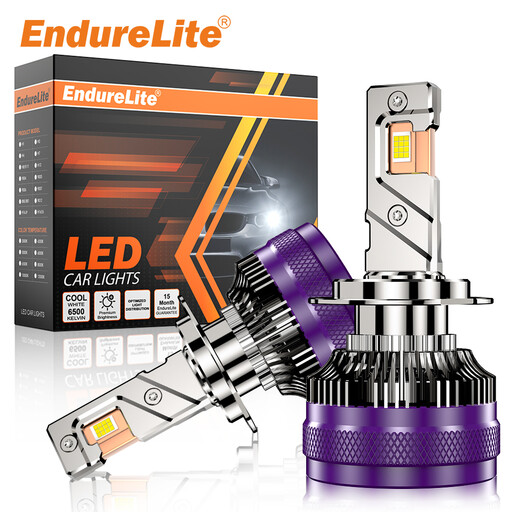
Why it suits this driver: Designed for vehicles with a 9005 or HB3 connection for headlights or specific fog-light applications.
The product description lists a 1:1 size, cooling fan, plug-and-play connection and CANbus-ready design. The correct HB3 fitting is still essential.
6000K cool white light, IP68 according to the product information and a set of two bulbs.
Check the fitting and available installation space before buying. Carefully remove the halogen bulb, connect the LED bulb and position the chips as directed in the installation instructions. Then test the dipped beam, main beam and any fog lights separately.
Have the headlight alignment checked if the beam pattern changes. A beam that points too high or spreads too widely can dazzle other road users. Also check whether retrofit LED bulbs are permitted for use on public roads in your headlight and vehicle. Having a CANbus driver or an IP68 rating doesn’t, by itself, mean the bulbs are road legal.
We’ve put together a complete, up-to-date list of products that meet these strict selection criteria and the current European safety regulations.
That depends on the fitting, available space and your car’s electronics. A bulb may fit straight in, but you might need a CANbus decoder to prevent a warning message or flickering. Check that the original dust cap still fits as well.
The product descriptions mentioned above often state a lifespan of 50,000 hours; the KATUR H11 is listed at 60,000 hours. These are figures provided by the manufacturer or seller, not a guarantee for every car. Heat, vibration, moisture and usage conditions all affect the actual lifespan.
LED bulbs can use less energy than halogen bulbs for a similar light output, but the exact power consumption varies by model. Check the stated wattage alongside the lumen rating. A higher lumen figure doesn’t automatically mean lower power consumption or a better beam pattern.
