Start with a setup that lets you speak close to the microphone and play back a test recording: a recorder won’t make a noisy room quiet by itself. If you want to position a separate microphone away from the recorder, compare the connections. For standalone recording, the built-in microphones, storage and power supply are important considerations. Shure notes that a microphone can’t improve the acoustics of the room it’s in.
Who is this choice relevant to?
Readers troubled by noise in their flat
If you can hear room reverberation or outside noise in your recording, it’s worth making a test recording at the intended speaking distance and finding a suitable place to position the microphone. Shure offers advice on microphone placement and recording in a quiet, softly furnished room.
Narrators who want to connect a separate microphone
If you want to position an external voice microphone separately, compare its connection with the recorder’s inputs. Zoom and Tascam list XLR/TRS inputs on specific handheld recorders.
Creators recording long chapters
If you want to record longer takes, check in advance that your storage and power supply are ready and that you can play back the recording afterwards. Zoom and Tascam manuals specify storage and power requirements for individual models.
What should you look for when buying?
Handheld recorder with built-in microphones
A good fit if: you want to record without a separate microphone and can position the recorder at a suitable distance. The Zoom H1essential and Tascam DR-05XP have built-in microphones.
Trade-off: built-in microphones can’t eliminate room acoustics, so make a test recording in the room where you plan to read aloud.
Handheld recorder with XLR/TRS inputs
A good fit if: you want to connect a suitable external microphone and can position it separately. The Zoom H4essential and Tascam DR-40XP each have two XLR/TRS inputs.
Trade-off: check the connection and any power requirements for the complete microphone setup. Extra inputs alone don’t mean that background noise will disappear.
USB/XLR microphone with recording equipment
A good fit if: you can record using a computer, or want to connect the microphone via XLR to a compatible recorder. RØDE describes the PodMic USB as having USB-C and XLR connections.
Trade-off: a separate voice microphone isn’t a standalone handheld recorder, so decide in advance how you’ll record and save your chapters.
First decide whether you want to position the microphone separately or would rather use a single handheld recorder. Then check your recording location, storage and power supply before your first long session.
| What to consider |
What should you check? |
Who is this most important for? |
| Clear speech |
Make a test recording at the planned speaking distance and listen to a quiet passage as well. |
If I’m reading aloud while room or outside noise is audible, I want to know how my voice sounds at the recording location. Around 36% of consumers put clarity first. |
| External microphone |
Compare the microphone connection with the recorder and check separately whether it needs a power supply. |
I want to be able to position the microphone separately if the recorder can’t be placed close to my mouth. Around 29% of consumers prioritise the option to connect an external microphone. |
| Long recordings |
Before the session, check that the storage and power supply are suitable for the exact model and that you can play back files. |
If I’m recording long chapters, I want to avoid a session being interrupted because storage or power isn’t ready. Around 21% of consumers prioritise uninterrupted recording. |
| Easy standalone recording |
Consider whether starting, playing back and transferring files fit the way you work. |
I want to record a chapter without first putting together a separate microphone setup. Around 14% of consumers prioritise ease of use with as few separate components as possible. |
Pitfalls to avoid
-
Mistaking a recording format for soundproofing
A recording format or noise-reduction feature won’t make the room quiet. Shure notes that a microphone can’t improve the acoustic environment it’s in.
Make a test recording in your own flat at the planned speaking distance, and listen to the quiet passages as well.
If you can hear room or background noise, you may need to re-record a take or spend extra time editing.
-
Not checking storage or power in advance
The Zoom H1essential can’t record or play back without a microSD card inserted. The Tascam DR-40XP manual specifies a microSD card and three AA batteries, sold separately.
Check what’s required for the exact model and make a test recording before a long session, then play it back straight away.
Depending on the model, you may need to arrange storage or batteries separately.
-
Confusing a USB/XLR microphone with a handheld recorder
The RØDE PodMic USB sends its signal via USB-C or XLR to other recording equipment; it doesn’t save chapter files on its own.
First decide whether you want to record without a computer, then check that all the equipment in your recording setup is compatible.
You may need additional equipment and cables to make the recording.
Relevant brands for this recording setup
Zoom
Zoom describes the H1essential as having built-in X/Y microphones and a microphone/line input; the H4essential also has two XLR/TRS inputs.
- According to Zoom’s product specifications, the H4essential has connections for an external microphone setup.
- A microSD card must be inserted to record or play back on the H1essential, according to Zoom’s manual.
Tascam
The DR-05XP has built-in omnidirectional microphones, while the DR-40XP has XLR/TRS inputs with phantom power, according to Tascam.
- The DR-40XP’s connections let you connect a suitable external microphone.
- The DR-40XP manual specifies a microSD card and three AA batteries, sold separately. Built-in microphones can’t eliminate room acoustics.
RØDE
According to RØDE, the PodMic USB is a dynamic voice microphone with USB-C and XLR connections.
- Its connections offer the option to use it with a computer or compatible XLR recording equipment.
- The PodMic USB isn’t a standalone handheld recorder; you’ll need recording equipment to capture chapters.
Shure
Shure describes the MV7+ as having USB-C and XLR outputs, and offers advice on microphone placement in a challenging space.
- The connections described offer different ways to connect the microphone to recording equipment.
- You’ll need additional recording equipment for standalone recording. Shure’s placement advice can’t guarantee that all noise from neighbours or traffic will disappear.
Joybuy products for voice recording
These products are designed for voice recording, such as capturing and processing spoken text. For audiobook chapters, check that the recording, storage and export options suit the way you work.
 No image available
Plaud Note Pro AI Notes & Summary Voice Recorder (Silver)
The product name identifies this as a voice recorder and mentions AI notes and summaries. Check whether its recording and export process works for chapter files.
View at Joybuy
 No image available
64 GB digital voice recorder with transcription function
This model is designed for voice recording and lists 64 GB of storage and a transcription function. Check how you can save and use recordings for your chapters.
View at Joybuy
 No image available
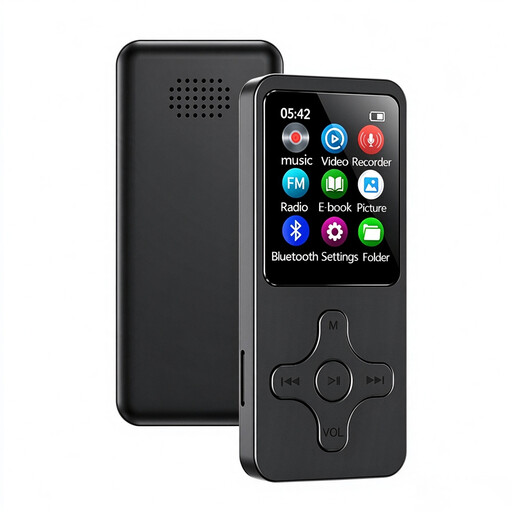
Digital audio player with 1.8-inch display, Bluetooth and voice recording
The product name lists voice recording as a feature of a digital audio player. Check whether the recording function is suitable for the way you want to capture chapters.
View at Joybuy
 No image available
64 GB mini dictaphone with transcription and summary
This mini voice recorder lists 64 GB of storage, transcription and summaries. Check that its features and file handling suit the way you work.
View at Joybuy
 No image available
Rexsun L357 portable digital voice recorder, 128 GB
This recorder is designed for recording and playing back speech, and managing files. The description lists up to 35 hours of continuous recording and A-B repeat.
The product name lists 128 GB of storage and an LCD screen.
View at Joybuy
Frequently asked questions
Is 32-bit float enough to remove noise from neighbours or traffic?
No. A recording format won’t make background noise inaudible by itself. Shure explains that a microphone can’t improve the acoustics of a room, so test the recording location and microphone distance too.
What should you have ready before recording a chapter with a handheld recorder?
Check the requirements for the exact model and make a short recording that you play back straight away. The Zoom H1essential can’t record or play back without a microSD card inserted; for the Tascam DR-40XP, the manual specifies a microSD card and three AA batteries, sold separately.
Are recorders automatically covered by a two-year statutory guarantee in the Netherlands?
No. ACM ConsuWijzer explains that statutory guarantee in the Netherlands doesn’t have a fixed two-year period: what matters is what you can reasonably expect from the product with normal use. If there’s a fault, contact the seller.
Can you publish a recording of a copyright-protected book?
Not without the necessary permission from the copyright holder. The Dutch government distinguishes between a private copy for personal use and distributing or making a work available to the public; owning recording equipment doesn’t give you the right to publish.
Do you need to meet ACX requirements if you’re only recording a sample chapter for yourself?
No. ACX requirements apply to audiobooks you want to submit to that platform, not to a private test recording. If you plan to submit your audiobook, check the current submission and quality requirements for your final files.


