
Creator of long solo explanations
Records one voice in long takes and wants to check in advance that the power supply, storage and controls can handle the session.


For a long explanation, first choose a recorder whose power supply, storage and controls are suited to the entire take. Built-in microphones may be enough for one speaker; external microphone inputs are mainly useful if you want to position a microphone separately or record multiple voices individually. The manufacturer's battery-life figures are not a guarantee for every recording setup.
Records one voice in long takes and wants to check in advance that the power supply, storage and controls can handle the session.
Wants to position an external microphone closer to the speaker or connect separate microphones for a conversation.
Is looking for a compact recorder and wants to be able to find and listen back to recordings while out and about.
First check that the recorder can handle the entire take with the power supply, storage and settings you’ll actually use. Then decide which microphone setup suits your explanation.
| What to consider | What should you check? | Who is this important for? |
|---|---|---|
| Finishing a take | Check the power supply and remaining recording time with your chosen format and recording settings. Test the full setup beforehand. | If I don’t want to record my explanation again, I want to know in advance whether the power supply and storage are suitable for my take. An estimated 39% of consumers prioritise uninterrupted recording. |
| Recording a solo voice | Compare built-in microphones with an external microphone input, and check that the connector and any required power supply are compatible. | I want to record one voice clearly without making the setup unnecessarily complicated, but sometimes the microphone needs to be further from the recorder. An estimated 31% of consumers mainly weigh up a solo-voice setup. |
| Connecting multiple voices | Check the number and type of inputs and whether they’re compatible with the microphones you want to use. | If I’m recording a conversation or demonstration with a second speaker, I want to know whether I can connect separate microphones. This is the main priority for an estimated 15% of consumers. |
| Taking it with you and finding your recordings | See how recordings are saved and retrieved, and check the remaining space for your preferred recording format. | When I record in different locations, I want a recorder that’s easy to carry and lets me find my files afterwards. An estimated 15% of consumers prioritise portability and file management. |
The built-in microphones on the Zoom H1essential and Tascam DR-05XP can provide a simple setup for one speaker. Zoom says the H1essential also has a 3.5 mm input for a lavalier microphone, for example. For two separate XLR/TRS microphones, Zoom lists two inputs on the H4essential. These differences in connections are not an independent measure of sound quality.
Storage capacity alone doesn’t tell you how long you can record in a particular format. Before you start, check the remaining recording time on the device and listen back to a test recording made where you plan to record your explanation. The stated battery life also depends on the settings you use.
Manufacturer figures don’t automatically apply to every setting or use case. A take may be interrupted if the power runs out sooner than expected.
Before an important recording, test the recorder with your own settings for a similar length of time.
Available recording time also depends on the format you choose. So a storage figure alone won’t tell you whether there’s enough space for your take.
Choose your file format in advance and check the remaining recording time on the recorder.
Extra inputs matter if you actually want to connect external microphones; built-in microphones may be enough for a solo recording.
Decide how many voices and microphones you’ll record, then check that the connections are compatible with your equipment.
You’ll also need to include suitable microphones and cables in your setup if you’re using external microphones.
The H1essential is a compact stereo recorder; the H4essential is worth comparing if you need two XLR/TRS inputs.
The DR-05XP is a portable stereo recorder with built-in microphones and an input for an external microphone.
The ICD-UX570 is a compact voice recorder with built-in storage and a calendar search function.
The LS-P5 is a compact recorder with internal and expandable storage and Bluetooth control.
This selection focuses on compact digital voice recorders for spoken recordings; some models also list transcription features in their product information.
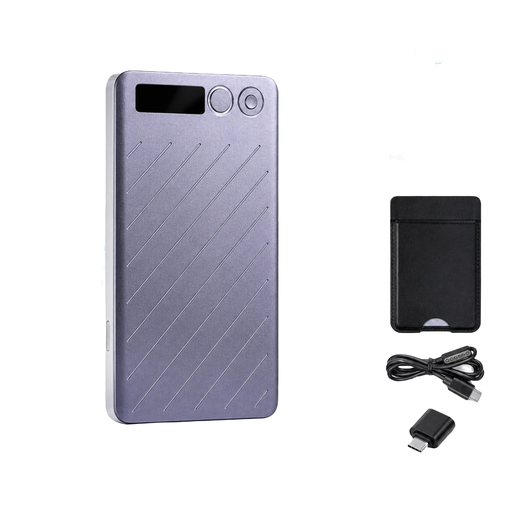 No image available
Could suit you if you want to store spoken recordings and use transcription too.
The product information lists 64 GB of internal storage, up to 480 hours of audio and up to 36 hours of battery life.
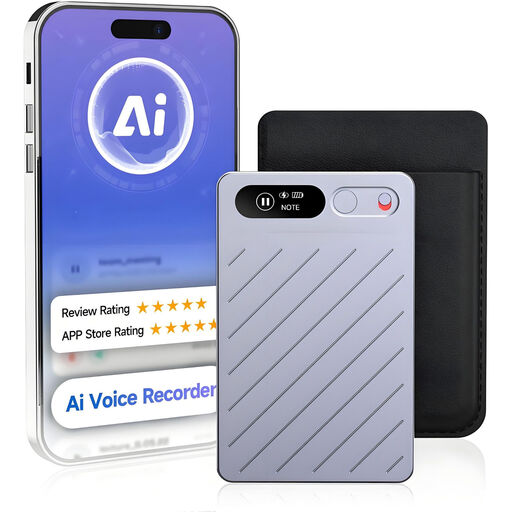 No image available
Could suit you if you’re looking for a compact recorder and want to have your recording transcribed or summarised too.
The product information lists 64 GB of storage, plus transcription and summarisation in 118 languages.
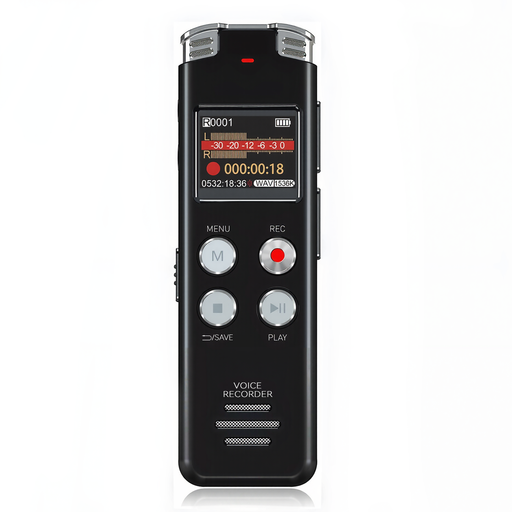 No image available
Could suit you if you want to compare portable recorders for long spoken recordings.
The product information lists up to 22 hours of continuous recording, WAV recording and USB-C.
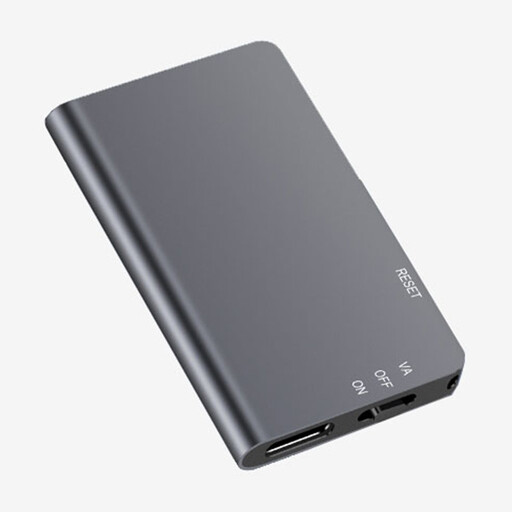 No image available
Could suit you if you’re looking for a portable recorder with one-button operation and commonly used recording formats.
The product information lists up to 35 hours of continuous recording and MP3 and WAV recording.
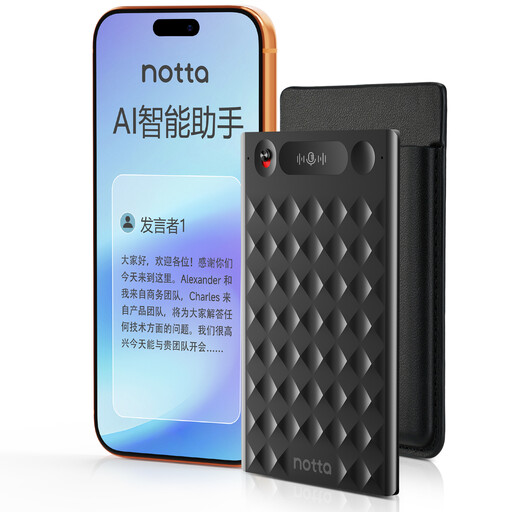 No image available
Could suit you if you want to make a spoken recording and then transcribe, translate or summarise it.
The title lists 32 GB, up to 2,000 hours of audio and up to 30 hours of recording.
Check the remaining recording time in your chosen format, the power supply and the microphone connection. Make a test recording and listen back to it; the stated battery life is no substitute for this check.
Not necessarily: the Zoom H1essential and Tascam DR-05XP have built-in microphones and an input for an external microphone. If you want to connect two separate XLR/TRS microphones, Zoom says the Zoom H4essential has two inputs for this.
According to the Dutch government, online purchases from a business generally come with a 14-day cooling-off period. Check whether the specific purchase falls under the distance-selling rules.
An audio recording in which someone is identifiable may constitute personal data. If the GDPR applies, you need a valid legal basis; consent is one possible basis, but not automatically the only one. The rules that apply depend on the circumstances of the recording and publication.