
Narrator recording in an echoey room
You can hear reflections in test recordings and want to position the microphone separately from the recorder.


When recording audiobook chapters in an untreated room, microphone placement is especially important. A recorder with a separate microphone gives you more flexibility to position the mic closer to your voice, while a handheld recorder with built-in microphones is simpler to get started with. A recorder with 32-bit float recording can give you more leeway when setting levels, but it won’t remove room echo. Make a test recording in the actual recording space and listen back before recording a whole session.
You can hear reflections in test recordings and want to position the microphone separately from the recorder.
You want to record your first chapters without a separate microphone and are happy to spend time testing placement and listening back.
You record several chapters in a row and want to think ahead about headphone monitoring, power, storage and a repeatable workflow.
First, decide whether you want to start without a separate microphone or position the microphone independently of the recorder. Then check how you can listen back to your recording and make sure it meets the requirements of your intended delivery platform.
| Priority | What to look for when buying | Who should pay particular attention? |
|---|---|---|
| Echo and microphone placement | Compare a recording made from your intended speaking position with one where the microphone is closer. If you’re using an external microphone, check that the recorder has the right connection. | If I’m recording in an echoey room, I want to position the microphone to suit my voice; around 36% of consumers make echo and placement their main buying concern. |
| Getting started easily | Check whether the model has built-in microphones, can be positioned securely and has a headphone socket. | I want to record my first chapter quickly without a separate microphone and am happy to test the placement; around 29% of consumers prioritise a simple set-up. |
| Monitoring during long sessions | Check the headphone output, suitable power options and the storage media supported by the exact model. Make a test recording before a long session. | When recording several chapters, I want to listen back and prepare power and storage in advance; around 21% of consumers prioritise monitoring during a session. |
| Files for delivery | Check the requirements set by your publisher or chosen platform, and check the final file for noise and editing errors. | I want to know in advance what requirements my delivery platform has for the file; around 14% of consumers prioritise files that are ready for delivery. |
32-bit float can give you more leeway when setting recording levels, but it won’t prevent reflections in the room. Shure explains how reflected sound can affect speech recordings.
Record a short clip in the actual recording space and compare microphone positions before recording your chapters.
Audible echo may mean extra time spent recording again or editing afterwards.
According to the product specifications, the Zoom H1 XLR does not have a built-in stereo microphone. So a recorder with an XLR input is not the same as a complete handheld set-up for recording without a separate microphone.
Check whether the exact model has built-in microphones and which separate components you’ll need for your chosen set-up.
An external set-up may require a separate microphone, cable and mount.
Zoom warns that reflections from the tabletop can reduce recording clarity when using the H1essential.
Place the recorder securely but away from the tabletop, for example on a stand, and listen back to the result.
Recording and delivering a file that meets a publisher’s or platform’s requirements are two different steps. ACX says its Audio Lab does not detect every issue, including noise floor and editing errors.
Check the requirements of your own delivery platform and listen to the final file for any noticeable errors.
Checking, editing or exporting the file again may take extra time.
Zoom offers both standalone handheld recorders and models with inputs for external microphones.
The DR-05XP is a handheld recorder with built-in microphones; the FR-AV2 is designed for use with a separate microphone.
The LS-P5 is a compact recorder with built-in microphones and internal memory.
The RØDECaster Duo is a fixed recording console for anyone looking for an external microphone and more extensive controls.
These Joybuy products are relevant to portable recorders for speech recording and listening back.
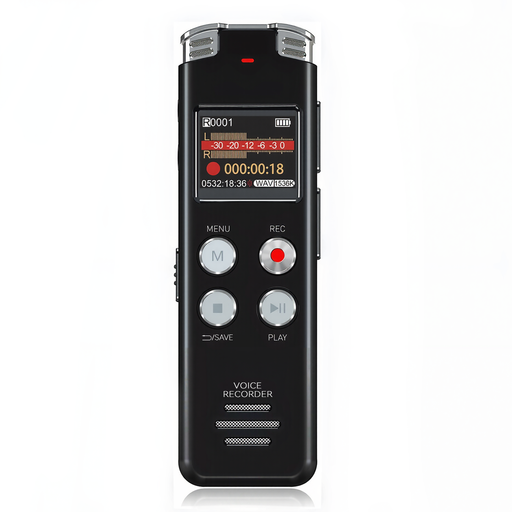 No image available
A portable recorder to consider if you want to record chapters and listen back later.
The product name lists 128 GB of storage.
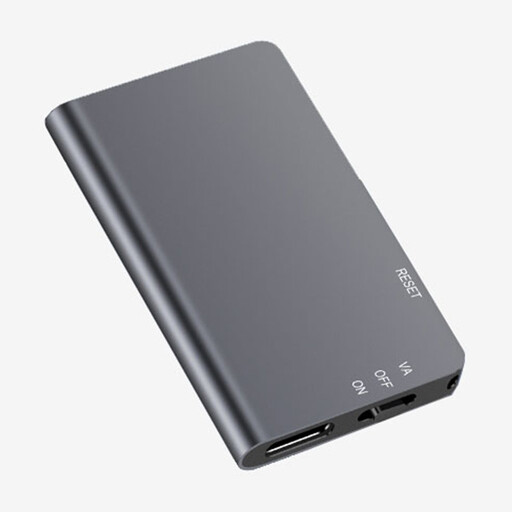 No image available
A portable recorder to consider if you’re looking for a simple recording set-up and want to listen back to your recordings.
The product name lists 64 GB of storage.
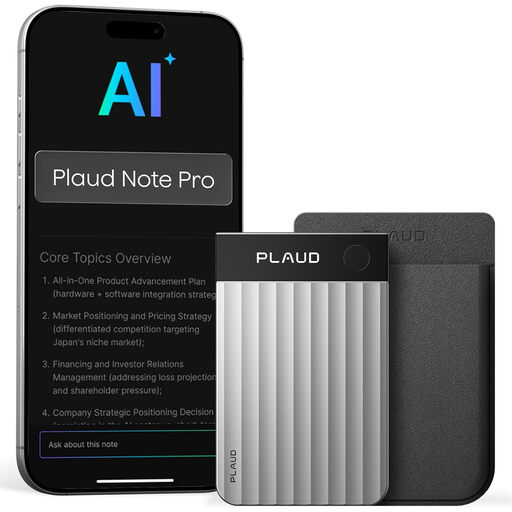 No image available
An option to consider if the AI notes and summaries mentioned in the product name are also useful to you.
The product name lists the Silver colour variant.
No, 32-bit float won’t remove room echo. It can give you more leeway when adjusting recording levels, but suitable microphone placement is still important. Make a test recording and listen back.
It depends on the recorder and how you position it. Zoom warns that reflections from the tabletop can reduce clarity with the H1essential; try placing the device on a stand, for example, and check the result with a test recording.
ACX submission requirements apply only if ACX is your delivery platform. ACX says Audio Lab does not detect every issue, including noise floor and editing errors. If you’re using another publisher or distributor, ask for their specifications.
According to the Government of the Netherlands, you need the creator’s permission to distribute a copyright-protected book. Making a recording does not, by itself, give you permission to make it available to the public; check the rights before publishing.
In the Netherlands, there is a statutory guarantee but no fixed statutory warranty period: the product must meet what you can reasonably expect, and the retailer is your point of contact if there’s a problem. For online purchases from a business, a 14-day cooling-off period applies in many cases; check whether these rules apply to your specific purchase.