Choose a setup that keeps the microphone close to your mouth at a consistent distance, and make a test recording in the actual recording space with the fan on. A lapel microphone is well suited to walking around; for a fixed position, a recorder with an external microphone input gives you more options, while a compact recorder with built-in microphones may be simpler to use. RØDE recommends placing the microphone close to the sound source and away from unwanted noise. 32-bit float recording helps with changing recording levels, but it won’t remove fan noise.
Who is this choice relevant to?
Presenter recording with audible fan noise
You record from a fixed position and want your voice to come through clearly above continuous fan noise. The distance from the microphone and a test recording in the actual space matter more than recording bit depth alone. RØDE recommends placing the microphone close to the sound source.
Tour guide who moves around
You move while recording and want the distance between your mouth and the microphone to stay reasonably consistent. A portable recorder with a lapel microphone may be a good fit; check that it attaches securely and listen for any rustling from clothing or noise from cables. Tascam describes the DR-10L Pro as a combination of a portable recorder and a lapel microphone.
Creator looking for editing flexibility
You want to connect a dedicated voice microphone or carefully edit your recordings later. Check the connections and file formats of the exact model. Zoom lists a 3.5mm input for the H1essential and two XLR/TRS inputs for the H4essential, among other specifications.
What should you look for when buying?
Compact recorder with built-in microphones
A good fit if: you record from a fixed position and can place the recorder close to your voice. The Zoom H1essential has built-in X/Y microphones and a 3.5mm input.
Trade-off: the built-in microphones also pick up ambient noise; 32-bit float recording won’t stop fan noise from being captured.
Recorder with a lapel microphone
A good fit if: you move around and want the microphone to move with you. Tascam describes the DR-10L Pro as a portable recorder with a lapel microphone.
Trade-off: attach the microphone and cable carefully and check for clothing rustle; recording close to your mouth doesn’t guarantee that the fan will be inaudible.
Recorder with XLR inputs
A good fit if: you want to connect a separate microphone while recording from a fixed position. The Zoom H4essential has two XLR/TRS inputs as well as built-in X/Y microphones.
Trade-off: a separate microphone and suitable cables make the setup more involved; the inputs themselves won’t suppress fan noise.
Simple voice recorder
A good fit if: getting started quickly, listening back and transferring files are important to you. Sony lists linear PCM recording, recording monitoring and direct USB transfer among the ICD-UX570’s features.
Trade-off: Sony’s claim that Auto Voice Recording reduces background noise is a manufacturer claim, not proof that it will work against the fan in your room.
| What to consider |
What should you check? |
Who is this important to? |
| Clarity with fan noise |
Check which microphone you can use, where to place it and whether you can monitor the recording as you make a test. |
If I’m recording from a fixed position, I want to know whether my voice will remain clear with the fan on. Around 36% of consumers prioritise clarity when recording with fan noise. |
| Freedom of movement |
Check whether a lapel microphone is included and that the attachment and cable won’t cause unwanted noise. |
If I’m walking around during the tour, I want the microphone to move with me and stay at a reasonably consistent distance from my mouth. Around 29% of consumers prioritise freedom of movement and a consistent microphone distance. |
| Microphone choice and editing |
Check the input type, the microphone power required and whether the recording format suits your editing workflow. |
If I want to choose a separate microphone or edit clips later, I look at the connections and file format. Around 21% of consumers consider expandability and editing their main priorities. |
| Quick recording and playback |
Check the recording indicator, playback function, storage and how to transfer files. |
If I’m recording short sections, I want to be able to start, check and transfer files easily. Around 14% of consumers prioritise simple recording and file transfer. |
Common buying mistakes
-
Confusing 32-bit float with removing fan noise
A recording format doesn’t change where the microphone is in relation to your voice and the fan. 32-bit float recording helps with changing recording levels, but it isn’t acoustic isolation.
Make a test recording in the actual recording space with the fan on, and assess the microphone setup before recording the narration.
If the background noise is still audible, recording again or doing extra post-production may take more time.
-
Placing a built-in microphone too far from the presenter
If you have to turn up the gain to record a voice from a distance, background noise may also become more noticeable.
Compare a recorder or suitable external microphone placed close to your mouth with the setup you actually intend to use.
-
Comparing the recorder alone
A separate microphone, cable or other accessories may be needed for one setup but not another.
For each exact model, check what’s included, which connections you need, and whether the storage and editing workflow suit your needs.
A separate microphone or cable may mean extra expense and setup time.
Relevant brands to consider
Zoom
The H1essential is a compact recorder with built-in X/Y microphones and a 3.5mm input for a lapel microphone. The H4essential also has two XLR/TRS inputs. Zoom lists 32-bit float recording for both models.
- The connections give you different options for using a built-in or separate microphone.
- 32-bit float recording isn’t a measure of fan-noise suppression; your microphone choice and placement still matter.
Tascam
The DR-10L Pro combines a portable recorder with a lapel microphone. The DR-05XP is a handheld recorder with built-in omnidirectional microphones and an input for a compatible external microphone. Tascam lists 32-bit float recording for both models.
- The models offer different setups, with either a wearable microphone or built-in microphones.
- The listed recording features don’t prove that fan noise will disappear in your room.
Sony
The ICD-UX570 series is designed for compact voice recording and, according to Sony, offers built-in storage, linear PCM and MP3 recording, and direct USB transfer.
- Recording monitoring and USB transfer may suit short sections that you’ll put together later.
- Sony says Auto Voice Recording reduces background noise; treat this as a manufacturer claim and test your recording with the fan on.
Philips
The VoiceTracer DVT4115 offers built-in memory, PCM and MP3 recording, and control via a smartphone app.
- The listed microphones and app may suit straightforward recording and file management.
- Philips’ statements about recording quality are manufacturer claims; check the microphone placement and make a test recording with the fan on.
Joybuy product picks
These Joybuy product picks are aimed at spoken recordings and editing or transferring your recordings. Test your chosen setup where you’ll record the narration for your virtual tour.
 Image unavailable
DJI Mic Mini 2S (2 TX + 1 RX + Charging Case)
The described clip or magnetic attachment may suit a presenter who moves around; test the recording with the fan on.
The product name lists 2 TX, 1 RX and a Charging Case.
View on Joybuy
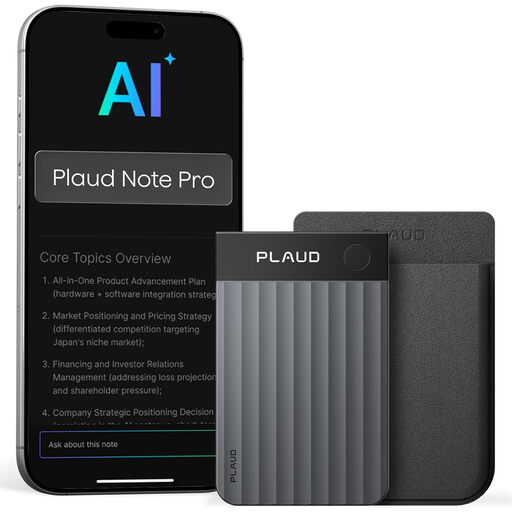 Image unavailable
Plaud Note Pro AI Voice Recorder (Black)
The product name describes this model as a voice recorder for notes and summaries; check whether the features listed suit the way you process your narration.
The variant listed in the product name is Black.
View on Joybuy
 Image unavailable
64 GB digital voice recorder with transcription function
The product name mentions voice recording and transcription; check whether the features suit the way you want to process spoken sections.
The product name lists 64 GB and a transcription function.
View on Joybuy
 Image unavailable
AI Dictation Device 64 GB Mini Voice Recorder
The product name mentions voice recording, transcription and summarisation; check whether these features fit the way you work after recording.
The product name lists 64 GB, with transcription and summarisation in 118 languages.
View on Joybuy
 Image unavailable
Rexsun 128GB Portable Digital Voice Recorder (L357)
The product name describes a portable digital voice recorder; check that the connection and file transfer options suit your workflow.
The product name lists 128GB and model number L357.
View on Joybuy
Frequently asked questions
Does 32-bit float recording help with fan noise?
Not on its own. Manufacturers describe 32-bit float as helping with recording levels and dynamic range, not as removing ambient noise. Place the microphone suitably close to your voice and listen to a test recording with the fan on.
How can I check the setup before recording the whole tour?
Record a short section in the intended recording position with the fan on. Listen for fan noise and plosives, and if you’re wearing a microphone, check for rustling from clothing or noise from the cable. Adjust the positioning and test again.
What should I look for when it comes to storage and file transfer?
Check which type of memory the exact model uses, which recording formats your editing software accepts and how to transfer files. Sony lists built-in memory and direct USB transfer for the ICD-UX570; Philips lists built-in memory and a microSD slot for the DVT4115.
What warranty applies when buying a recorder in the Netherlands?
When you buy as a consumer, you’re entitled to a product that meets reasonable expectations. According to the Dutch government, the Netherlands has no fixed statutory warranty period; if a product is faulty, the seller must provide a solution. Any additional manufacturer’s or seller’s warranty doesn’t replace your statutory rights.
Can I use recognisable voices of other people in a virtual tour?
A sound recording in which someone is recognisable may contain personal data. According to the Dutch Data Protection Authority, collecting and using it requires a valid legal basis under the GDPR; consent is one possible basis, but it isn’t automatically the only one. The assessment depends on who you record and how you use the tour.


