
Solo sports reporter
Wants to get started quickly and play back and edit an expressive voice recording.


If you mainly record your own voice, choose a recorder that’s quick to operate and lets you play back a test recording. 32-bit float recording can give you more scope to adjust levels afterwards when your voice varies in volume. If you also want to record interviews or ambient sound separately, check which inputs and tracks you need. When recording on location, microphone placement and wind protection remain important.
Wants to get started quickly and play back and edit an expressive voice recording.
Wants to check that their voice remains clear among the crowd, other sounds and wind.
Wants to record other voices or ambient sound as well as their own commentary, and may therefore need separate microphone inputs or tracks.
Zoom and Tascam list 32-bit float recording for the models mentioned. This can give you more scope to adjust varying levels afterwards, but it doesn’t guarantee a clear recording.
| What to consider | What should you check? | Who should pay particular attention? |
|---|---|---|
| Varying voice volume | Check the recording format and playback options; make a test recording with both quiet sentences and shouts. | If I speak quietly and then shout, I want to be able to judge how the recording sounds afterwards. Around 36% of consumers give varying voice volume top priority. |
| Clarity when recording on location | Check that you can connect the microphone you want to use and that the wind protection fits the exact model. | When I record pitchside, I want to check that my voice comes through clearly among the crowd and wind. Around 29% of consumers prioritise clarity when recording on location. |
| Interviews and separate sound sources | Decide how many sound sources you want to record separately at the same time, then check the inputs, tracks and microphones you’ll need. | If I want to record interviews alongside my commentary, I may need separate inputs or tracks. Around 21% of consumers make this their main consideration. |
| Portability and recording time | Check the power supply, storage and stated operating time with the settings you plan to use. | For a long day of recording, I want to know whether the power supply and storage will suit my plans. Around 14% of consumers prioritise portability and recording time. |
Having more scope to adjust recording levels afterwards is no substitute for positioning the microphone so your voice remains clear among other sounds.
Make a test recording on location and assess your voice, the crowd and the wind separately.
Some set-ups may still need a suitable external microphone or wind protection.
Adjustable built-in stereo microphones and separate inputs or tracks meet different recording needs.
Decide in advance how many voices and sound sources you want to keep separate at the same time.
A multi-source set-up may require extra microphones.
The stated operating time for the LS-P5 is a manufacturer’s figure and won’t necessarily apply with every setting. The H1essential manual describes using microSD cards and batteries.
Test the recorder in advance with your chosen settings, and make a full test recording before an important event.
Spare power and storage media may take up extra space in your kit.
The H1essential is a compact option for one reporter, while the H4essential has four tracks and two XLR/TRS inputs for a more advanced set-up.
The DR-05XP has built-in stereo microphones, while the DR-07XP lets you choose between an A-B and X-Y configuration.
The LS-P5 has built-in memory. A dedicated wind protection kit is also available for this model.
This Joybuy selection includes digital voice recorders and a wireless microphone set. Check that the recording method and microphone set-up suit the way you want to capture your sports report.
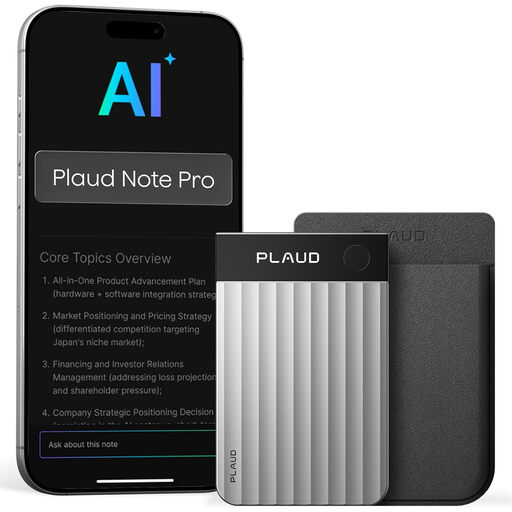 No image available
Could suit anyone considering a voice recorder with AI notes and summaries. Check that this approach works for your reporting needs.
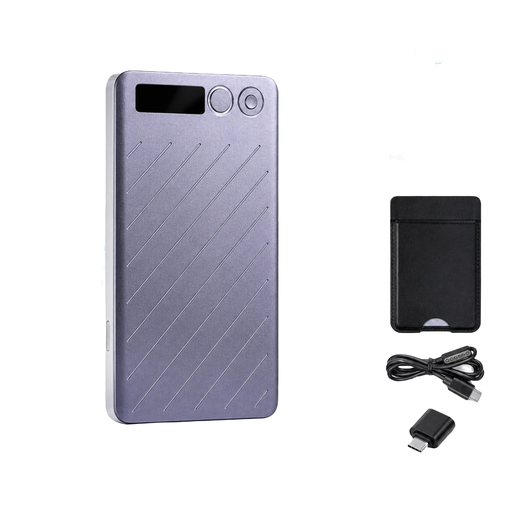 No image available
A digital recorder with 64 GB and a listed transcription function. Check that the recording and processing steps suit your reporting workflow.
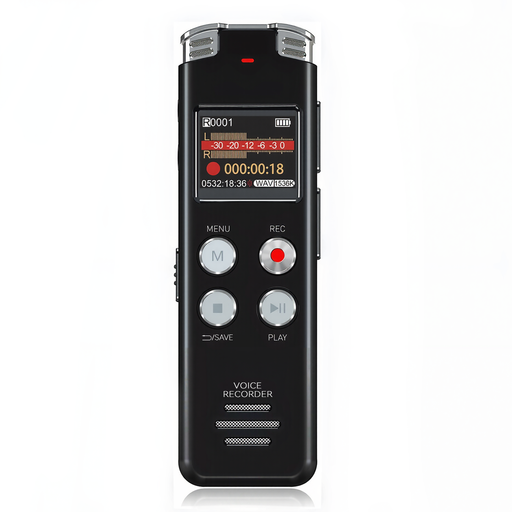 No image available
The product name lists 128 GB. Make a test recording to see whether the recorder suits the voice recording you want to do on location.
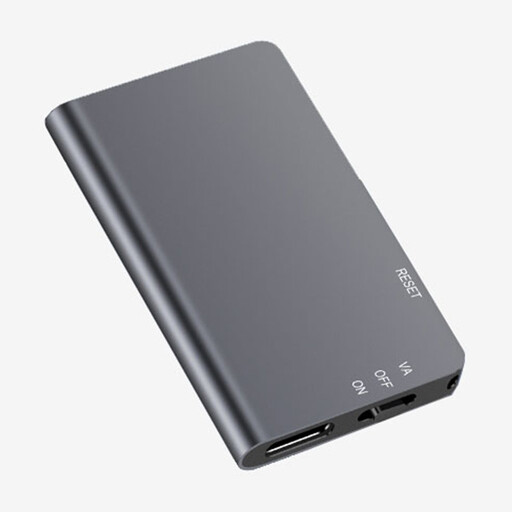 No image available
The product name describes a 64 GB recorder with one-touch recording. Check that the controls and playback suit the way you work.
 No image available
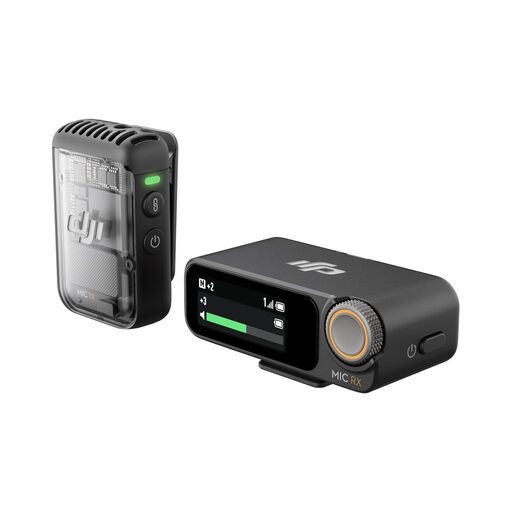
The product name lists internal 32-bit float recording; this version includes one transmitter and one receiver. Check that the set suits the microphone configuration you need.
No, the recording format alone isn’t enough. Zoom and Tascam say that 32-bit float recording can give you more scope to adjust varying levels afterwards, but microphone choice and placement still matter. Listen back to a test recording that includes both a quiet sentence and a shout.
Test the recorder from the distance you plan to speak from, then listen back to the recording. Check the power supply and storage too; if it’s windy, only use a windscreen that fits the exact model. OM System, for example, lists a dedicated wind protection kit for the LS-P5.
Not necessarily. When you buy as a consumer in the Netherlands, you’re entitled to a product that conforms to the agreement; according to the Dutch government, there is no fixed statutory warranty period. An extended warranty is mainly worth considering if its terms offer something beyond your existing rights.
That depends on the specific circumstances, the purpose of publication and the people involved. The Dutch Data Protection Authority describes a lawful basis for processing as a starting point and treats journalistic use separately. Before recording and publishing, consider which rules apply to your situation; consent isn’t the only possible lawful basis in every case.