
Creator of short spoken cards
You want to record individual sentences, find them easily and play them back. Features for splitting or repeating files may therefore be useful.


For short spoken flashcards, a voice recorder with handy features for replaying and transferring clips is a sensible place to start. Always make a test recording where you plan to speak: the features listed by the manufacturer don’t guarantee that voices will be clear in a community centre. A more advanced handheld recorder may offer extra recording options or an input for an external microphone, but it could require more preparation, such as checking storage and power.
You want to record individual sentences, find them easily and play them back. Features for splitting or repeating files may therefore be useful.
Your main priority is checking whether the voice is clear in the actual recording location. It may be worth trying a different microphone position or an external microphone.
You want to transfer recordings to a computer or phone, and know in advance which recording formats and connections your chosen model supports.
Good for: recording short cards on your own, then playing them back quickly or transferring them via USB.
Bear in mind: make a test recording. Playback or voice-setting features don’t guarantee that the recording will exclude noise from the hall.
Good for: anyone who values controlling or transferring recordings via a phone.
Bear in mind: check that the app and any cloud-based workflow suit your needs. Transcription isn’t necessary for making audio flashcards.
Good for: anyone looking for more recording options or an input for an external microphone.
Bear in mind: check storage, power and the microphone you’ll need in advance. Extra recording options won’t automatically eliminate echo.
When recording spoken flashcards in a community centre, making sure the voice is clear at the recording location is an important practical consideration. Also choose a workflow that makes it easy to find, replay and transfer your clips.
| Consideration | What to look for when buying | Who is this important for? |
|---|---|---|
| Clarity | Make a test recording in the intended location and check the microphone position. If using an external microphone, check that the connection is compatible. | If I’m speaking in the hall, I want to be able to hear my words clearly in the recording; around 33% of consumers put clarity first. |
| Finding clips | Check whether the exact model lets you split, search or repeat files. | If you want to find individual cards quickly and play them back, look for clip management features; around 27% of consumers make this their top priority. |
| Transferring files | Compare the connection, recording formats and transfer method with the computer, phone and flashcard workflow you use. | If I want to use recordings in my digital flashcards, the transfer method needs to work with my devices; around 20% of consumers put file transfer first. |
| Ready-to-use recording | Check what’s included with the exact model and test the storage and power before the session. | If you want to avoid an interrupted recording, check the storage and power requirements in advance; around 20% of consumers put this at the top of their list. |
For the OM SYSTEM WS-883, the manufacturer describes noise reduction during playback. That alone doesn’t mean that noise from the hall is removed from the recording file.
Check which stage a feature applies to, and make a test recording from the distance you’ll actually be speaking at.
The Zoom H1essential manual explains how to insert and format a microSD card. Other models mentioned have built-in memory, so the process varies by model.
Check exactly what’s included and prepare the required card and power supply before the session.
Philips describes audio recording and sharing separately from transcription using Sembly cloud software.
Choose an app or cloud-based option only if it adds something to your flashcard workflow, and check its terms separately.
The ICD-UX570 is a compact voice recorder for recording, playback and transferring files on the device.
The WS-883 is designed for straightforward recording and playback, including for language learning.
According to Philips, the VoiceTracer DVT4115 combines built-in memory with options for controlling or transferring recordings via a phone.
The H1essential is a handheld recorder for anyone who values recording options and an input for an external microphone.
The DR-05XP is a handheld alternative for anyone who also wants to use an external microphone or connect to a computer.
These product choices are aimed at recording spoken content and, depending on the model, managing or processing recordings.
 No image available
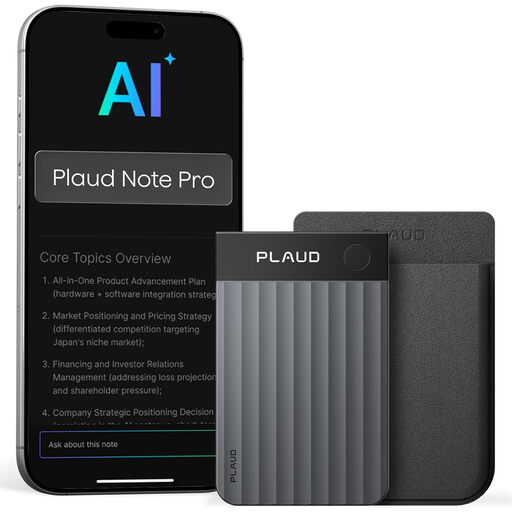
The product title positions this model as a device for recording speech and creating notes and summaries.
 No image available
The product title mentions 64 GB and transcription and summaries in 118 languages. Check whether these features suit your audio flashcard workflow.
 No image available
This model is listed with 128GB of storage; the product title also mentions an LCD screen.
 No image available
The product title lists 64GB of storage and one-touch operation. Before use, check which transfer and playback options are available with the version you choose.
 No image available
The product title lists 32GB of storage, plus transcription and summary features. File management and cloud syncing are handled through the Notta app; check whether this suits your workflow.
Record a few cards in the intended location and play them back to check that every word is clear. Try moving the microphone if necessary; voice-setting or noise-reduction features don’t guarantee a good result in your hall.
No, it varies by model. The Sony ICD-UX570, OM SYSTEM WS-883 and Philips DVT4115 have built-in memory. The Zoom H1essential manual explains how to insert and format a microSD card; check what’s included when you buy.
No, not to record and use audio files. Philips describes transcription using separate Sembly cloud software; consider that option only if you also want transcripts.
Before recording or sharing, consider who is creating and using the files, and whether identifiable personal data is being processed. The Dutch Data Protection Authority explains that, where the GDPR applies, a lawful basis for processing is required; consent is one possible basis, but not automatically the only one. Don’t assume that a personal recording is subject to the same rules as recordings made or shared by an organisation.
Transfer any useful files and make a backup before deleting recordings or resetting the recorder. The Philips manual warns that a factory reset deletes files and recommends making a backup first.