
Presenter recording solo in a reverberant room
You mainly want clear speech and can place the recorder or a suitable microphone close to your voice.


If you’re recording one voice and can place the recorder close to the speaker, a compact recorder with instant playback is a sensible first choice. If you want to record speakers separately or place a microphone closer to one speaker, check how many compatible inputs the recorder has. Extra tracks and 32-bit float recording won’t, by themselves, eliminate room reverberation.
You mainly want clear speech and can place the recorder or a suitable microphone close to your voice.
You may want to record the voices separately and need compatible microphone inputs and tracks to do so.
You want to record without a complicated setup, listen back straight away and find your takes later when editing.
A good fit if: you record one speaker and short takes, and want to save and find files on the device. Sony lists 4 GB of built-in storage and calendar search for the ICD-UX570 series.
Bear in mind: built-in storage won’t reduce reverberation; the distance between the microphone and speaker still matters.
A good fit if: you want to record on your own and need a built-in microphone and headphone monitoring. Zoom lists these features for the H1essential; Tascam lists built-in microphones for the DR-05XP.
Bear in mind: where you position the handheld recorder still affects speech clarity in a reverberant room.
A good fit if: you want to connect two compatible external microphones and record them separately. Zoom and Tascam each specify two XLR/TRS inputs for the H4essential and DR-40XP respectively.
Bear in mind: you’ll need compatible microphones and cables. Also check that the connections and any required power supply are suitable for those microphones.
In a reverberant room, a microphone can’t automatically separate direct speech from reflections. Shure therefore emphasises the importance of microphone distance and placement.
| What to consider | What to look for | Who it matters to |
|---|---|---|
| Clear speech | Can you place the microphone close to the speaker and check a test recording through headphones? | When I record a bulletin in a reverberant room, I want to place the microphone close to my voice and check that the words still sound clear. Around 36% of consumers say speech clarity is their main reason for buying. |
| Separate voices | How many voices do you want to record separately, and are the plug, input and any phantom power compatible with the microphones? | If I’m recording a bulletin with a second speaker, I want to be able to record their voices separately. This is a top priority for around 29% of consumers. |
| Quick recording and playback | Can you record without a computer and listen back straight away? Are storage and power ready for the session? | For short takes, I want to spend as little time as possible setting up and check my recording straight away. Around 21% of consumers say quick recording and playback matter most to them. |
| Files for editing | Which file format does the recipient need, and can you transfer files using the equipment you have? | If I’m handing a bulletin over to an editor, I want to know in advance which file format and transfer method they need. File delivery is the main priority for around 14% of consumers. |
The recording format won’t remove reflections in a room. Shure explains that a microphone can’t automatically separate wanted speech from unwanted reverberation.
First decide where to position the speaker and microphone, then make a short test recording there.
Two XLR/TRS inputs are only useful for recording separate voices if you connect compatible microphones.
Before buying, check each microphone’s plug and power requirements. Bear in mind that microphones and cables may be part of a more extensive setup.
For a session with short takes, you’ll need to know in advance how your chosen model is powered and where recordings are stored.
Check the storage and power options for the model you’re considering, and test the recorder before your session.
Zoom offers compact handheld recorders for simple recordings, as well as models with extra connections for a more extensive microphone setup.
Tascam offers handheld recorders with built-in microphones, as well as a model with connections for external microphones.
The ICD-UX570 series is a compact voice recorder worth comparing if you’re looking for built-in storage and features that help you find recordings.
The VoiceTracer DVT4115 is worth comparing if built-in storage, expandable storage and a choice of file formats suit the way you work.
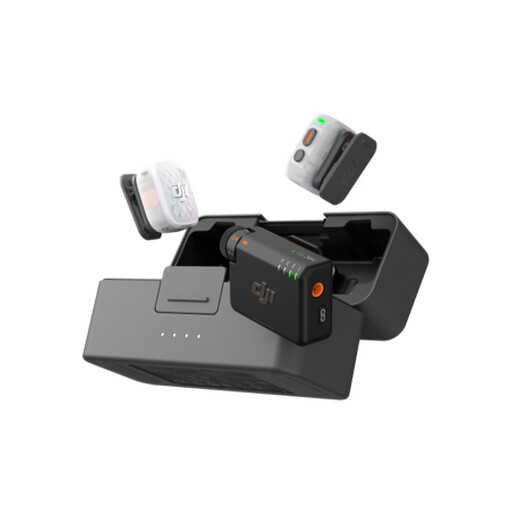
This selection includes products for voice recording, including a microphone set and digital voice recorders. Check each model to see whether it records independently or needs a separate recording device.
 No image available
The product description mentions audio recording with transcription and a compact design for interviews and creative use.
It also lists 32 GB of built-in storage and features for transcription and summaries.
 No image available
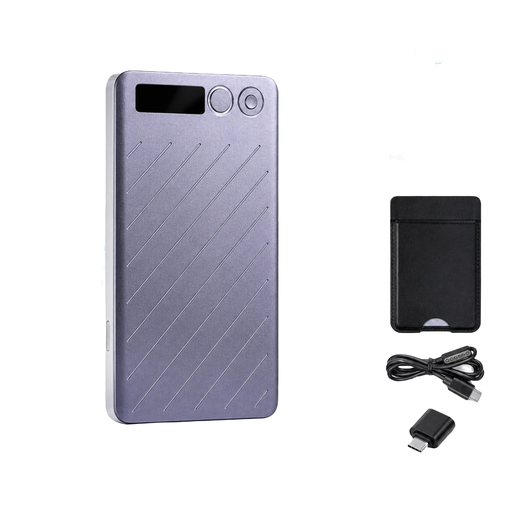
The product description lists meetings and interviews as suitable uses for this voice recorder.
It mentions 64 GB of built-in storage, transcription and automatic summaries. Check that the features and file transfer options suit the way you edit.
 No image available
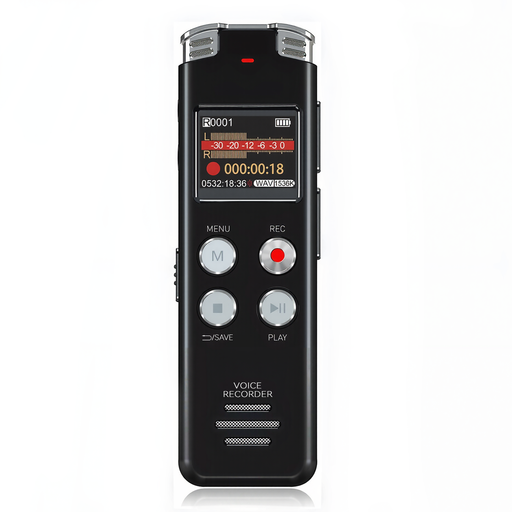
The product description mentions one-button operation and playback, making it easy to start and check short recordings quickly.
It lists MP3 and WAV recording, timestamped files, A-B repeat and file transfer via USB-C.
 No image available
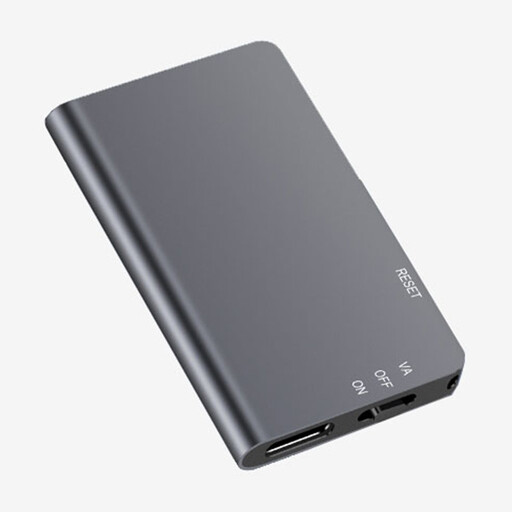
The product description mentions one-button recording and playback through the supplied headphones.
It also lists WAV recording, voice activation and file transfer via USB-C.
 No image available
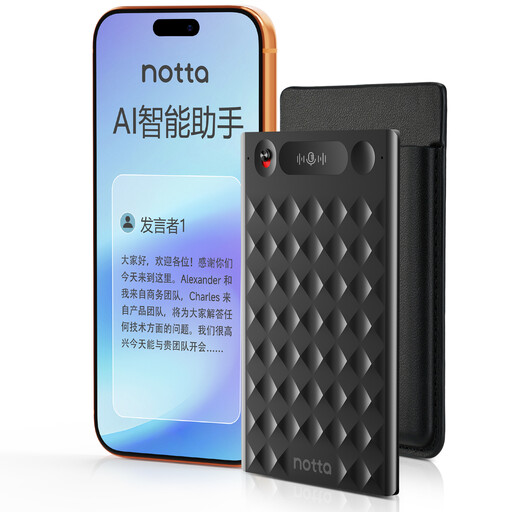
The product description mentions interviews and a portable design. This recorder is aimed at people who also want to turn recordings into text.
It lists 32 GB of built-in storage, real-time transcription and summaries.
No. 32-bit float is a recording format, not a way to prevent reflections between the voice and microphone. Place the microphone closer to the speaker and listen to a test recording.
Check storage, power and headphone output, then make a short test recording where the speaker will actually be standing. Zoom recommends testing a new or previously used microSD card with the H1essential and notes that placing it directly on a table can reduce clarity.
Not necessarily: according to ACM ConsuWijzer, statutory warranty rights apply alongside a retailer’s or manufacturer’s warranty. If a product breaks sooner than you could reasonably expect under normal use, the retailer is responsible for offering an appropriate solution.
Not automatically; it depends on the purpose and the specific publication. The Dutch Data Protection Authority distinguishes between ordinary use of personal data and journalistic use, with the journalistic exemption depending on the circumstances. Check the relevant privacy rules before publishing; buying a recorder doesn’t give you the right to publish.