
Speaker in an echoey room
You want to record your voice clearly, so you’re focusing on the distance between your mouth and the microphone. Shure explains how microphone placement affects the balance between direct voice sound and reflected sound.


If you’ll be recording the script from one spot, prioritise a microphone you can place close to your voice. A higher recording resolution won’t fix echo caused by poor microphone placement. For repeated takes, easy playback matters. If you’ll be speaking as you walk around, make sure you have a suitable external microphone and check the connections, storage and power supply.
You want to record your voice clearly, so you’re focusing on the distance between your mouth and the microphone. Shure explains how microphone placement affects the balance between direct voice sound and reflected sound.
You practise passages repeatedly and want to find and listen back to clips easily. Sony’s Dutch specifications for the ICD-UX570 list A-B repeat and adjustable playback speed.
You practise the route as you speak and want to check that the microphone placement and connection work for the way you move. Shure, Zoom and Tascam explain points to consider when positioning microphones and using external microphones.
First, decide whether you’ll be speaking from one spot or walking around while recording. Then make a short test recording and check that it’s easy to play back and save.
| What to consider | What to check before buying | Who is this important for? |
|---|---|---|
| Clear speech | Try the microphone in your intended speaking position and compare it with a position closer to your mouth. | If the rehearsal room is echoey, I mainly want my script to be easy to understand. Around 33% of consumers give clarity the highest priority. |
| Listening back to takes | Check how to find clips and whether you can repeat them or play them back at an adjusted speed. | When I’m practising sentences and transitions, I want to be able to replay short passages easily. Around 27% of consumers give listening back to takes the highest priority. |
| Moving while recording | Check that an external microphone is compatible with the recorder’s input and power supply, and test the entire route. | If I want to record while walking, I need to be able to position the microphone appropriately as I move. Around 20% of consumers give freedom of movement the highest priority. |
| Saving recordings | Check which storage medium the exact model uses and how to transfer files. | If I want to save and transfer takes, I want to know in advance what storage and process I’ll need. Around 20% of consumers give file management the highest priority. |
A microphone can’t separate reflected sound from direct speech after the fact. So a higher recording resolution won’t make up for being too far from the microphone.
First, test your speaking position and the distance to the microphone with a short recording. Then compare recording formats.
When you walk around, the distance between your voice and a stationary recorder changes.
Check that the recorder supports the microphone you plan to use, and test the full route before recording your script.
Recording while walking may also require a suitable external microphone and connection accessories.
Storage and playback features vary by model. This can affect how you find and listen to your takes.
Check the storage medium for the exact model, and try finding and playing back a take in advance.
If you’re using a memory card, you’ll need to prepare it beforehand.
The H1essential is a handheld option with built-in microphones and an input for an external microphone.
The ICD-UX570 could be worth considering if you want to listen back to passages directly on the recorder.
The DR-05XP is a handheld option to compare if you’re weighing up built-in microphones, an external input and use as a computer interface.
The LS-P5 is worth considering if internal storage, expandable storage and adjustable microphone direction matter to you.
The DVT6115 is worth a look if you’re comparing recording scenes with smartphone control.
These Joybuy products are portable recorders and recording devices to compare for recording and listening back to a script.
 No image available
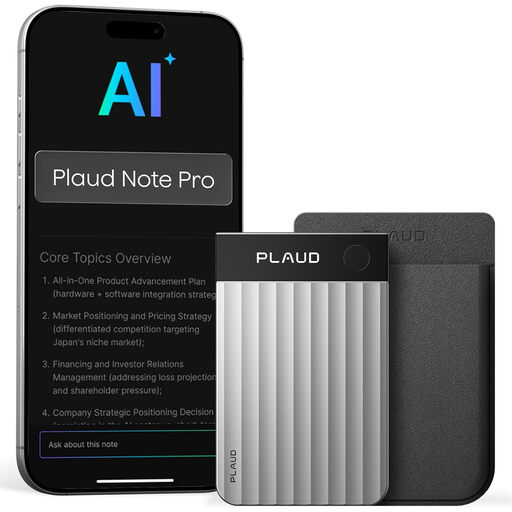
An option to consider if you want to record a script and use the AI notes and summaries listed.
The product name mentions AI notes and summaries.
 No image available
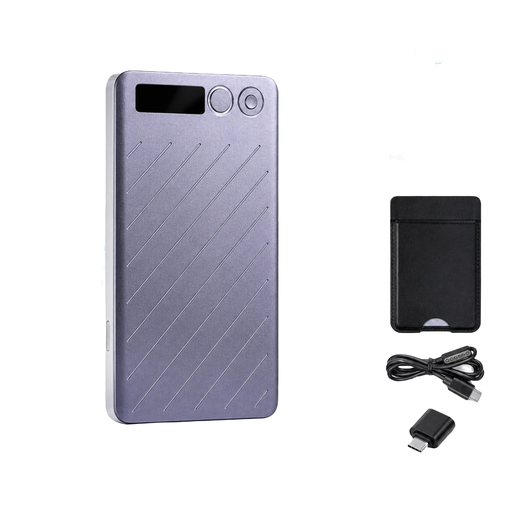
An option if you want to look at the transcription function listed as well as recording speech.
The product name specifies 64 GB and a transcription function.
 No image available
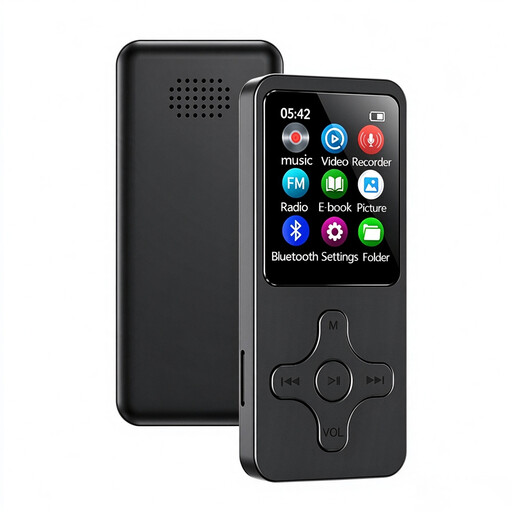
A combination of an audio player and voice recorder to consider if you’re looking for both features in one device.
The product name mentions a 1.8-inch display, Bluetooth and voice recording.
 No image available
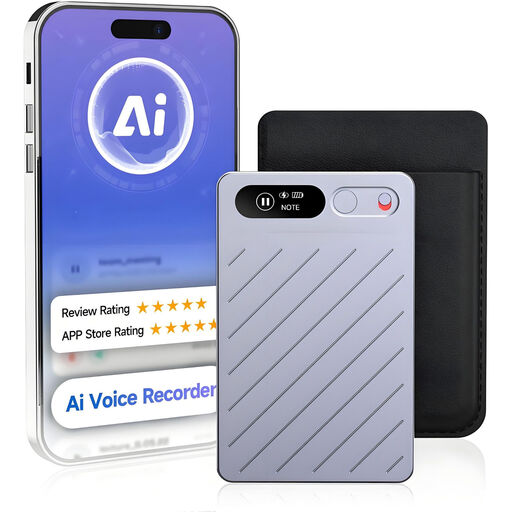
An option to compare if you’re looking for a recording device with the transcription and summary features listed.
The product name specifies 64 GB and transcription and summaries in 118 languages.
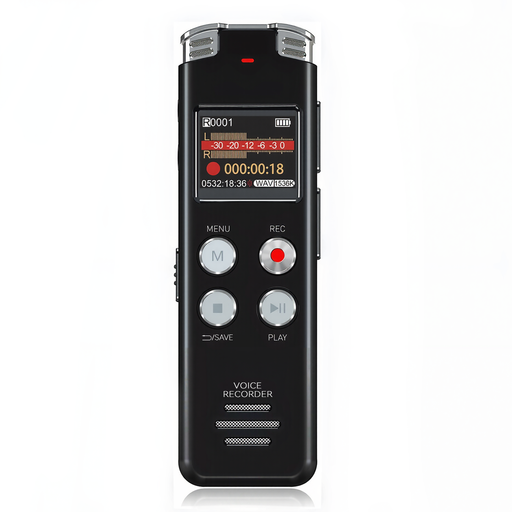 No image available
A portable voice recorder to compare if you want to save recordings of your spoken script and listen back to them later.
The product name specifies 128 GB.
No. 32-bit float won’t remove echo that the microphone has already picked up. Position the microphone closer to the speaker and compare recordings from the spot where you plan to record your script.
Check the storage and power supply for the exact model, then make a short test recording and listen back to it straight away. The Zoom manual covers inserting and formatting microSD cards; according to their specifications, the Sony ICD-UX570 and OM SYSTEM LS-P5 have internal memory.
According to the Dutch government, the seller must offer a solution if a product is faulty. The Netherlands does not have a fixed statutory guarantee period for all products; what you can reasonably expect depends, among other things, on the product and how it is used.
For many purchases made remotely from a business, you have a 14-day cooling-off period, according to the Dutch government. Check whether the rules apply to your purchase; not every online transaction is covered by the same terms.
If an organisation records identifiable people or publishes their personal data, it must assess the applicable GDPR legal basis and purpose of use. The Dutch Data Protection Authority lists consent as one possible legal basis and states that consent is needed in most cases to publish other people’s personal data online. A recording of your own voice alone is not necessarily the same situation.