
Solo diarist
You mainly record your memories and want to be able to understand and find your voice recordings easily later. A convenient microphone position and straightforward controls matter more to you than having multiple recording channels.


If you mainly want to record spoken diary entries, choose a recorder you can position close to your voice, with storage and power to suit the way you work. If you also want to capture the atmosphere or music in the room, compare stereo recorders. For separate external microphones, suitable inputs matter more than simply having a higher bit depth. None of these features will automatically remove echo caused by poor microphone placement.
You mainly record your memories and want to be able to understand and find your voice recordings easily later. A convenient microphone position and straightforward controls matter more to you than having multiple recording channels.
You want to capture music or the sound of the rehearsal room alongside your thoughts. That’s why you’re comparing stereo recording and recording formats.
You want to record a voice and a second sound source separately. To do that, the recorder and microphones need compatible connections.
Choose this option: if you mainly want to record, find and listen back to spoken entries.
Bear in mind: a built-in microphone used at a distance won’t remove echo; also check the features of the exact version you’re considering.
Choose this option: if the sound of the room or music, as well as your voice, is part of your diary.
Bear in mind: the recording may capture more of the room’s sound, too. Check what storage and power you’ll need, and whether you need an external microphone.
Choose this option: if you want to connect compatible external microphones for separate sound sources.
Bear in mind: extra inputs also mean more equipment and preparation; the number of tracks isn’t the same as the number of inputs.
| What to consider | What to look for when buying | Who is this important for? |
|---|---|---|
| How clearly your voice can be heard | Check whether you can position the microphone close to yourself or use a suitable external microphone. Make a test recording where you plan to use it. | If I record my diary in an echoey room, I want to be able to understand my words clearly later. Around 36% of consumers prioritise clear speech above all else. |
| Atmosphere and music | Compare the built-in microphone setup and recording formats of the exact model. | If I also want to capture music or the sound of the room, I look for stereo and the file options I need. Around 29% of consumers put capturing atmosphere first. |
| Record and listen back straight away | Check the internal memory or required memory card, power, file navigation and what’s included with the offer. | If I want to record and find a clip quickly while I’m out, ease of use and storage matter to me. Around 21% of consumers prioritise recording and listening back straight away. |
| Separate sound sources | Count the external microphones you want to use at the same time, then check the connections and power required. Compare the number of physical inputs with the number of tracks. | If I want to record my voice and another source separately, I check that the inputs are compatible with my microphones. Around 14% of consumers prioritise separate sound sources above all else. |
This recording format doesn’t change how much reflected sound a poorly positioned microphone picks up.
First, find a practical microphone position, then decide which recording features you need.
The Zoom H4essential has four recording tracks and two external XLR/TRS inputs. These numbers don’t mean the same thing.
Count the sources you want to connect and record separately at the same time, then check the inputs on the exact model.
A setup with external sources may also require compatible microphones and cables.
The recording time Philips quotes for the DVT4115 depends on the selected format and settings; it doesn’t necessarily tell you how much space uncompressed recordings will use.
Compare storage and recording time using the same format and settings.
The ICD-UX570 is a voice recorder worth comparing if spoken entries and being able to find them again are your priorities.
The H1essential and H4essential are different options: the first has built-in X/Y microphones, while the second is designed for those who also need external inputs.
The DR-05XP is a handheld stereo recorder worth comparing if you’re weighing up built-in microphones against the option of using an external microphone.
The DVT4115 is an option worth comparing if internal memory, a rechargeable battery, and MP3 and PCM recording matter to you.
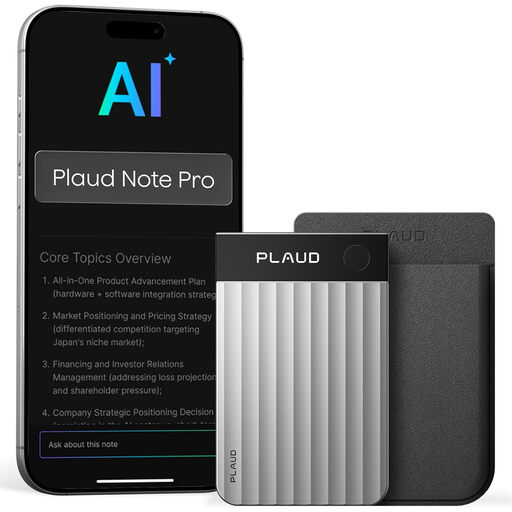
The Joybuy picks below focus on compact voice recorders for spoken entries. Check the storage, file features and any transcription options for each model.
 No image available
A compact voice recorder for anyone who wants to record spoken entries and process them later.
The product description lists 32 GB of storage, transcription and summaries.
 No image available
An option to consider if you want to record spoken entries and transcription matters to you.
The product description lists 64 GB of storage, a transcription service, a portable design and app control.
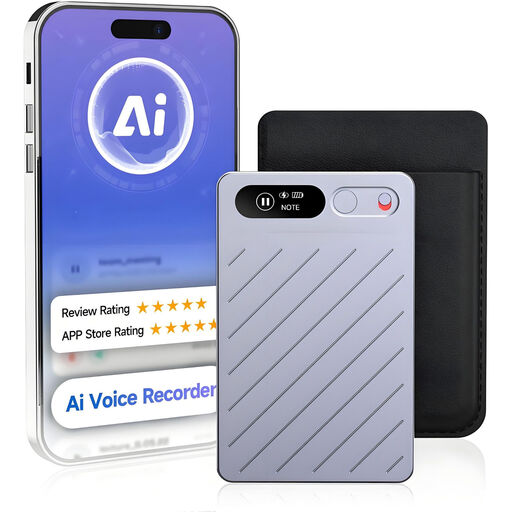 No image available
A compact voice recorder to compare if you also want to have recordings transcribed and summarised.
The product title lists 64 GB; the product description mentions transcription and summaries.
 No image available
An option for anyone who wants to start and play recordings easily, and save them in different file formats.
The product title lists 128 GB; the product description mentions MP3 and WAV support, and timestamped file management.
 No image available
A compact option to compare if you want to start and manage recordings while you’re out and about.
The product title lists 64 GB; the product description mentions WAV recording, USB-C, voice-activated recording, a rechargeable battery and a weight of 18 g.
If you mainly want to listen back to your spoken diary, compare voice recorders for ease of use, file navigation and storage. If the sound of the room or music is part of your story, compare handheld recorders for their stereo microphones and recording formats; a higher bit depth doesn’t mean clearer speech.
Start with a short test recording, positioning the microphone close to the speaker, then listen back where you plan to use the recording. Shure explains that a microphone can’t separate direct speech from echo after the recording has been made. If the recording captures too much of the room, try another position or a suitable external microphone.
For each model, check whether you’ll need a compatible memory card, power supply, microphone or cable. Also check what’s actually included with the version on offer, especially if you want to connect external sound sources.
In the Netherlands, there is no fixed period for the statutory guarantee. According to the Dutch government, what you can expect from a product depends, among other things, on the product and its price. If a product is faulty, the seller is responsible for providing a suitable solution.
Distinguish between a diary kept solely for personal use and processing for other purposes. The Dutch Data Protection Authority describes an exemption from the GDPR for purely personal or household use under specific conditions. Outside that exemption, you need a lawful basis under the GDPR, and consent is just one possible basis. This is not blanket permission to record or publish every conversation in a rehearsal room.