
Recording in a reverberant room
You usually record recipes from one spot and want to position the microphone close to your voice.


For recording recipe voiceovers in an untreated room, a lavalier microphone is a good choice if you move around while cooking. If you record from a fixed position, a handheld recorder placed close to your voice may work well. If you want to record several sound sources separately, check the number and type of inputs. Shure explains that a microphone cannot effectively separate direct speech from reflected speech, so 32-bit float recording won’t eliminate room echo.
You usually record recipes from one spot and want to position the microphone close to your voice.
You talk while preparing and cooking, and don’t want to keep moving a handheld recorder.
You want to record your voice and, for example, a second speaker using separate external microphones.
Start with the distance between your voice and the microphone. Shure explains that a microphone cannot effectively separate direct speech from sound reflected around the room.
| What to consider | What should you check? | Who is this important for? |
|---|---|---|
| Clarity in a reverberant room | Can you position the recorder close to your voice, or connect a suitable external microphone? Make a test recording in the intended location. | If I’m recording from one spot, I want to place the microphone nearby to keep the distance from my voice to a minimum. Around 37% of consumers prioritise clear speech. |
| Freedom to move while cooking | Check whether a lavalier microphone is included, and how you wear the recorder and transfer recordings. | If I move between the worktop and the hob, I don’t want to rely on a recorder that stays in one place. Around 29% of consumers prioritise freedom of movement. |
| Easy solo recording | Check the controls, monitoring options, storage and power supply for the exact version. | If I’m recording a recipe on my own, I want the recording setup and controls to be simple. Around 21% of consumers put easy solo recording first. |
| Several sound sources | Check the number and type of inputs, and whether they suit your microphones and any microphone power requirements. | If I want to record a second speaker or a separate microphone as well as my own voice, I need suitable individual inputs. Around 14% of consumers prioritise recording several sound sources. |
Reflected speech is captured by the microphone along with your direct voice. A recording format won’t solve this acoustic problem.
First, compare microphone placement in your room and make a test recording. Then consider 32-bit float as a recording and editing feature.
Poor positioning can mean extra time spent re-recording or adjusting your setup.
As you move around the kitchen, the distance between your mouth and a recorder left in one spot changes.
Compare a recorder with a lavalier microphone with a handheld recorder that lets you position a suitable external microphone closer to your voice.
The models listed differ in their built-in microphones, connections and whether a lavalier microphone is included.
Check what comes with the exact version and compare it with the microphones, mounting, power and storage your setup requires.
A setup with separate microphones also needs more attention to positioning and cable management.
These brands offer different recorder setups. The features listed apply to the specific models and product ranges below.
The H1essential is a compact handheld recorder with built-in microphones and a 3.5 mm microphone/line input. The H4essential also has two XLR/TRS inputs.
The DR-05XP is a handheld recorder with built-in microphones and an external mini-jack input. The DR-10L Pro combines a portable recorder with a lavalier microphone.
The R-07 is a compact recorder option worth comparing if you want scene memory and remote control.
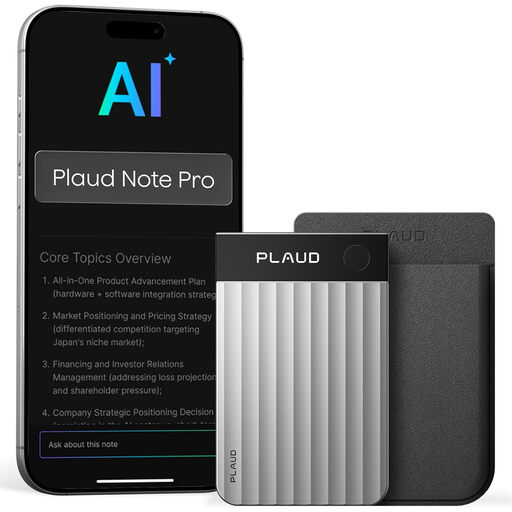
These Joybuy products are voice recorders for recording and processing spoken content. Before using one in an untreated room, check how you can position the microphone close to your voice.
 No image available
The product description lists recording, transcription and summaries for processing spoken content.
Storage: 32 GB.
 No image available
The product description mentions one-touch operation for voice recordings.
Recording formats: MP3 and WAV. File transfer via USB-C.
 No image available
The product description mentions one-touch recording and playback through the included headphones.
Recording format: WAV. Storage: 64 GB. File transfer via USB-C.
 No image available
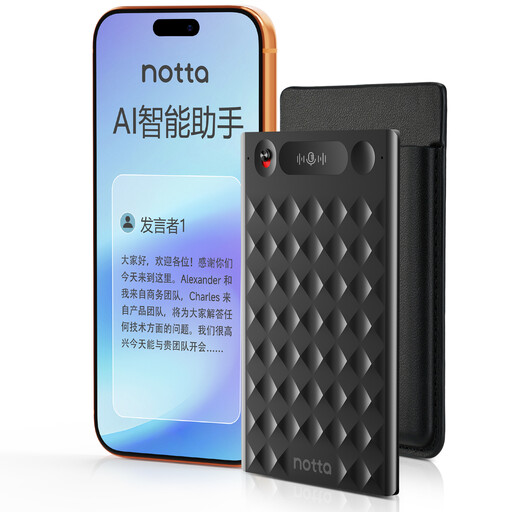
The product description mentions a room recording mode and AI transcription for processing spoken content.
Microphone array: 4 microphones. Storage: 32 GB. The description lists transcription in 58 languages and use of the Notta app for cloud syncing and file management.
Check that using the app and cloud syncing suits the way you work. The microphone setup alone won’t eliminate room echo.
No. 32-bit float is a recording format. According to Shure, a microphone cannot effectively separate direct speech from reflected speech. Where possible, position the microphone close to your voice and listen back to a test recording made in your chosen location.
Check the positioning, recording settings, power and storage, then make a short test recording and listen back to it. The official Zoom H1essential manual explains, among other things, how to insert and format microSD cards. For other models, follow the relevant manual.
First, check whether you need microphones, mounting, power and storage for your setup, and whether you already have them. According to ACM ConsuWijzer, online consumer purchases generally come with a 14-day cooling-off period from delivery, subject to legal exceptions. You also have a statutory guarantee based on what you could reasonably expect from the product. This doesn’t automatically mean one fixed guarantee period for every recorder.
The GDPR is relevant when publishing other people’s identifiable personal data to a wide audience. The Dutch Data Protection Authority says that consent is needed in most cases and describes a limited exception for personal or household use only. Whether a particular voice is identifiable, and which legal basis applies to a specific recording, depends on how it is recorded and published.