
Narrators in echoey kitchens
You want recipe instructions to remain clear in a room with reflective surfaces. That makes microphone placement an important consideration, as Shure explains.


Start by considering where and how far away you’ll be from the recorder: a recorder won’t remove reverberation from a room, so compare short test recordings from your usual speaking distance. Shure emphasises that microphone placement can’t improve a room’s acoustics. Then choose between simple standalone recording, features for varying vocal volume, and options for storage or editing.
You want recipe instructions to remain clear in a room with reflective surfaces. That makes microphone placement an important consideration, as Shure explains.
You sometimes speak softly and at other times with more emphasis, and want to compare recording features that suit these changes in volume. Zoom and Tascam describe a 32-bit-float mode for specific models.
You want to find passages, transfer them or edit them further. The storage and connections on the specific model determine which workflow will suit you; Zoom, Tascam and OM SYSTEM describe different features for different models.
Start with how clear the recording sounds in the room, then decide how important varying vocal volumes are to you, and finally consider the controls and file management.
| What to consider | What should you look for? | Who is this important for? |
|---|---|---|
| Clarity in the room | Make a short test recording from your usual speaking distance and compare it with one made closer to the microphone. Listen out for kitchen noise too. | If I’m recording in an echoey kitchen, I want to assess how clear my voice sounds where I’ll actually be speaking. Around 36% of consumers say clarity is their top priority when choosing. |
| Varying vocal volume | Record both a quiet passage and one with more emphasis, then compare the recording formats available on the exact model. | When narrating expressively, I want to listen back to softer lines and emphatic passages without assuming that a recording feature will remove background noise. Around 29% of consumers prioritise changes in vocal volume. |
| Standalone recording | Check the controls for starting and playing back recordings, the power supply and where the model stores recordings. | If I want to record without a computer while preparing a recipe, controls and storage suited to that workflow will be useful. Around 21% of consumers make standalone recording their top priority. |
| Files and editing | Compare recording formats, storage, file transfer and any USB microphone or audio interface features for each model. | If I want to find passages and edit them later, I want to know how the files will fit into my workflow. Around 14% of consumers put file management and editing first. |
A recording format won’t change a room’s acoustics. The balance between direct voice and reflections depends partly on microphone placement.
Test the recording location and speaking distance first, before giving extra recording features more weight.
Storage and external microphone features vary by model. The LS-P5 lists built-in memory; the H1essential manual explains how to insert a microSD card.
Check the contents, storage method and available inputs for the exact model.
Depending on the model and workflow you choose, you may need extra storage or a suitable external microphone.
The H1essential is a standalone handheld recorder to consider if you want to record without a computer and compare model-specific microphone or USB features.
The DR-05XP is a standalone handheld recorder to consider if 32-bit-float recording or use as a USB audio interface matters to you.
The LS-P5 is worth considering if you want to compare adjustable microphone direction and storage on the recorder itself.
These product options are suited to recording recipe narration on your own and finding or processing recordings afterwards.
 No image available
The clip and magnetic attachment give you options for positioning a microphone close to the narrator.
The description lists internal 32-bit-float recording, two transmitter microphones and three vocal tone settings.
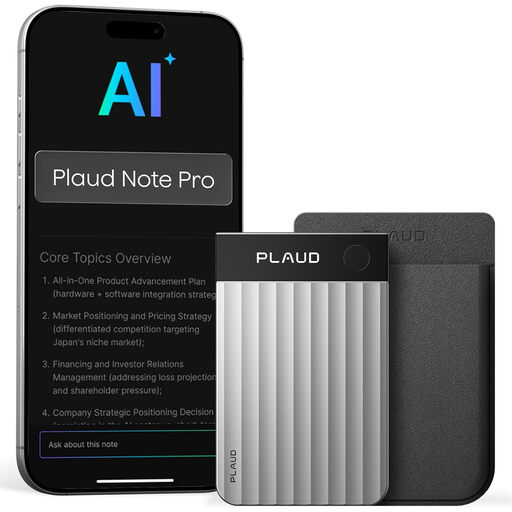 No image available
An option to consider if you want to process recorded passages afterwards.
The description lists recording, transcription, summaries and built-in storage.
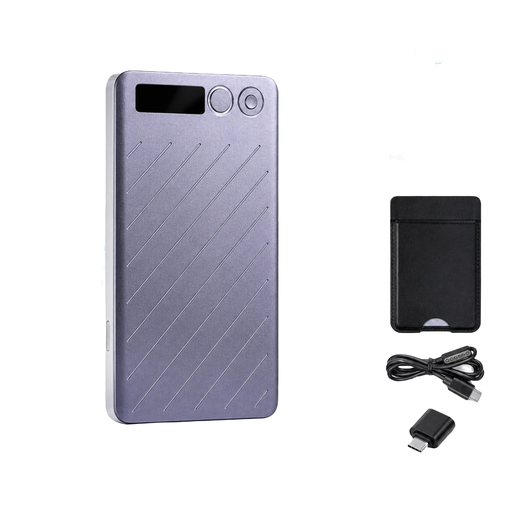 No image available
This recorder could suit a workflow where you want spoken passages transcribed.
The product name lists 64 GB and a transcription function; the description also mentions recording and summaries.
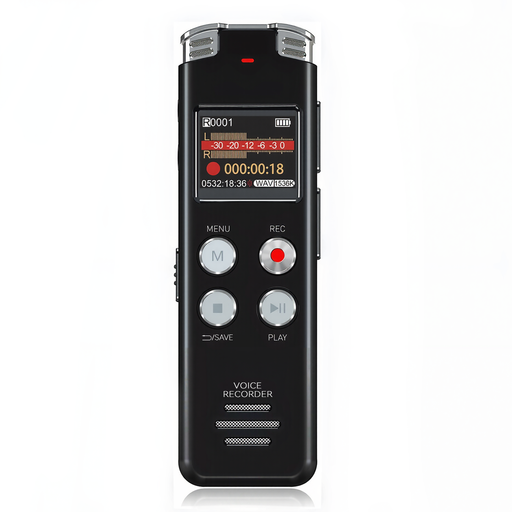 No image available
An option for recording on your own and playing back or finding passages later.
The product name lists 128 GB. The description mentions WAV and MP3 formats, one-button operation, A-B repeat and timestamped files.
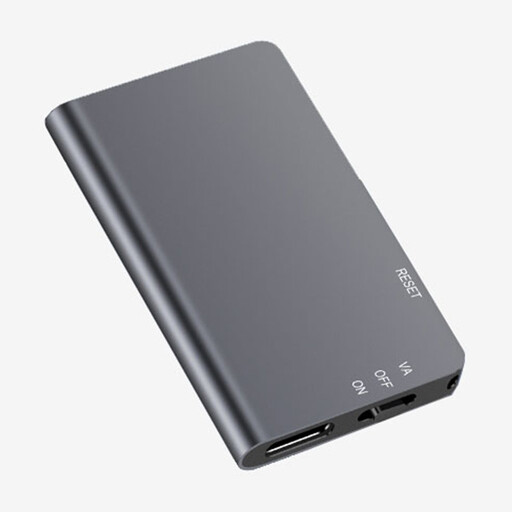 No image available
An option if you want to play back recordings and transfer files to a computer or another device mentioned in the description.
The product name lists 64 GB. The description mentions WAV recording, USB-C file transfer, one-button operation, voice activation and an included set of headphones; compatibility is listed for Windows, Mac and Android.
No. Zoom and Tascam list this recording mode for the models mentioned, but it won’t change the room’s acoustics. First, compare short test recordings with different microphone placements.
Record a short passage from where you plan to speak, listen back, and check the power supply and storage on your exact recorder. Zoom describes playback on the H1essential; OM SYSTEM lists built-in memory for the LS-P5.
No, these vary by model. OM SYSTEM lists 16 GB of built-in memory for the LS-P5, while the Zoom H1essential manual explains how to insert a microSD card. So check the storage method and connections on the model you’re considering.
Check the rights to any text, music and images you use separately. The Government of the Netherlands says that, in principle, you need the creator’s permission to use someone else’s copyright-protected work; you may not distribute or make a private copy available to the public. This does not establish that permission from someone else is required for a recipe narration written in your own words.
Assess the applicable legal basis before publishing the recording. The Dutch Data Protection Authority says that permission is required in most cases to publish personal data online, and describes a limited exception for exclusively personal or household use. Whether that exception applies depends on how the recording is used and whether the voice can be recognised.