
Voice actor with a wide dynamic range
You switch between quiet and loud lines in the same scene and want to be able to listen back to and edit the recording. Zoom and Tascam list 32-bit float recording for the recorders mentioned here.


When voice levels vary widely, a recorder with 32-bit float recording is one option: it lets you adjust the level of the recording file afterwards. Zoom and Tascam list this mode for the models mentioned here. Listen to a test recording of the loudest line too, as this mode cannot fix distortion that has already occurred at the microphone. In a reverberant room, microphone placement matters just as much: first decide where you can position it, then choose between built-in microphones and a suitable external input.
You switch between quiet and loud lines in the same scene and want to be able to listen back to and edit the recording. Zoom and Tascam list 32-bit float recording for the recorders mentioned here.
You want the voice to come through clearly and are able to experiment with microphone placement or use a separate microphone.
You record short scenes or voice tests and want to get started, save and listen back with ease. Remember to check what storage your chosen model needs.
First, check how the recorder handles quiet and loud lines. Then consider where you’ll be recording, how much storage you need and whether you’ll need connections for another microphone.
| What to consider | What to look for | Who should consider this? |
|---|---|---|
| Quiet and loud lines | Check the recording mode on the exact model and listen back to a test recording of the loudest passage. Zoom and Tascam list 32-bit float recording for the models mentioned here. | If my character whispers and then suddenly speaks loudly, I want to be able to check and edit the recording afterwards. Around 33% of consumers give top priority to preserving those variations in volume. |
| Clarity and reverberation | Make test recordings in the intended performance space and compare microphone positions. RØDE points out that a microphone placed further away can pick up more room sound. | When I record in a reverberant room, I don’t want the voice to get lost in the room sound. Around 27% of consumers prioritise clear speech in their own space. |
| Quick recording | Check how to start recording and listen back, what power supply is needed, and whether the recorder has internal storage or requires a memory card. The Zoom H1essential needs a microSD card to be inserted for standalone recording and playback. | For short voice tests, I want to be able to get started quickly without having to set much up first. Around 20% of consumers prioritise easy recording and saving. |
| Editing and other microphones | Check your preferred file format and whether the input and power supply are compatible with the microphone. The Zoom H4essential has two XLR/TRS inputs; the H1essential has a 3.5mm mic/line input. | If I want to edit scenes or use another microphone, I look at which features suit the way I work. Around 20% of consumers prioritise editing and connections. |
This recording mode is no substitute for good microphone placement, and it cannot fix distortion that has already occurred at the microphone.
Record the loudest line with your actual setup and listen back before recording the whole scene.
If the reverberation or distortion is distracting, you may need to record the scene again.
According to the manual, the Zoom H1essential cannot record or play back independently without a microSD card inserted.
Check what comes with the exact model and test the card beforehand by recording and playing something back.
If a suitable card isn’t included, you’ll need to arrange one separately.
The two XLR/TRS inputs on the Zoom H4essential give you more connection options, but they won’t automatically solve poor microphone placement.
First decide where the microphone can go during the puppet performance, then check that its connection and power requirements are compatible.
A separate microphone and possibly equipment to position it are extra items to factor in.
The H1essential is a compact handheld recorder with built-in X/Y microphones; the H4essential adds two XLR/TRS inputs for a more extensive setup.
The DR-05XP records using built-in microphones; the DR-07XP has adjustable microphones that let you choose an A-B or X-Y configuration.
The LS-P5 is a compact recorder with internal memory and adjustable directivity.
These Joybuy product picks are intended for voice recording: the list includes voice recorders and an MP3 player whose product name also mentions voice recording.
 No image available
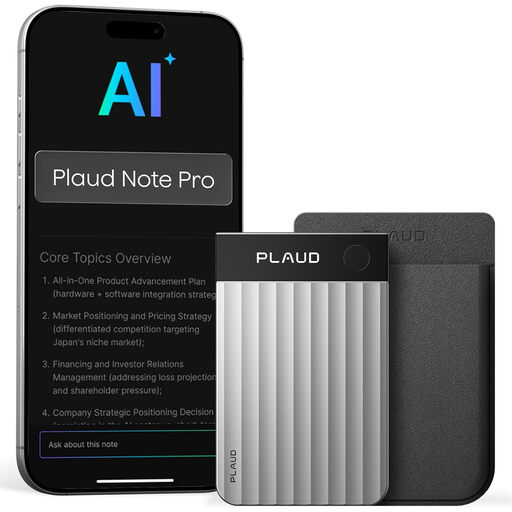
The product name describes a voice recorder with AI Notes & Summary; consider this model if that combination suits the way you record.
 No image available
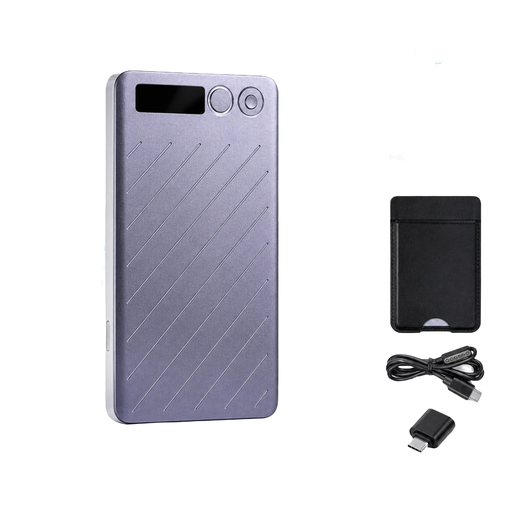
The product name describes a digital voice recorder for voice recordings.
The listed specifications include 64 GB of storage and a transcription function.
 No image available
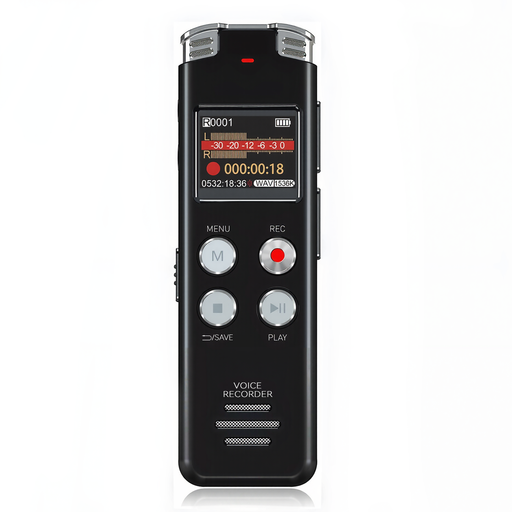
According to its product name, this is a portable digital voice recorder for anyone looking for a dedicated device for voice recordings.
The name lists 128GB of storage.
 No image available
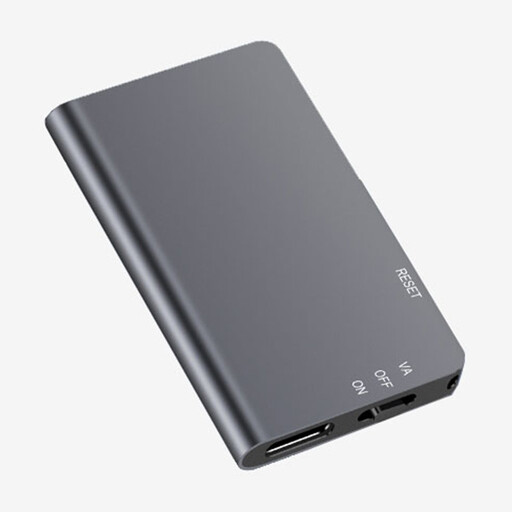
The product name identifies this model as a digital voice recorder for capturing speech.
The listed storage capacity is 64GB.
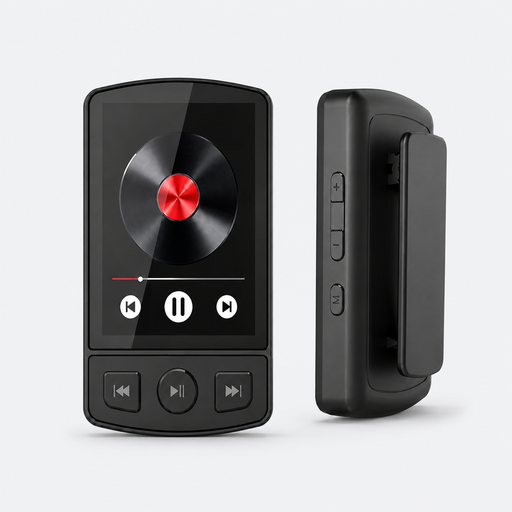 No image available
The product name describes this model primarily as an MP3 player; voice recording is one of its listed features. Consider it only if you’re also looking for an MP3 player.
The product name lists Bluetooth 5.2, a clip and 64 GB.
No, not always. It can be useful when recording levels vary widely and you want to edit the file afterwards. Do make a test recording, though: 32-bit float cannot fix distortion caused by an overloaded microphone.
Compare test recordings made with different microphone positions and try moving the microphone closer to the speaker without amplifying plosive sounds. A separate microphone gives you more flexibility only if it can be connected to the recorder and positioned appropriately.
No. According to Zoom’s manual, a microSD card must be inserted for standalone recording and playback on the Zoom H1essential. Also check the power requirements and test the card before an important scene.
According to the Dutch government, you’re entitled to a product that works as it should, and you can contact the seller if there’s a problem. The Netherlands has no fixed statutory warranty period; the product’s expected lifespan and the cause of the problem are taken into account.
This depends, among other things, on how the recording is used. The Dutch Data Protection Authority notes that an identifiable voice recording can be personal data and distinguishes between limited personal use and public or business publication. Outside the personal-use exception, processing requires a legal basis under the GDPR. Consent is one possible legal basis, but it is not automatically the only one.