Who is this choice relevant to?

Expressive voice-over creator

If you record a product demonstration in one fixed position, with a mix of quiet and emphatic passages, easy recording and playback are important considerations. Zoom and Tascam describe a 32-bit float mode for certain models.

On-camera presenter

If you move around while showing a product, a lapel microphone can move with you instead of staying at a fixed distance. Tascam describes the DR-10L Pro as a recorder with a lapel microphone.

Creator with an expandable setup

If you want to use separate microphones or multiple recording tracks later, check which connections and additional equipment you’ll need. Zoom specifies two XLR/TRS inputs and four tracks for the H4essential.

What should you look for when buying?

Compact handheld recorder with built-in microphones

Choose this option: if you speak from a fixed position and want to record without a separate microphone.

Bear in mind: the built-in microphone also picks up the sound of the room, so placement and echo still matter.

Recorder with a lapel microphone

Choose this option: if you move around during a presentation and need the microphone to move with you.

Bear in mind: how you attach it, clothing rustle and synchronising the audio with video.

Handheld recorder with inputs for separate microphones

Choose this option: if you want to record with several compatible microphones or on separate tracks.

Bear in mind: separate microphones, cables and a suitable setup can make operation more involved.

Compact recorder with built-in memory and adjustable microphone direction

Choose this option: if built-in memory and adjustable microphone direction suit your recording location.

Bear in mind: make a test recording to check that the selected direction captures enough direct voice sound.

What to consider What should you look for? Who should prioritise this?
Varying speaking volume Check whether the exact model can record 32-bit float files and whether you can play them back and edit them. Prioritise this if both quiet and loud lines need to remain usable in the edit. Around 36% of consumers prioritise varying speaking volume.
Clarity in the room Make a test recording at your intended location and check that the recorder is close enough to your voice. If you want your voice to come through clearly above the room echo, test the microphone position before changing settings alone. Around 29% of consumers prioritise clarity in the recording space.
Recording while moving Check whether a lapel microphone is included, how to attach it and how to synchronise audio with video. If you walk around while demonstrating a product, you’ll want the microphone to move with you. Around 21% of consumers prioritise recording while moving.
Separate microphones and expansion Count how many simultaneous inputs and tracks you need, and check that the connections are compatible with your microphones. If you want to record multiple sources separately later, check which inputs you’ll actually use. Around 14% of consumers prioritise expandability.

Common pitfalls

  • Assuming 32-bit float will fix room echo

    Adjusting the level of a recording afterwards won’t remove reflections that have already been captured from the voice. Shure points out that microphone placement affects the balance between direct voice sound and reflections.

    Record your quietest and loudest lines in the room where you’ll be working, then listen back. If there’s a lot of echo, try a different microphone position first.

    A different setup or microphone position may require extra preparation time.

  • Using a recorder at a distance while moving around on camera

    When your distance from a stationary recorder changes, the way your voice is recorded changes too. Wearing a microphone is another way to record, with considerations such as how it’s attached and clothing rustle.

    Choose your microphone setup based on how much you’ll be moving, and test how it’s attached and check for clothing rustle before the full recording.

    Remember to synchronise the recorded sound with the video.

  • Buying extra inputs without a plan for separate microphones

    The two additional XLR/TRS inputs on the Zoom H4essential are mainly useful if you want to connect compatible external sources; you may not need them for a single voice recorded with a built-in microphone.

    Decide in advance how many sources you want to record separately at the same time, and check the connection type on your microphones.

    A more extensive setup may require separate microphones, cables and mounting equipment.

Relevant brands to consider

Zoom

The H1essential is a compact recorder with built-in microphones; according to Zoom, the H4essential has two XLR/TRS inputs and four tracks.

  • Zoom specifies a 32-bit float mode for both of the models mentioned.
  • The H1essential doesn’t have the two XLR/TRS inputs specified for the H4essential. These are manufacturer specifications, not the result of an independent listening test.

Tascam

The DR-05XP is a handheld recorder with built-in microphones; the DR-10L Pro combines a portable recorder with a lapel microphone for presentations on the move.

  • Tascam describes 32-bit float recording for both of the models mentioned.
  • For app control and wireless timecode synchronisation with the DR-10L Pro, Tascam lists an optional adapter. This difference applies to the models mentioned and not necessarily to the brand as a whole.

OM SYSTEM

The LS-P5 is designed for compact, standalone recording, with built-in memory and adjustable microphone direction.

  • OM SYSTEM specifies 16 GB of built-in memory and linear PCM recording up to 24-bit/96 kHz.
  • This specification isn’t a 32-bit float claim. Make a test recording to see whether the microphone direction suits your recording location.

Joybuy products

This selection includes portable voice recorders and a wireless microphone kit for recording a product demonstration.

Plaud Note Pro AI voice recorder in silver

Plaud Note Pro AI voice recorder (silver)

A good fit if you’d also like to have your recorded explanations transcribed and summarised; the product description mentions transcription and summarisation features.

32 GB of built-in storage.

View at Joybuy

Digital voice recorder with 64 GB storage and transcription function

Digital voice recorder, 64 GB, with transcription function

An option if you want to have a recording transcribed; the product description mentions transcription in 118 languages.

The description lists six microphones, a weight of 32 grams and up to 36 hours of battery life.

View at Joybuy

Rexsun L357 portable digital voice recorder, 128 GB

Rexsun L357 voice recorder, 128 GB

A good fit if you’re looking for a portable recorder with straightforward recording controls and support for common audio formats.

The product information lists WAV and MP3 files, a USB-C connection and an LCD screen.

View at Joybuy

Rexsun L810 digital voice recorder, 64 GB

Rexsun L810 voice recorder, 64 GB

An option if you want to listen back after recording; the product description lists headphones as included.

The description mentions WAV and MP3 files and up to 35 hours of battery life. It says files can be transferred via USB-C to Windows, Mac and Android devices.

View at Joybuy
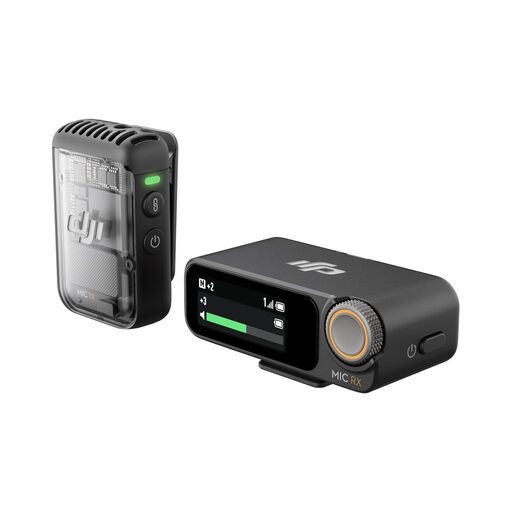
DJI Mic 2 wireless microphone kit, 1 TX and 1 RX

DJI Mic 2 (1 TX + 1 RX)

A good fit for a demonstration where you move around; the product information mentions internal recording on the transmitter and attachment using a clip or magnet.

32-bit float recording on the transmitter. The adapters described are for connecting to devices such as phones and cameras.

View at Joybuy

Frequently asked questions

Is 32-bit float enough to capture an expressive voice without making a test recording?

No, you should make a test recording too. Manufacturers explain that you can adjust the level of a 32-bit float file afterwards, but room echo and microphone placement still need attention. Listen back in advance at the location where you’ll be recording.

What should I do before recording a full product demonstration?

At your intended location, record both your quietest and loudest lines, then listen back. If you can hear a lot of reflections from the room, try a different microphone position or move the microphone closer to your voice.

What additional items should I check before buying?

For the version you’ve chosen, check the power and storage requirements, what’s included in the box, and whether any separate microphone is compatible with the recorder. For example, Tascam lists an optional adapter for app control and wireless timecode synchronisation with the DR-10L Pro.

Who should I contact about a faulty recorder I bought as a consumer in the Netherlands?

Report the fault to the retailer. According to the Dutch Government, statutory warranty is in addition to any manufacturer’s warranty; the Netherlands has no fixed statutory warranty period. The appropriate solution depends on the fault and the circumstances.

Can I record and publish identifiable voices of others in a business product demonstration?

A recording in which someone is identifiable may be personal data. If the GDPR applies to the processing, you must identify an appropriate legal basis before processing; consent is one possible legal basis, but it isn’t automatically the only one. The Dutch Data Protection Authority explains that the assessment depends on the processing and the legal basis chosen.
