Who is this guide for?

Solo performer in a small booth

You mainly want a clear voice without distracting room sound, and can position the recorder before you start and listen back afterwards. Shure explains how microphone placement and reflections affect what the microphone picks up.

Performer who wants to record straight away

You want to capture a reading with minimal fuss and are looking for built-in microphones, straightforward controls and a recording you can listen back to. Zoom and Tascam describe models with built-in microphones.

Creator using an external microphone

You want to position the microphone separately from the recorder or record multiple sources later on. The right input and any power requirements depend on the microphone you choose; Zoom and Tascam describe different connection options on their models.

What should you look for when choosing?

What to consider What to look for Who is this important for?
Clarity and room sound Check that the recorder can stand securely and that you can monitor or listen back to the recording. Make a test recording in the booth. When I record in a small booth, I want to hear whether my voice stays clear without the room dominating the sound. Around 36% of consumers give clarity and room sound top priority.
Easy recording Compare the start and stop controls, storage, power supply and the option to listen back to a test recording. If you only want to capture a complete reading, you may mainly need a recording-ready setup with minimal steps. Around 29% of consumers prioritise recording quickly and easily.
Changes in vocal volume Check the recording format and whether you can monitor during a test. Listen to both the quietest and loudest passages. For whispered lines and emphatic passages, I want to know whether both sound usable. Checking how the recorder handles changes in vocal volume is the top priority for around 21% of consumers.
External microphone or additional sources Compare the microphone’s connector and power requirements with the inputs on the exact model. Also check how many tracks you need. If I want to position the microphone separately or record more sources later, the connection and power supply need to suit my microphone. Around 14% of consumers give expandability top priority.

Common buying pitfalls

  • Assuming 32-bit float will solve echo

    A file format and microphone placement solve different problems. Reflections from the booth can still be heard in the recording.

    A poor recording can mean extra time spent recording again or editing afterwards.

    Start with a test recording in the booth and listen back to it. Then decide how much flexibility you need from the recording format for your workflow.

  • Assuming every external microphone works with every input

    A mini-jack input offers different connection options from XLR/TRS inputs with phantom power. The connection you need depends on the microphone.

    You may need a different microphone, cable or recorder if the connection or power supply is incompatible.

    Before buying, check the connector, power requirements and number of tracks needed for your complete setup.

  • Confusing maximum recording time with recording time in WAV

    Philips VoiceTracer product information lists different recording formats and a maximum recording time on the built-in memory. That maximum doesn’t necessarily tell you how much time is available in your preferred format.

    You may need extra storage for the recording time you want.

    Check the recording time for your chosen format, and whether you need a memory card and if one is included with the product.

Brands to compare

Zoom

The H1essential is designed for a compact setup with built-in X/Y microphones. The H4essential adds two XLR/TRS inputs and extra tracks.

  • The specifications for both models listed include 32-bit float recording.
  • XLR/TRS inputs and phantom power are listed here for the H4essential, not the H1essential. These specifications don’t prove which recorder sounds better in a small booth.

Tascam

The DR-05XP has built-in omnidirectional microphones, a 32-bit float mode and a stereo mini-jack input for a compatible external source.

  • Tascam describes one-handed operation and a choice of recording formats.
  • The mini-jack input doesn’t offer the same connections and phantom power as the Zoom H4essential reviewed here. Treat sound claims as the manufacturer’s statements.

OM SYSTEM

The LS-P5 could be a good fit if you’re looking for a compact recorder with an adjustable recording field and built-in memory.

  • OM SYSTEM Netherlands lists direction settings, 16 GB of built-in memory and PCM recording up to 96 kHz/24 bit.
  • These specifications aren’t a direct sound test for clarity in a poetry booth. Check the connections for your chosen microphone setup.

Philips VoiceTracer

The DVT4115 is designed for recording and sharing, with built-in memory, PCM/WAV recording and control via a smartphone app.

  • These features are listed on the product page of the licensee of Philips Dictation.
  • Don’t assume that the maximum recording time on the built-in memory is the recording time for uncompressed poetry recordings without checking the format and settings.

Joybuy product picks

These Joybuy product picks are designed for recording speech and listening back or working with it later. Check whether each model’s workflow and microphone setup suit a poetry reading in a small booth.
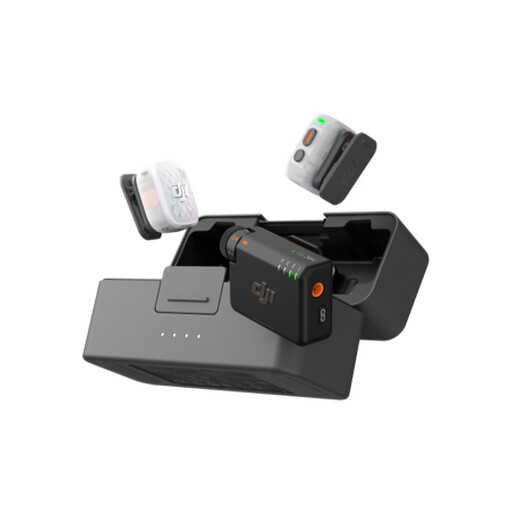
DJI Mic Mini 2S with two transmitters, one receiver and charging case

DJI Mic Mini 2S (2 TX + 1 RX + Charging Case)

Could be a good fit if you want to record a reading without a separate recorder; the product information says the transmitters can record internally.

View at Joybuy
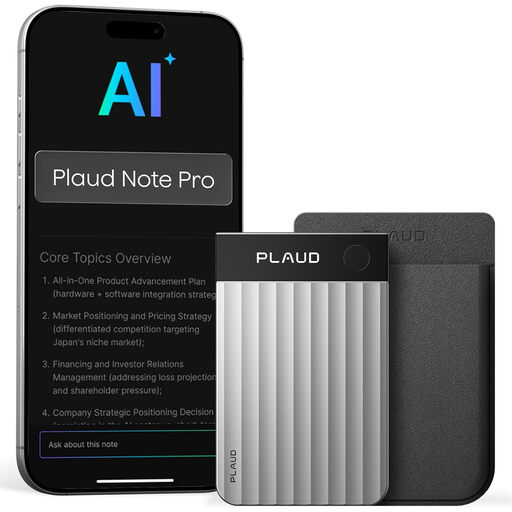
Plaud Note Pro AI Voice Recorder in silver

Plaud Note Pro AI Voice Recorder, Silver

Designed for anyone who wants to make a recording and find the text later; the product name mentions AI notes and summaries. Check that the stated features suit the way you want to use it.

View at Joybuy
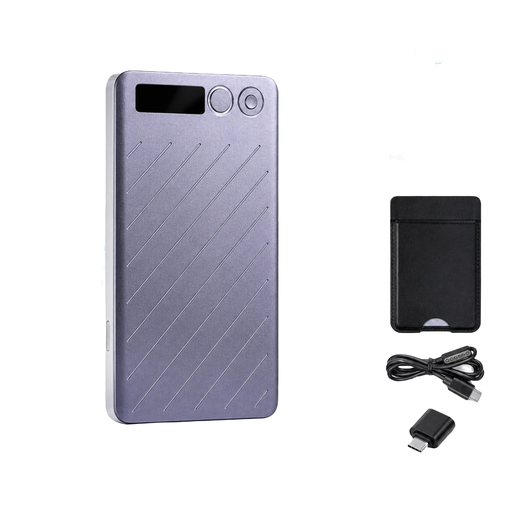
Digital voice recorder with 64 GB and transcription function

Digital Voice Recorder, 64 GB, with Transcription Function

Could be a good fit if you want to record speech and find the text later. The product name lists 64 GB and a transcription function; check that the feature supports your language and intended use.

View at Joybuy
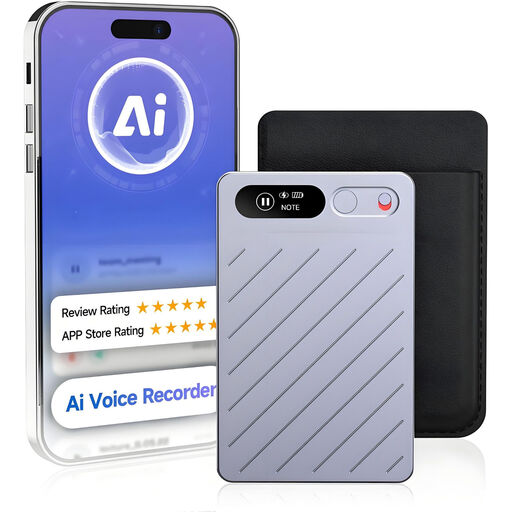
Compact AI dictation device with 64 GB and transcription and summary features

AI Dictation Device, 64 GB

Designed for anyone who wants to record a reading and then turn it into text. The product name mentions transcription and summaries in 118 languages; check that your preferred language and the features suit your needs.

View at Joybuy
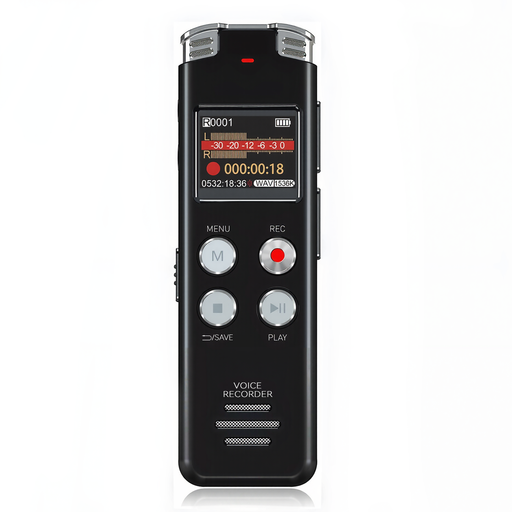
Rexsun L357 digital voice recorder with 128 GB and LCD screen

Rexsun L357 Portable Digital Voice Recorder, 128 GB

Could be a good fit if you want to start recording easily and listen back to a passage later. Before buying, check which recording and playback features you need.

View at Joybuy

Frequently asked questions

How should I position a recorder for a reading in a small booth?

Place the recorder securely, make a test recording with both quiet and loud lines, then listen back. If you hear a lot of reflections, try a different microphone position; a microphone won’t change the room’s acoustics. Zoom also recommends using a tripod with the H4essential if placing it directly on a table could reduce clarity.

What should I do with recordings and storage after recording?

Before your session, check whether your recorder uses built-in memory or needs a compatible memory card. Afterwards, make a separate copy of important recordings. OM SYSTEM’s LS-P5 product page and Philips Dictation’s DVT4115 product page list built-in memory; the Zoom H1essential manual describes using a microSD card. The available recording time depends on the format you choose.

Who can help if a recorder I bought in the Netherlands breaks too soon during normal use?

According to ACM ConsuWijzer, the seller is responsible for the statutory guarantee. If the product doesn’t meet what you could reasonably expect, the seller must offer a solution under the applicable conditions, such as a repair, replacement or refund. A manufacturer’s guarantee doesn’t replace this right.

Can I publish a recording of someone else’s poetry reading?

Don’t assume you can publish a recording just because you made it yourself. The Government of the Netherlands distinguishes between making a copy for personal use and distributing or publishing copyright-protected work. In principle, you need permission from the rights holder for the latter. Before publishing, check which poem and rights apply.

What if the recording also includes another identifiable voice?

A recording in which someone is identifiable may contain personal data. The GDPR applies if you publish it for purposes beyond purely personal or household use, and you’ll need an appropriate legal basis. The Dutch Data Protection Authority lists consent as one possible legal basis, not the only one; it also describes an exception for purely personal or household use, subject to certain conditions.
