
Solo narrator recording in an ordinary room
Wants to record a poetry discussion in which words and quieter passages remain clear, without a complicated set-up.


If you mainly record yourself, a handheld recorder with built-in microphones is an easy place to start. When moving between quiet and more emphatic passages, 32-bit float recording can give you extra room to adjust the recording level afterwards. Additional microphone inputs matter most if you want to connect a separate microphone or a second voice. No recording format will automatically fix room echo, breath noise or poor microphone placement.
Wants to record a poetry discussion in which words and quieter passages remain clear, without a complicated set-up.
Switches between emphatic and restrained passages and wants to be able to review and edit the recordings.
Wants to connect a second voice or separate vocal microphone, so pays attention to the inputs, not just the built-in microphones.
Suitable if: you record solo and want to start with a minimum of connections.
Trade-off: recorder placement still matters; if you plan to use a lapel microphone, check that the exact model has the right connection.
Suitable if: as well as spoken commentary, you want to capture the sense of space in a performance.
Trade-off: a wider sound image may also capture more of the room; specifications can’t predict how your space will sound.
Suitable if: you’re recording someone else or want to use an existing XLR microphone.
Trade-off: check that your microphone, power supply, cables and set-up are compatible with the inputs.
For solo commentary, placement, clarity and being able to play back your recording easily are key considerations. Extra connections are mainly useful if you actually need them.
| What to consider | What should you look for? | Who is this important for? |
|---|---|---|
| Clear speech | Can you position the recorder securely and play back a test recording made from your usual speaking distance? | If I’m recording in an ordinary room, I want to be able to make out quiet words without the room overpowering them. Around 36% of consumers prioritise clear speech in their own recording space. |
| Quiet and loud passages | Does the exact model offer 32-bit float recording, and is the file compatible with your editing set-up? | If you switch between soft and emphatic delivery, you’ll want room to adjust the recording level afterwards. This is the top priority for around 29% of consumers. |
| Easy recording and playback | Can you quickly start recording and check the result? Also check the memory and whether you need a card. | For a short session, I want to be able to start recording, play it back and save it without delay. An easy-to-use process is the top priority for around 21% of consumers. |
| Separate microphone or second voice | Check the connection type, whether the microphone needs power, and how many sources you want to record at once. | If I want to record a guest or use a separate microphone, I want to know in advance whether the connections are compatible. Expandable microphone inputs are the top priority for around 14% of consumers. |
32-bit float recording gives you room to adjust the file level, but it won’t automatically prevent distracting room acoustics or breath and wind noise near the microphone.
Make a test recording using your own delivery and listen for unwanted sounds as well as checking the recording level.
The Zoom H4essential has two XLR/TRS inputs; the Zoom H1essential lists a 3.5mm mic/line input. These are different connections.
First decide which microphone you want to use, then check the connection and power requirements for the exact model.
The Dutch government distinguishes between making a copy for personal use and distributing or making protected work available to the public. Recording something and publishing it online are therefore not automatically the same thing.
Before publishing, check what rights apply to the text you’re using. Don’t assume that adding commentary gives you permission to publish a full performance.
The H1essential is a compact option with built-in microphones and a 3.5mm input. The H4essential is worth considering if you need two XLR/TRS inputs.
The DR-05XP has built-in stereo microphones, while the DR-07XP lets you set the microphones in an A-B or X-Y configuration.
The LS-P5 is a compact option with adjustable directionality and internal memory.
The Joybuy products below are digital voice recorders for recording spoken commentary. Check which features and storage options suit your set-up for each model.
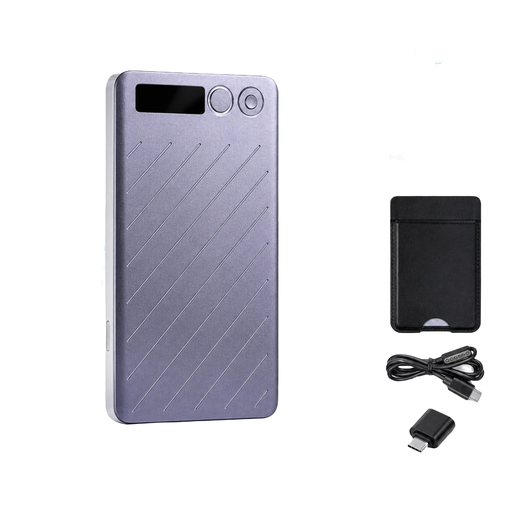 No image available
A digital voice recorder for capturing spoken commentary.
64 GB storage; transcription function.
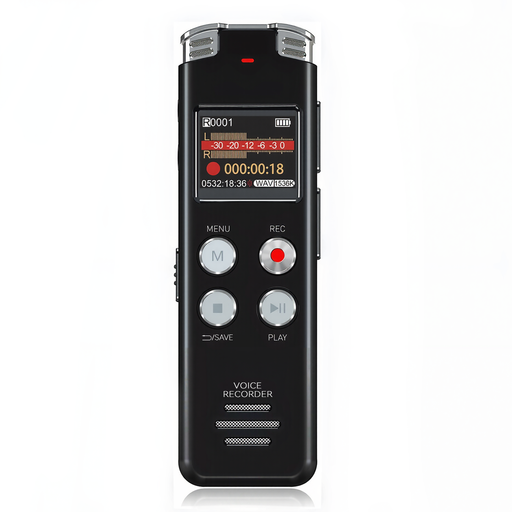 No image available
A portable digital voice recorder for capturing spoken commentary.
128 GB; LCD screen; noise reduction function; ABS and aluminium alloy; grey.
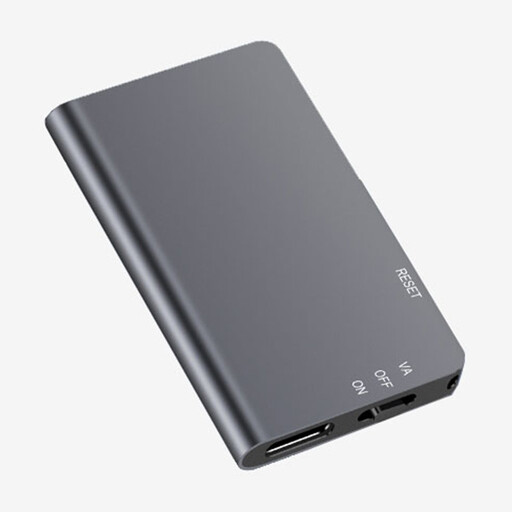 No image available
A digital voice recorder for capturing and playing back spoken commentary.
64 GB; one-touch recording; ABS and aluminium alloy; grey.
Place the recorder securely, record both your quietest and most emphatic passage, then listen back using headphones. You could also try a different speaking distance and listen for breath or wind noise. Zoom describes a low-cut setting for reducing, among other things, air blowing directly onto the microphone.
Check whether your set-up requires a memory card, batteries, a microphone or a cable. According to the Dutch government, online purchases from a business generally come with a 14-day cooling-off period; the seller is also your point of contact if a product is faulty.
Don’t assume that adding commentary gives you permission to publish a full performance. The Dutch government distinguishes between making a copy for personal use and distributing or making work available to the public. Auteursrecht.nl outlines the conditions for short, relevant quotations from published work, including crediting the source and author. Consider the circumstances of your publication and obtain permission if needed.
Discuss the recording and your plans for publishing it with your guest in advance. The Dutch Data Protection Authority explains that processing personal data for purposes beyond purely personal or household use may require a lawful basis. Consent is one possible basis, but not the only one. Consider which lawful basis applies to your publication.