
Capture a clear talk
Your main priority is being able to hear the speaker clearly, and you can place the recorder or an external microphone nearby. Shure emphasises that the distance from the speaker matters in a reverberant space.


For a clear museum talk, placing a microphone close to the speaker is generally more important than choosing a recorder with a higher recording resolution and leaving it at the back of the hall. A compact voice recorder may be enough if you can position it nearby; if you want to use an external microphone or connect to the hall’s sound system, you’ll need a recorder with the right input. Shure points out that a microphone placed far away cannot effectively separate direct speech from reverberation.
Your main priority is being able to hear the speaker clearly, and you can place the recorder or an external microphone nearby. Shure emphasises that the distance from the speaker matters in a reverberant space.
You’re recording a speaker from nearby so you can listen back to the talk or transcribe it later. Simple controls and the ability to check the recording are important considerations.
You also want to capture the sound of the room, or use an external microphone or the hall’s sound system. Check which connection is required by the recorder you choose and the available audio source.
Choose this option: if you mainly want to listen back or transcribe the recording and can position the recorder nearby.
Bear in mind: a recorder placed further away will still pick up the hall’s reverberation.
Choose this option: if you want to capture the sound of the hall as well as speech, and can place the recorder near the speaker.
Bear in mind: recording features won’t change the acoustics or the distance from the speaker; check storage and power requirements too.
Choose this option: if you can position a suitable microphone nearby or get a usable signal from the hall’s sound system.
Bear in mind: connections aren’t interchangeable; check the plug, signal level and whether the microphone needs power.
| What to consider | What to check before buying | Who is this most important for? |
|---|---|---|
| Clarity in a reverberant hall | Find out where the microphone can be placed and listen back to a short test recording from that spot. | If the hall is reverberant, I mainly want to hear the speaker clearly and position the microphone nearby. Around 40% of consumers say clarity is their main concern. |
| Simple controls | Before the talk starts, practise starting and stopping a recording, playing it back and locking the controls. | When I have other things to do, I want to be able to start and check the recording without fiddly steps. Around 23% of consumers prioritise ease of use. |
| Connection to a microphone or hall sound system | Check the source output and make sure the connector, input type and signal level are compatible with the exact model. | If I want to use an external microphone or the hall’s sound system, I want to know in advance whether the connection will work. Around 23% of consumers give connectivity top priority. |
| Recording time, storage and files | Check card compatibility, available storage, power, file format and file transfer before the event. | For a talk I want to transcribe later, I need enough storage and power, and a way to transfer the files. Around 14% of consumers prioritise these things. |
A microphone placed further away cannot effectively separate direct speech from reflected sound. Recording features won’t change the room’s acoustics.
Position the recorder or a suitable external microphone as close to the speaker as possible, and listen to a test recording beforehand.
Recorders can have different input types, and a plug that fits doesn’t necessarily mean the signal is suitable.
Ask which output is available and check the connector, input type and level for the exact model before connecting it.
You may also need extra cables or another connection solution.
An incompatible or full memory card, or insufficient power, could interrupt the recording.
Check the requirements in the product information and manual, and make a test recording both at home and at the venue.
The H1essential is a compact field recorder with built-in X/Y microphones. The H4essential also has two XLR/TRS inputs for suitable external sources.
The DR-05XP has built-in stereo microphones and a stereo mini-jack input for a suitable external microphone or line-level source.
The WS-883 is a compact voice recorder for anyone who wants to record a talk from nearby and listen back to it later.
According to the product information, the DVT4115 combines three built-in microphones with MP3 and PCM recording, and can be controlled via a smartphone app.
This selection focuses on portable voice recorders for capturing, listening back to or working with a talk. Before buying, check that the microphone placement, controls and any connections suit your recording needs.
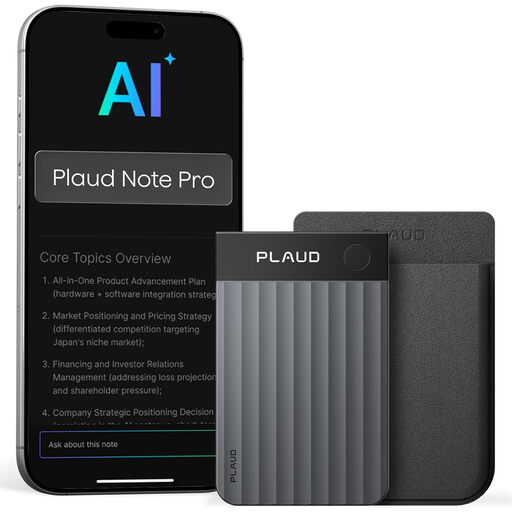 No image available
An AI voice recorder for capturing a talk; the product name mentions notes and summaries.
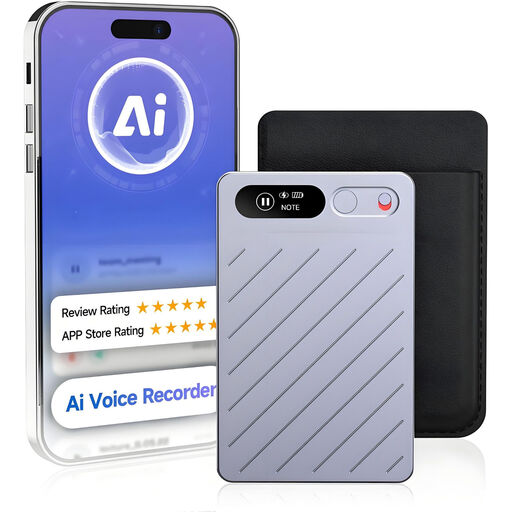 No image available
A mini voice recorder for recording a talk and working with it later.
The product name specifies 64 GB, and transcription and summaries in 118 languages.
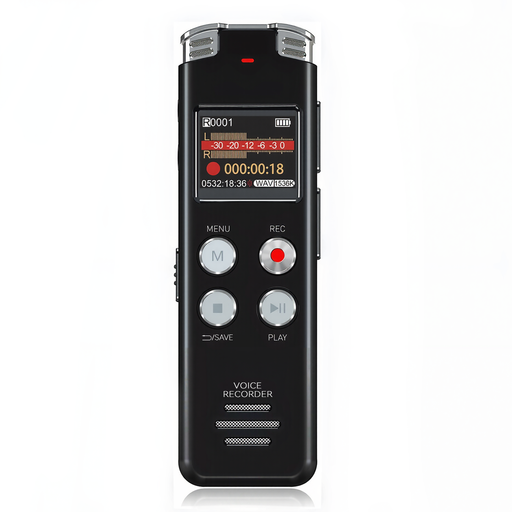 No image available
A portable digital voice recorder for recording a talk and listening back to it later.
The product name specifies 128 GB of storage and an LCD screen.
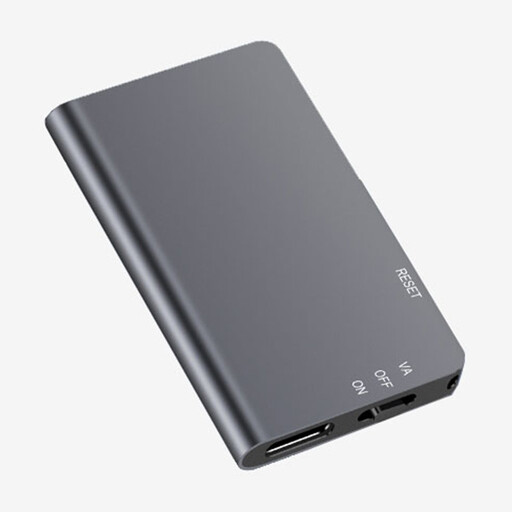 No image available
A digital voice recorder for anyone who wants to record a talk easily and listen back to it later.
The product name specifies 64 GB and one-touch recording.
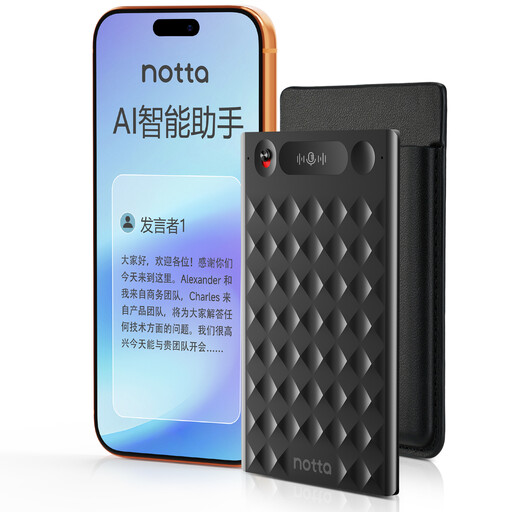 No image available
An AI voice recorder for recording and processing a spoken talk.
The product name specifies 32 GB, 30 hours of battery life, real-time AI transcription and translation in 58 languages.
No. This recording mode won’t change the distance from the speaker or reduce reverberation. If possible, move a suitable microphone closer and listen back to a test recording beforehand.
Check the power supply and available storage, choose your preferred recording format, then make a short test recording from the intended position and play it back straight away. For the H1essential, Zoom lists specific supported capacities for microSDHC and microSDXC cards.
According to the Dutch government, if a product is faulty, the seller must provide a solution. Normal wear and tear or damage caused by the user isn’t automatically covered by free repairs.
This depends on who can be recognised in the recording, its purpose and how it will be used. According to the Dutch Data Protection Authority, identifiable audio recordings may be personal data. An organisation must have an applicable legal basis under the GDPR for processing them; consent isn’t automatically the only possible basis. Before recording or publishing, also check whether anyone else owns the rights to any text or music. These general considerations alone don’t determine what applies to this particular event.