
Expressive performer
You move between restrained and powerful passages and want to capture those contrasts without constantly interrupting your performance. Zoom describes 32-bit float recording as a way to adjust the digital level afterwards.


Start with a test recording in the place where you plan to perform the monologue: microphone placement and the room’s reverberation matter just as much as the recording format. If there is a big difference between quiet and loud passages, 32-bit float recording can help you adjust the digital level afterwards, but it cannot replace suitable microphone placement. Also consider whether you need an external microphone input, playback options and storage.
You move between restrained and powerful passages and want to capture those contrasts without constantly interrupting your performance. Zoom describes 32-bit float recording as a way to adjust the digital level afterwards.
You record at home or in a historic location and want to keep your voice clear despite reflections in the room. Shure explains that microphone placement affects the balance between direct speech and reverberation.
You record several versions and want to check, keep or edit passages later. So consider the playback options, recording format and how files are stored.
| What to consider | What should you check? | Who is this important for? |
|---|---|---|
| Clarity in the room | Make a test recording in the intended location; if necessary, compare it with one using a suitable external microphone closer to your voice. | If you record in a reverberant room or on location, you’ll want to know whether your voice remains clear at the chosen distance. Around 29% of consumers prioritise clarity in the room. |
| Quiet and loud passages | Record a full test passage, including a whisper and your loudest line, then play the file back. | If your performance includes wide variations in volume, you’ll want to focus less on recording levels while speaking. Around 29% of consumers give these variations top priority. |
| Freedom of movement | Test the passage where you move around the most; check whether a fixed microphone position is suitable and whether an external microphone would work. | If you move away from your position during the monologue, you’ll want your microphone setup to accommodate that movement. Around 24% of consumers prioritise freedom of movement. |
| Managing takes | Compare the recording format, storage, playback options and ways to transfer files. | If you record different versions, you’ll want to be able to find and keep successful takes. Around 18% of consumers make recording management their top priority when choosing. |
A recording format won’t remove reverberation from a room. Shure points out that a microphone cannot separate direct speech from reflected sound after recording.
First, make test recordings in the actual performance space, then decide which recording format suits your performance.
Unsuitable placement could mean making extra takes or adjusting your microphone setup.
Available recording time depends on the settings you choose; a stated maximum does not automatically apply to every recording setting.
Check the remaining recording time in the format you plan to use, and confirm which storage comes with the exact version.
The age of a story does not automatically determine the rights to the version or adaptation you perform.
Check who created the text and which version you are actually using before publishing a recording.
The H1essential is a compact handheld recorder with built-in X/Y microphones, 32-bit float recording and a 3.5mm input for a lavalier microphone.
The DR-05XP combines built-in omnidirectional stereo microphones with a 32-bit float mode and an input for a suitable external microphone.
The LS-P5 is a portable PCM recorder for anyone comparing microphone direction, manual level control and built-in memory.
According to Philips, the DVT4115 offers PCM or MP3 recording, 8 GB of built-in memory and control via a smartphone app.
These products are relevant to recording, playing back or processing spoken material. Check whether each one suits the microphone setup you need for a monologue.
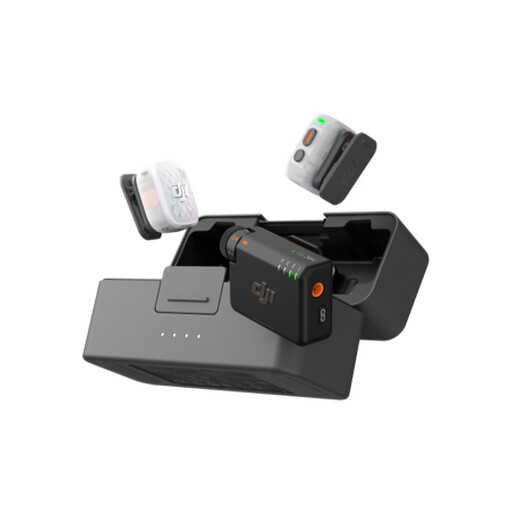 No image available
The product name indicates a microphone system; check whether the connections and setup are compatible with your recorder and the way you plan to record the monologue.
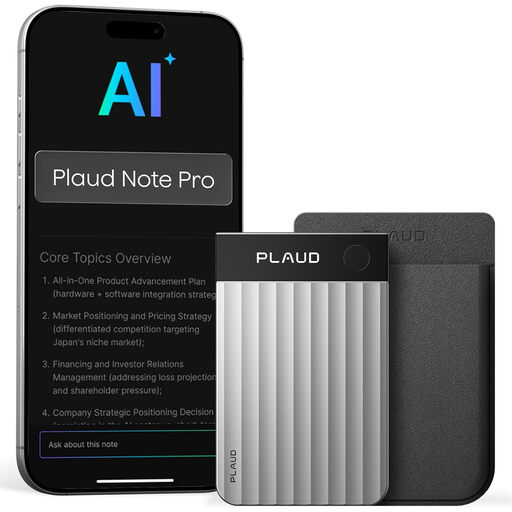 No image available
If you want to review several takes, consider whether the note-taking and summarising purpose mentioned in the product name fits your workflow.
 No image available
The product name lists 64 GB and transcription; check whether the recorder and transcription function suit the way you record and find your takes.
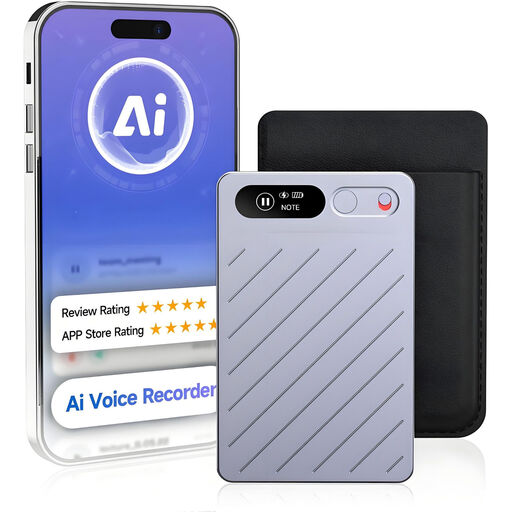 No image available
The product name lists 64 GB, transcription and summaries in 118 languages; check whether these features suit what you want to do with your recorded takes.
 No image available
The product name lists 128GB and model L357. If you want to play back your takes, check whether the controls and file transfer suit your workflow.
No, not always. It can be useful if quiet and loud passages make it difficult to set the digital recording level, but good microphone placement and a test recording are still important.
First, make a recording from the position where you’ll actually be speaking. Compare it with a recording where the microphone is closer to your voice, and check that you still have enough room to move.
For the exact version, check what storage, power supply and any external microphone you’ll need, and what’s included in the box. Don’t assume a memory card is included without checking. If a product is faulty, the seller in the Netherlands is responsible for the statutory guarantee, as ACM ConsuWijzer explains.
That depends on the rights to the text and the version you use; ‘historical’ does not automatically mean copyright-free. According to Auteursrecht.nl, in the usual situation copyright expires 70 years after the creator’s death, calculated from 1 January of the following year. Check the specific text, any adaptation and your intended publication.
Before making the recording public, consider whether you are processing other people’s personal data. The Dutch Data Protection Authority describes a limited exception for purely personal or household use; this exception does not automatically apply to publication on behalf of a business.