Who is this choice relevant to?

Creators who want to capture the sound of the hall

You’re recording a historical monologue in which the acoustics are part of the storytelling, and want to choose how much of the room can be heard alongside the voice. Zoom and Tascam recording patterns give you different options to compare on location.

Creators who want every sentence to remain clear

You’d like some reverberation, but the words still need to be clear when you listen back. Shure explains how microphone distance and position affect the balance between direct speech and reflections.

Creators recording on location by themselves

You want to record a complete performance without a complicated set-up, and check in advance that recording, storage and power are all sorted. The Zoom and Philips manuals describe the storage and operating options available on different models.

What should you look for when choosing?

Stereo recorder with adjustable patterns

A good fit when: the hall’s acoustics are an intentional part of the monologue and you can try different positions and stereo modes.

Bear in mind: a wider or more distant recording can also pick up more background noise; a stereo mode does not guarantee clear speech.

Compact stereo recorder with a fixed X/Y set-up

A good fit when: you want to record in stereo by yourself, with fewer microphone set-up choices; the Zoom H1essential is one example, with fixed X/Y microphones.

Bear in mind: unlike the Tascam DR-07XP, its X/Y set-up cannot be switched to A-B; the recording position still determines how much reverberation you capture.

Voice recorder

A good fit when: your main aim is to listen back to the words or transcribe them, and a strongly spatial sound is less important.

Bear in mind: voice-focused features do not prove that the hall’s reverberation will be retained; where possible, compare a test recording with and without this processing.

What to consider What should you check? Who is this important to?
Audible room ambience Compare the available stereo patterns and make test recordings from different positions at the location; listen back on headphones. If you want to hear the acoustics without making the recording unusable, capturing the sound of the room is your priority. Around 36% of consumers put room ambience first.
Clarity Compare a position closer to the speaker with one that captures more of the room; assess complete sentences. If you want to be able to follow every sentence and welcome some reverberation, clarity matters most to you. Around 29% of consumers prioritise clarity.
Recording by yourself Check the storage medium, available recording time in your chosen format, power supply, and whether you can monitor and play back the recording. If you want to record the full performance on location by yourself, you’ll want to be sure in advance that recording and storage work. Around 21% of consumers put reliable recording by themselves first.
Post-production Compare the recording formats supported by the exact models and choose your settings before making a test recording. If you want to edit the recording later or adjust its level, the file options are what matter most to you. Around 14% of consumers prioritise post-production.

Common buying mistakes

  • Expecting a stereo mode to create the atmosphere you want automatically

    The room and microphone position affect the balance between the voice and reflections. Too much reverberation can make the words less clear.

    Record the same passage from several positions and listen back to the complete sentence, not just a pause or an isolated sound.

  • Confusing voice optimisation with preserving the hall’s reverberation

    The manufacturer describes the Sony ICD-UX570’s voice-focused recording function as a way to optimise settings for voice frequencies. This does not show that it will preserve the room ambience you want.

    Before using this processing during the monologue, compare a test recording on your chosen model with and without it.

  • Leaving storage and power checks until recording day

    The Philips DVT4115 has internal storage; the Zoom H1essential manual explains how to insert a microSD card.

    Check what’s included with the exact product listing and make a full test recording in advance.

    Depending on the model, you may need a storage medium or a suitable power supply; check this against your planned recording duration.

Brands to consider

Zoom

Worth considering if you’re looking for a portable recorder that lets you compare different stereo recording patterns.

  • The H2essential offers 90° and 120° stereo, among other options; the H1essential has fixed X/Y microphones and headphone monitoring.
  • These model-specific features do not prove which recorder will deliver the balance of voice and reverberation you want in your hall.

Tascam

Worth considering if you’re looking for a stereo recorder with switchable A-B and X-Y microphone configurations.

  • The DR-07XP has switchable A-B and X-Y microphones; Tascam specifies a 32-bit-float mode for the DR-07XP and DR-05XP.
  • The recording mode does not guarantee a good balance between voice and reverberation; the switchable microphone configuration is specifically confirmed here for the DR-07XP.

Philips VoiceTracer

The DVT4115 is worth considering if internal storage and stereo PCM or MP3 are important to you.

  • Philips lists 8 GB of internal storage and stereo PCM and MP3 recording for the DVT4115.
  • These specifications do not determine how the recorder will capture the reverberation you want in your room.

Sony

The ICD-UX570 is a useful point of comparison if quick playback and voice-focused recording features are your priorities.

  • Sony describes Auto Voice Recording, search functions and direct USB file transfer.
  • These operating features do not show that voice optimisation will preserve the room reverberation you want.

Joybuy products

The Joybuy options below are voice recorders for anyone who wants to record a monologue independently. Compare the listed storage and recording features with the room ambience you want, and check the settings before making your full recording.
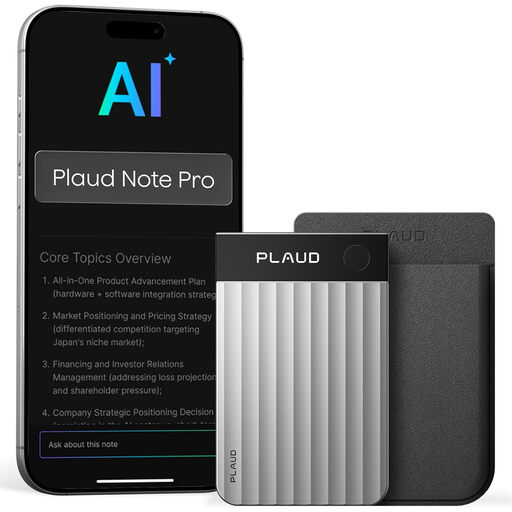
Plaud Note Pro AI Notes & Summary Voice Recorder in silver

Plaud Note Pro AI Notes & Summary Voice Recorder, Silver

For anyone looking for a voice recorder with built-in storage. The product description lists 32 GB of built-in storage; the product name mentions AI Notes & Summary.

View on Joybuy

Digital voice recorder with 64 GB and transcription function

Digital Voice Recorder, 64 GB

For anyone looking for digital voice recording with a transcription function. The product name mentions 64 GB and transcription.

View on Joybuy
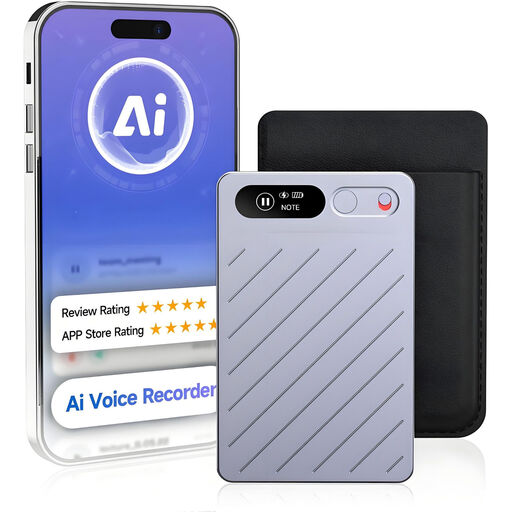
AI Dictation Device Mini Voice Recorder, 64 GB

AI Dictation Device Mini Voice Recorder, 64 GB

For anyone looking for a mini voice recorder with transcription and summarisation. The product name mentions 64 GB and support for 118 languages.

View on Joybuy

Rexsun L357 digital voice recorder, 128 GB

Rexsun L357 Digital Voice Recorder, 128 GB

For recording and listening back independently. The product description lists one-button recording, WAV and MP3 formats, voice-activated recording and A-B repeat.

View on Joybuy

Rexsun L810 digital voice recorder, 64 GB

Rexsun L810 Digital Voice Recorder, 64 GB

For anyone who wants to record and listen back using headphones. The product description lists WAV recording, voice activation, included headphones and compatibility with Windows, Mac and Android.

View on Joybuy

Frequently asked questions

Can I preserve the reverberation while keeping the voice clear?

Yes, but the usable balance depends on the room and the microphone position. Make short test recordings at different distances and listen back to check that the words remain clear; a recorder cannot separate direct speech from reflections once they have been recorded.

Do I need to set up the recorder in advance?

Yes. Before the performance, check that the chosen storage medium is in place and usable, the power supply is working and the desired recording format is selected. The Zoom H1essential manual explains how to insert a microSD card and set up the recorder; for other models, follow their own manuals.

Who should I contact if my recorder turns out to be faulty in the Netherlands?

According to the Dutch government, you can contact the seller to find a solution. The Netherlands does not have a fixed statutory guarantee period for every product; a manufacturer’s guarantee is in addition to your statutory rights.

Can I publish the monologue if other people are recognisable in the recording?

A sound recording in which someone is recognisable may contain personal data. According to the Dutch Data Protection Authority, publishing other people’s personal data online generally requires a valid legal basis; separate rules apply to purely personal or household use. Before publishing, consider who is recognisable and who the recording is intended for.
