With the fan running during a historical monologue, a suitable external directional microphone placed close to your voice gives you the most flexibility, provided it’s compatible with your recorder’s input. Shure explains that a directional microphone is most sensitive at the front. A handheld recorder may be enough if you can improve the distance and positioning. A compact voice recorder is handy for recording and listening back, but features such as filters or noise reduction don’t guarantee a noise-free recording.
Who is this choice relevant to?
Narrator beside a running fan
Your main priority is keeping your words clear. Before relying on digital noise features, compare the distance to the microphone, the direction in which it is most sensitive and whether you can connect an external microphone.
Narrator who moves during recording
If you change position, you’ll want to keep the microphone at a consistent distance. Check whether a microphone placed close to your voice suits the way you work, and whether the recorder has the right input.
Narrator making a long recording
You’ll want to record the monologue without interruption, then be able to listen back or edit it. Check the power supply, storage, file formats and file transfer for the exact model.
What should you look for?
Handheld recorder with built-in microphones
Choose this when: you’ll be speaking in one place and can position the recorder close to you. You could also switch off the fan or move it further away.
The trade-off: this simple set-up may also pick up sound from other directions. A low-cut filter won’t remove all fan noise.
Recorder with an external directional microphone
Choose this when: the fan needs to stay on and you can position a suitable microphone close to your voice, with its less sensitive side facing the source of the noise.
The trade-off: you’ll need extra equipment and a compatible input. The Zoom H4essential has XLR/TRS inputs; for other models, check that the microphone is compatible with the input.
Compact voice recorder
Choose this when: simple recording, file transfer and finding specific passages are important to you.
The trade-off: voice recording features don’t prove that a model will reduce fan noise enough in your room. Make a test recording from the distance you plan to speak at.
Whichever option you choose, making a test recording with the fan set to its usual level is a practical way to check how clear your voice sounds from your usual speaking position. Shure explains how a microphone’s direction affects its sensitivity to sound from different directions.
| What to consider |
What should you check? |
Who should consider this? |
| Clarity |
Check the microphone’s direction, speaking distance and connection. A low-cut filter is no substitute for a suitable set-up. |
If I want my words to stay clear while the fan is running, I’ll prioritise clarity over extra features. Around 42% of consumers say intelligibility despite fan noise is their main concern when buying. |
| Freedom of movement |
Decide whether you’ll be sitting still. If you’re using an external microphone, check the connection and power requirements for the exact model. |
If I move while speaking, I’ll want to avoid the distance between my voice and the microphone changing constantly. Around 25% of consumers prioritise freedom of movement during a monologue. |
| Recording time |
Check the storage, power supply and recording settings for the planned duration, and test them beforehand. |
If I want to record the entire monologue in one go, I’ll want to make sure storage or power doesn’t interrupt the recording. Around 17% of consumers give uninterrupted recording their highest priority. |
| Listening back and editing |
Check the supported file formats, headphone monitoring and how to transfer your files. |
If I want to find specific passages or edit the monologue, I’ll want to know how to listen back to and transfer recordings. Around 16% of consumers prioritise editing and listening back. |
Common buying mistakes
-
Assuming ‘noise reduction’ guarantees a noise-free recording
A low-cut filter is designed for lower frequencies; its presence doesn’t prove that it will remove fan noise in your room. Zoom describes AI noise reduction for the Essential series as a firmware feature, not as a measurement taken in this recording situation.
First, compare the microphone distance and direction. Make a short test recording with the fan on, then listen back.
If a recording isn’t usable, you may need to record the performance again or spend extra time editing it.
-
Choosing an external microphone without checking the input
An XLR microphone won’t connect directly to every mini-jack input. The microphone power required can also vary between combinations.
Before choosing, check the microphone connection and power requirements alongside the exact recorder model.
You may need a different microphone or a suitable connection solution.
-
Relying only on the stated recording time
The recording settings and model you choose both affect the storage and power needed for a long monologue.
Test your preferred settings and check that you have enough storage and power before recording the full performance.
You may need extra storage or power for the planned recording.
Brands to compare
Zoom
The H1essential has built-in X/Y microphones and a mini-jack input; the H4essential also offers two XLR/TRS inputs.
- The different connections give you options for an external microphone. Check which type is compatible with your recorder.
- Zoom says AI noise reduction is available via a firmware update for the Essential series. This is a manufacturer claim, not an independent measurement of fan noise during a monologue. Check the firmware for the exact model.
Tascam
The DR-05XP has built-in omnidirectional microphones, low-cut options and a mini-jack input for a compatible external microphone.
- Tascam lists 32-bit float recording and a range of file formats for this model.
- The built-in microphones are omnidirectional; a low-cut filter won’t automatically remove all fan noise.
OM SYSTEM
The WS-883 is a portable voice recorder with built-in storage, direct USB transfer and a low-cut filter.
- The stated storage and USB transfer offer a straightforward way to transfer recordings.
- The manufacturer describes the filter as working on lower frequencies; results with fan noise depend on the room and positioning.
Sony
The Dutch product information for the ICD-UX570 describes voice settings, USB transfer and features for finding specific passages.
- Sony describes Auto Voice Recording as a feature that adjusts recording settings to suit voice frequencies.
- Sony’s claim about background noise isn’t a comparison with other recorders or a guarantee of a noise-free monologue.
Philips VoiceTracer
The technical documentation for the DVT4110 lists built-in omnidirectional and directional microphones, PCM/MP3 recording and an external microphone input.
- The combination of microphone types and recording formats described gives you features to compare for the exact model.
- The manual covers several models and lists features by model; check the specifications for the precise DVT model.
Joybuy products for voice recording
The Joybuy products below are compact voice recorders for recording spoken content and processing it or listening back. Their product names don’t tell you how clear a recording will be with fan noise, so assess this separately for your set-up.
 No image available
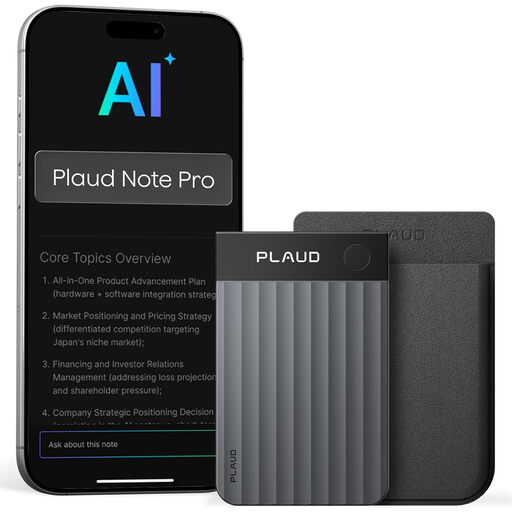
Plaud Note Pro AI Voice Recorder (Black)
Suited to anyone who also wants to turn a recording into notes or summaries; check that the stated features fit the way you work.
The product name lists Notes & Summary and the Black variant.
View at Joybuy
 No image available
Digital Voice Recorder 64 GB with Transcription Feature
An option to compare if you also want to convert a recording to text; the product name alone doesn’t indicate how clear it will sound with fan noise.
The product name lists 64 GB of storage and a transcription feature.
View at Joybuy
 No image available
AI Dictation Device 64 GB, Mini Voice Recorder with Transcription and Summaries in 118 Languages
Suited to anyone who also wants to turn a spoken monologue into text; check that the stated features meet your intended needs.
The product name lists 64 GB of storage, plus transcription and summaries in 118 languages.
View at Joybuy
 No image available
Rexsun L357 Portable Digital Voice Recorder, 128 GB, Grey
Compare this model if you want to listen back to the monologue later; also consider how you’ll transfer the files to suit the way you work.
The product name lists 128 GB of storage and the L357 variant in grey.
View at Joybuy
 No image available
Rexsun L810 Digital Voice Recorder, 64 GB, Grey
An option to compare if you want to keep and process the recording later; check that the storage and file transfer suit your planned monologue.
The product name lists 64 GB of storage and the L810 variant in grey.
View at Joybuy
Frequently asked questions
Does 32-bit float remove fan noise?
No. Manufacturers describe 32-bit float as a recording format, not a way to keep ambient noise out of the microphone. Start by considering the microphone’s distance and direction, then assess any noise features with a test recording.
How do I test the recorder before the monologue?
Make a short recording from the planned speaking position, with the fan running at its usual setting. Point a suitable directional microphone towards your voice, try to keep the source of the noise outside its most sensitive direction, then listen back before starting the full monologue.
What should I consider for a long recording?
Before recording, check the power supply, available storage, recording settings and file transfer for the exact model. Test the set-up beforehand with a recording of a similar length.
Can I publish a monologue if other voices are also audible?
If other people are identifiable in the recording, treat publication as a separate privacy matter. The Dutch Data Protection Authority considers identifiable audio recordings to be personal data and states that, in most cases, you need consent to publish someone else’s personal data online.


