Who are these recorders suitable for?

Creator with a soft voice

Practising an intro that needs to remain clear without straining their voice. Microphone position, background noise and a test recording are worth considering before focusing on a higher quoted resolution. Shure recommends a quiet room and keeping the microphone close to the speaker.

Bilingual speaking duo

Wants to monitor two voices or edit them separately. Consider whether separate microphone inputs are worth the extra setup; the Zoom H4essential has two XLR/TRS inputs.

Pronunciation-focused learner

Records several takes and wants to listen back to specific words or transitions between languages. A-B repeat, adjustable playback speed or shadowing may be useful: Sony lists the first two features for the ICD-UX570, while OM SYSTEM mentions shadowing and playback features for the WS-883.

What should you look for when choosing?

Compact voice recorder

Choose this if: you mainly want to record short takes and listen back to your wording or pronunciation. OM SYSTEM lists shadowing and playback features for the WS-883; Sony lists A-B repeat and adjustable playback speed for the ICD-UX570.

Bear in mind: playback features won't automatically make the original recording clearer.

Portable recorder with built-in microphones

Choose this if: you want to record an entire intro quickly. Zoom lists 32-bit float recording for the H1essential, as does Tascam for the DR-05XP.

Bear in mind: this recording mode won't automatically reduce echo or background noise. According to Zoom, the H1essential cannot record or play back without a microSD card.

Recorder with separate microphone inputs

Choose this if: each speaker needs their own microphone so you can record and edit their voices separately. The Zoom H4essential has two XLR/TRS inputs.

Bear in mind: you may need extra microphones, cables and stands. Also check the connections and whether phantom power is required.

What to consider What should you check? Who should pay extra attention?
Clarity of soft voices Check that you can position the microphone well, and assess a test recording through headphones. If my voice is soft, I want to hear in a test recording whether the words are still clear. Around 36% of consumers give clear soft speech their top priority.
Recording two voices separately Count the microphones you need and check the connections and any phantom power requirements for the exact model. Suitable inputs matter for a duo who want to record and edit each voice separately. Around 29% of consumers prioritise recording two voices on separate tracks.
Listening back to language and pronunciation Check whether A-B repeat, playback speed or shadowing on each model suits the way you practise. If I want to listen again to a language transition or pronunciation, I look for specific playback features. Around 21% of consumers give listening back to language and pronunciation their top priority.
Getting started easily Check whether storage and power are built in or needed separately, and how to transfer files. For anyone who wants to record a short practice take straight away, a simple setup can make all the difference. Around 14% of consumers prioritise recording quickly and easily.

Pitfalls to avoid when choosing

  • Expecting 32-bit float to make a soft voice clear automatically

    Clarity also depends on how far you are from the microphone and the noise in the room. A recording mode won't automatically prevent echo or background noise.

    Make a test recording with both voices at their usual speaking volume and listen back before settling on a setup.

  • Overlooking how much storage you need

    According to Zoom, the H1essential cannot record or play back without a microSD card. The WS-883 lists built-in memory, so storage options vary by model.

    Before you buy, check what storage the exact model needs and what is included with the version you choose.

    The H1essential may need a separate memory card; check whether one is included with the version you choose.

  • Assuming two inputs are all you need for a two-person setup

    The Zoom H4essential has two XLR/TRS inputs, but what else you need depends on your chosen microphones and whether they require power.

    Before you buy, check the connections and power requirements of both microphones.

    Your setup may also require separate microphones, cables and stands.

Brands to consider

Zoom

The H1essential is a compact recorder with built-in X/Y microphones; the H4essential has two XLR/TRS inputs for external microphones.

  • Zoom lists 32-bit float recording and variable-speed playback for the H1essential.
  • According to the manual, the H1essential cannot record or play back without a microSD card. The two XLR/TRS inputs are on the H4essential, not the whole range.

Tascam

The DR-05XP is a portable recorder with built-in stereo microphones for quick, easy recording.

  • Tascam lists 32-bit float recording, an external microphone input with plug-in power, and the ability to use it as a USB-C audio interface.
  • Built-in omnidirectional microphones alone don't tell you whether two soft voices at a distance will be recorded clearly and separately.

OM SYSTEM

The WS-883 is designed for voice recording and playback, with features that can also be useful for language practice.

  • OM SYSTEM lists built-in memory, USB file transfer, shadowing and playback features.
  • OM SYSTEM describes PCM recording on this model as mono; playback features are not separate recording tracks for two speakers.

Sony

The ICD-UX570 is a compact voice recorder for anyone who wants to listen back repeatedly.

  • Sony Netherlands lists A-B repeat, adjustable playback speed, 4 GB of built-in memory and USB charging.
  • These model specifications are not an independent assessment of how clearly soft voices are recorded.

Philips

The VoiceTracer DVT4115 combines built-in memory with stereo recording.

  • Philips lists stereo recording in MP3 and PCM formats, three built-in microphones and control through a smartphone app.
  • Claims about recording soft or distant speakers come from the manufacturer. Test the clarity with a recording in your own practice space.

Voice recorders on Joybuy

These Joybuy products are suited to recording and listening back to short practice takes. For each model, check whether any transcription features and controls suit your bilingual intro.
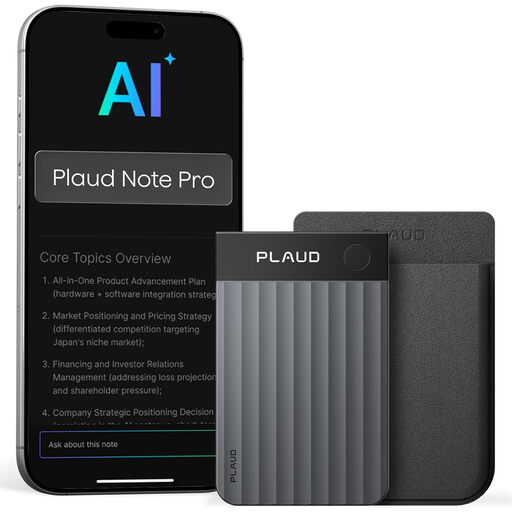
Plaud Note Pro AI voice recorder, black

Plaud Note Pro AI Voice Recorder (Black)

A good fit if you're looking for a compact voice recorder for short practice takes. Check whether the controls and advertised note-taking and summarising features suit your bilingual workflow.

View at Joybuy

Digital voice recorder with transcription, 64 GB

Digital voice recorder with transcription, 64 GB

A good fit if you want to record a practice take and are also considering the advertised transcription feature. Check which languages and controls are available for your intro.

View at Joybuy

AI dictation device, 64 GB

AI dictation device, 64 GB

Could suit anyone who wants to combine a practice recording with the advertised transcription and summarising features. Check whether your preferred languages are among the 118 listed.

View at Joybuy

Rexsun portable digital voice recorder L357, 128 GB

Rexsun L357 portable digital voice recorder, 128 GB

A good fit if you're looking for a portable recorder to capture and play back practice takes. The product name lists 128 GB; check the controls and storage format to make sure they suit your needs.

View at Joybuy

Rexsun digital voice recorder L810, 64 GB

Rexsun L810 digital voice recorder, 64 GB

A good fit if you want to record and save practice files; the product name lists 64 GB. Before you buy, check that the controls and included accessories suit your practice setup.

View at Joybuy

Frequently asked questions

Is 32-bit float recording essential for a soft voice?

No. Zoom lists this recording mode for the H1essential, and Tascam does the same for the DR-05XP. However, a quiet room, suitable microphone positioning and a test recording are still important for clarity. Listen to the recording through headphones too.

What should you get ready before practising with the H1essential?

Insert a compatible microSD card: according to Zoom, recording and playback aren't possible without one. Then make a short test recording and listen to check that both language passages are clear.

Do you always need two external microphones for two voices?

Not if you only want to listen back to a practice take together. If you want to record and edit both voices separately, the Zoom H4essential's two XLR/TRS inputs offer one option. Check that your chosen microphones are compatible and whether they need power.

What can you do if a recorder bought in the Netherlands is faulty?

Contact the seller; according to the Dutch government, they must provide a solution if a product is faulty. The Netherlands has no set statutory guarantee period: what you can expect from a product depends, among other things, on the product and the information provided at the time of purchase. Online purchases generally also come with a 14-day cooling-off period after delivery, subject to exceptions set out by ACM ConsuWijzer.

Can you publish a recognisable voice from a practice recording in a podcast without permission?

Don't assume you can. The Dutch Data Protection Authority considers recognisable audio recordings to be personal data; in most cases, you need permission to publish them online. The applicable legal basis depends on the circumstances.
