What should you look for?
Start with where you’ll record and how you work. Then decide whether you need extra connections or more options for editing afterwards.
Compact voice recorder
A good fit if: you mainly want to quickly record and play back a spoken draft.
Bear in mind: the controls and microphone placement need to suit a recording you plan to publish.
Handheld recorder with built-in microphones
A good fit if: you want to record independently and edit passages with varying vocal volume.
Bear in mind: a flexible recording format is no substitute for a suitable microphone distance or a quiet room.
Recorder with XLR/TRS inputs
A good fit if: you specifically want to connect a compatible external microphone.
Bear in mind: check which type of connection and power supply your microphone needs.
| What to consider |
What should you check? |
Which consumers is this most important to? |
| Clear speech in your own room |
Make a test recording from your usual speaking position; compare a different microphone distance if needed. |
If I record in my own room, I want to assess whether my words remain clear against the room sound. Around 36% of consumers prioritise clear speech in their own recording space. |
| Quiet and powerful passages |
Check which recording formats are available and test both your quietest and most powerful passage. |
When giving an expressive reading, I want to be able to work with quiet and loud sections without losing sight of my recording approach. Around 29% of consumers prioritise handling changes in vocal volume. |
| Recording and listening back to specific sections |
Check the controls, storage and power, and whether you can open a recorded file in your editing software. |
If I regularly record and check short passages, I want to be able to record and listen back without unnecessary preparation. Around 21% of consumers particularly value a simple, repeatable process. |
| Connecting an external microphone |
Check the exact input type, compatibility and whether the microphone needs a separate power supply. |
If I want to position a microphone closer to my mouth or use a more elaborate setup, I want to know whether it will connect to the recorder. Around 14% of consumers prioritise being able to add a microphone. |
Joybuy products
This selection includes compact voice recorders for recording and playback, as well as a wireless microphone kit as a possible option for positioning the microphone close to the speaker. Check that the features and connections suit the way you record and edit.
 No image available
Plaud Note Pro (Silver)
A compact voice recorder for recording and processing spoken notes.
The product name mentions AI Notes & Summary and the colour Silver.
View at Joybuy
 No image available
Digital Voice Recorder 64 GB
A voice recorder for making spoken recordings and working with them afterwards.
The product name mentions 64 GB and a transcription function.
View at Joybuy
 No image available
Rexsun 128GB Portable Digital Voice Recorder L357
A portable voice recorder for listening back to passages as well.
The product name mentions 128 GB of storage and model L357.
View at Joybuy
 No image available
Rexsun 64GB Digital Voice Recorder L810
A voice recorder for making spoken recordings and playing them back straight away.
The product name mentions 64 GB, one-button recording and model L810.
View at Joybuy
 No image available
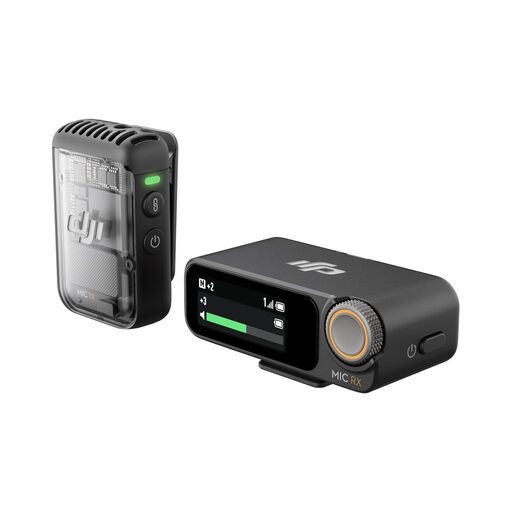
DJI Mic 2 (1 TX + 1 RX)
A wireless microphone kit for anyone who wants to position the microphone close to the speaker.
The product name mentions internal 32-bit float recording. Check that this microphone kit suits your recording equipment and editing workflow.
View at Joybuy
Frequently asked questions
How can I stop an expressive passage from ruining my recording?
First, record a short test using both your quietest and most powerful voice, then listen back with headphones. According to their product specifications, Zoom and Tascam offer a 32-bit float mode for the H1essential and DR-05XP respectively. It won’t fix a poor microphone position or distracting background noise.
Do I need to buy an external microphone straight away for a review?
Not necessarily: start by making a test recording with the built-in microphones. If your voice doesn’t sound clear enough in your room, see whether you can position a suitable microphone closer to you and check that the recorder has the right input.
What should I check before a longer recording session?
Check the power supply, available storage, selected file format and whether a test file opens in your editing software. Sony lists built-in memory for the ICD-UX570, and Philips does the same for the DVT4115. For the version you choose, also check the packaging and manual.
What are my rights if a recorder I bought online doesn’t work properly?
When you buy as a consumer in the Netherlands, a product must meet the expectations you were entitled to have of it under normal use. ACM ConsuWijzer says the seller must offer an appropriate solution if the product is faulty. This is separate from the cooling-off period for online purchases: according to the Dutch government, in many cases this is 14 days, subject to conditions and exceptions that may depend on the purchase.
Can I use extracts from the book or audiobook I’m reviewing in a public recording?
You can’t automatically share or publish a recording made for private use; the Dutch government makes this distinction explicit. According to Auteursrecht.nl, a short, relevant quotation from a published work may be used in a review under certain conditions, with the source and author credited and no more included than necessary. Check the rights for an existing audio extract from an audiobook separately.


