
Narrator with their own microphone
You already have a microphone, or want to position it separately from the recorder. Check that the recorder has the right connection and monitoring, and provides any power your microphone may need.


Choose a recorder based on your microphone setup. Built-in microphones may be enough for simple test recordings, while a suitable XLR input gives you more freedom to position a separate microphone for narration. That flexibility won’t solve echo or fan noise, so make a test recording in the booth and check monitoring, power and storage for a full chapter.
You already have a microphone, or want to position it separately from the recorder. Check that the recorder has the right connection and monitoring, and provides any power your microphone may need.
You want to find out whether ventilation, outside noise or reflections in the small space will be audible. A test recording from your intended position will help you assess the setup.
You record longer chapters in one go and want to check in advance that the power, monitoring and file management suit the way you work.
Start with your microphone and where you’ll be speaking. Then assess the acoustics and whether the recorder can handle a full chapter session.
A good fit if: you want a simple recording setup and can position the recorder suitably for your voice.
Bear in mind: the microphone position changes whenever you move the whole recorder.
A good fit if: you want to start with the built-in microphones but also have the option to connect a separate microphone.
Bear in mind: the cable, microphone and power supply need to be compatible with the input you choose.
A good fit if: you already have a suitable microphone and want to position it separately from the recorder.
Bear in mind: you’ll need a separate microphone and a suitable setup; you may not use the extra inputs if you’re recording a single voice.
| What to consider | What should you check? | Who is this important for? |
|---|---|---|
| Microphone connection and positioning | Check the type of input and whether phantom power is available. Also see if you can position the microphone separately from the recorder. | If you want to choose or move the microphone yourself, make its connection and positioning your priorities. Around 36% of consumers say this is their top buying priority. |
| Booth noise and reflections | Make a short voice recording from your intended position, then listen through headphones for reflections and background noise. | If ventilation or outside noise could affect your recording, you’ll want to hear what the booth picks up first. Around 29% of consumers prioritise a quiet recording with little echo. |
| Recording full chapters in one go | Check the power options, storage and file transfer. Test the recorder for a session that matches your schedule. | If you record longer chapters in one go, you’ll want the power and file management to suit the way you work. Around 21% of consumers prioritise manageable, long sessions. |
| Simple equipment | Decide whether you’ll use the built-in microphones or already have an external microphone, then compare the features you really need. | If you want to get started with as little separate equipment as possible, a simple setup may matter more than the option to expand it. Around 14% of consumers choose simplicity as their top buying priority. |
A recording format won’t change the booth’s acoustics. A microphone can still pick up unwanted reflections and sounds from the room.
Make and listen to a test recording from your intended position, even if the recorder supports 32-bit float recording.
Allow time to adjust the booth and re-record sections if you can hear distracting noise.
If you choose a recorder for a separate microphone, you’ll also need a suitable microphone and setup before you can record narration.
Plan your entire recording chain in advance. The Zoom F3, for example, is designed for use with an external microphone, while the H4essential also has built-in microphones.
A separate microphone, compatible cable and setup are extra items to factor into your choice.
The DR-40XP is a separate model; specifications for the DR-40X or Portacapture X6 don’t automatically apply to the DR-40XP.
Check the full model name and the specifications for the exact device you’re considering.
Zoom offers models for different microphone setups, from recorders with built-in microphones to models for separate XLR microphones.
The DR-40XP combines adjustable stereo microphones with two XLR/TRS inputs.
The MixPre-3 II is designed for a setup with separate microphones and multiple inputs.
The ICD-UX570 is a compact voice recorder with a built-in microphone.
The products below are portable voice recorders for capturing spoken audio. Before buying, check that the model has the connections and monitoring features to suit your microphone and intended audiobook recording.
 No image available
May suit simple voice recordings; check whether the connections and monitoring features are suitable for your narration setup.
Listed features include a 4-microphone array, 32 GB of storage and up to 30 hours of recording.
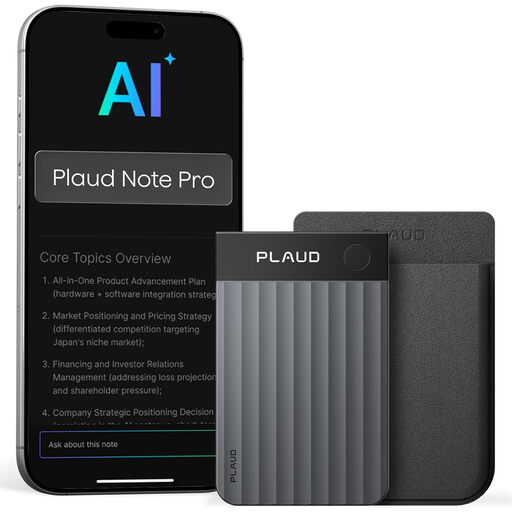 No image available
The listed features may suit capturing and processing spoken audio; check that the recording functions fit your chapter workflow.
The product name mentions one-touch recording; the description lists transcription and summaries.
 No image available
May be worth considering if you want to record and process spoken audio; check that the device suits the microphone setup you need.
The title lists 64 GB of storage; the product description mentions transcription and summaries in 118 languages.
 No image available
The listed recording and storage options may suit longer sessions; also check that it has the connections and monitoring features your microphone needs.
The product description lists WAV recording, 128 GB of storage, USB-C file transfer and up to 35 hours of continuous recording.
 No image available
May suit spoken audio recording; check that the recorder has the connections and monitoring features you need for narration.
The product description lists WAV recording, 64 GB of storage, USB-C file transfer and up to 22 hours of continuous recording.
No, 32-bit float isn’t a general requirement for this purchase. Zoom and Tascam offer it on specific models. A quiet space, suitable microphone positioning and checking the finished files are still separate considerations.
Make a short recording from the microphone position you plan to use, then listen through headphones for your voice, reflections and background noise. ACX recommends paying attention to outside noise and the recording space. If you’re submitting work to ACX, you can check a finished test file with the platform’s analysis tool.
For a consumer purchase, the Dutch government says you should contact the seller if a product isn’t working properly. The Netherlands has no fixed statutory guarantee period; what you can expect from a product depends, among other things, on the product itself and the information you were given when you bought it.
According to the Dutch government, you need permission from the rights holder to use and distribute someone else’s copyrighted book. Check the rights before publishing the audiobook.
Check the requirements of the platform where you plan to publish. ACX has requirements for finished audio files submitted to the platform and provides an analysis tool. These requirements aren’t automatically Dutch legal requirements or general requirements when buying a recorder.