
Creator working with several actors
You want to record voices on separate tracks during the same scene, so you can edit each voice individually later. Zoom, Tascam and RØDE describe models with different numbers of physical microphone inputs.


Choose a portable multitrack recorder if you want to capture atmosphere as well as dialogue; choose a podcast recorder or console if monitoring and control during a scene matter more. Zoom and Tascam describe portable models with built-in stereo microphones and external inputs, while Zoom and RØDE offer features for group recordings and live control. Before you buy, count the microphone inputs you’ll need to use at the same time: the number of recording tracks isn’t the same as the number of XLR inputs.
You want to record voices on separate tracks during the same scene, so you can edit each voice individually later. Zoom, Tascam and RØDE describe models with different numbers of physical microphone inputs.
You record spatial audio or practical sound effects alongside dialogue, so built-in stereo microphones and separate recording tracks are worth considering. Zoom and Tascam describe portable models with built-in stereo microphones.
You want to monitor actors, trigger sound effects or connect a remote participant during a scene. Zoom and RØDE describe monitoring and live-control features; check which connections and accessories each model requires.
Ideal for: recording dialogue on separate tracks while also capturing atmosphere or foley. The Zoom H6essential and Tascam Portacapture X8 combine built-in stereo microphones with four external XLR/TRS inputs, according to Zoom and Tascam.
Keep in mind: the number of tracks isn’t the same as the number of external microphone inputs. Zoom lists up to six tracks for the H6essential; Tascam describes up to six sources plus a stereo mix for the Portacapture X8 in MANUAL mode.
Ideal for: a group where individual headphone outputs and sound effects you can trigger instantly are important. Zoom describes the PodTrak P4next as having four XLR inputs, headphone outputs and sound pads.
Keep in mind: Zoom says you need a separate BTA-2 adapter for Bluetooth participation with the P4next.
Ideal for: a small, wired setup where you want faders, programmable pads and the option to record to a card, USB storage or a computer. RØDE lists these features for the RØDECaster Duo.
Keep in mind: the RØDECaster Duo has two physical combo inputs; other assignable channels aren’t additional XLR microphone inputs, according to RØDE.
| What to consider | What should you look for? | Who is this important for? |
|---|---|---|
| Separate voice tracks | Count the microphones you need to connect at the same time and check that their signals can be recorded separately. Zoom describes the H6essential as having four XLR/TRS inputs; Tascam lists four on the Portacapture X8, and Zoom lists four XLR inputs on the P4next. | If several actors are speaking at once, I want to be able to edit each voice separately. Around 33% of consumers give separate recording of multiple voices top priority. |
| Atmosphere and foley | Check whether it has built-in stereo microphones and how many external inputs remain available alongside them. Zoom and Tascam describe this combination for the H6essential and Portacapture X8 respectively. | When I also want to capture spatial audio or practical sound effects, I look for a way to record those sources separately. Around 27% of consumers prioritise atmosphere and foley recordings. |
| Monitoring and live cues | Check the number of headphone outputs, how the sound pads are operated and whether any adapters are required. Zoom describes headphone outputs and sound pads for the P4next; RØDE lists two headphone outputs and programmable pads for the RØDECaster Duo. | If actors need to hear themselves or I want to trigger cues during a scene, monitoring and control are important. Around 20% of consumers give live direction and monitoring top priority. |
| Storage and editing | Check where individual channels and the stereo mix are stored, and how to transfer files to your editing setup. Zoom describes microSD recording for the P4next; RØDE lists microSD, USB storage and computer recording for the RØDECaster Duo. | If I want to get started with editing quickly after recording, I look at storage and file transfer. Around 20% of consumers prioritise their editing workflow. |
A recorder can record more tracks than it has physical microphone inputs. According to Zoom, the Zoom H6essential can record six tracks and has four XLR/TRS inputs; the RØDECaster Duo has two physical combo inputs.
Make a note of which sources need their own microphone and track at the same time in a scene, then compare that with the physical inputs.
If there aren’t enough suitable inputs, you may need additional equipment.
A stereo mix and separate source channels are different recording files. If you want to edit each actor separately, check that the recording mode you choose saves the individual channels; Zoom describes both options for the PodTrak P4next.
Before you buy and before a recording day, check which files the selected mode saves.
According to Zoom, Bluetooth participation with the PodTrak P4next requires a separate BTA-2 adapter.
Check whether your setup uses USB, TRRS or Bluetooth, and whether an adapter is needed.
Recording an audio drama yourself doesn’t automatically give you the rights to existing texts, music or performances. The Dutch government explains that permission is required to use copyright-protected works; BumaStemra points out that performers and record companies may also hold rights.
Before publishing, identify the texts, music, effects and voices you’re using, and check what permissions or agreements you need.
Zoom describes both portable recorders with built-in stereo microphones and podcast recorders designed for group recordings.
Tascam describes the Portacapture X8 as a portable recorder with built-in stereo microphones and external inputs.
RØDE describes the RØDECaster Duo as a compact production console for a small, wired setup.
Below are Joybuy products described as voice or audio recording devices. For an audio drama with several actors, check specifically whether the recorder supports simultaneous microphone inputs and separate tracks.
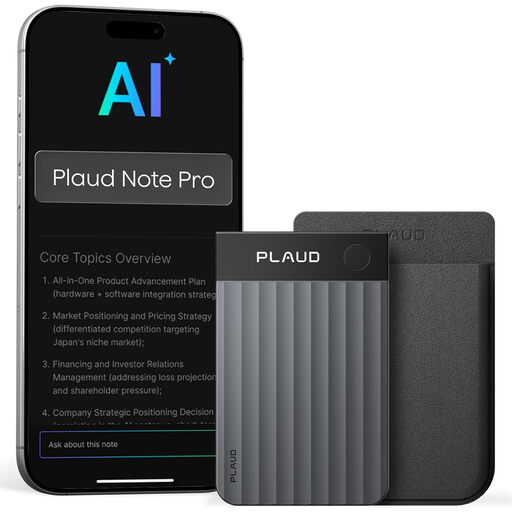 Image unavailable
The title describes this model as an AI voice recorder; the product description mentions one-touch recording.
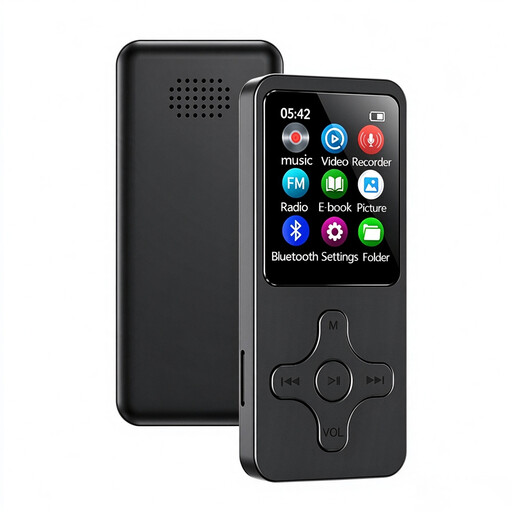 Image unavailable
Voice recording is listed alongside playback as a feature; check whether the recording functions suit the audio drama workflow you have in mind.
The product name also mentions an e-book reader and alarm function.
 Image unavailable
This portable digital voice recorder may be worth exploring for voice recordings; the listed recording formats are MP3 and WAV.
The product name lists 128GB; the description mentions USB-C file transfer. According to the description, AVR mode only records when sound is detected.
 Image unavailable
The title describes a digital voice recorder with one-touch operation; check whether its recording and connection options suit your editing setup.
The product name lists 64GB. The description mentions WAV recording and USB-C file transfer; according to the description, VOR mode pauses during silences.
 Image unavailable
The product description mentions a room recording mode and one-touch operation; check whether the recording is suitable for capturing separate voices.
The title lists 32GB, a stated storage capacity of 2000 hours and a stated battery life of 30 hours. It also mentions real-time AI transcription and translation in 58 languages.
Not unless you check the inputs and recording method. If four actors are each using their own wired microphone at the same time, you’ll need four suitable inputs and should check that the signals are recorded separately. Zoom lists four XLR inputs for the PodTrak P4next; according to Zoom and Tascam, the H6essential and Portacapture X8 each have four XLR/TRS inputs alongside built-in microphones.
Check which card types the recorder supports and make a test recording in advance, then play it back. In the H6essential manual, Zoom recommends formatting a new card, or one that has previously been used in another device, in the recorder.
If you’re a consumer in the Netherlands, the retailer is your point of contact for your statutory guarantee. The Dutch government states that there is no fixed statutory guarantee period in the Netherlands; what you can expect from a product depends on factors including the product and the purchase information.
Not simply because you made the recording yourself. The Dutch government states that you can only use copyright-protected books and music with the creator’s permission. BumaStemra points out that music in podcasts may also involve rights held by performers and record companies, so check which permissions your production needs.
Before publishing, decide which personal data you’ll process and what legal basis under the GDPR applies. According to the Dutch Data Protection Authority, publishing personal data online usually requires consent; whether an exception for personal or household use applies depends on who you share the recording with and how you share it.