Start by setting up a microphone close to each voice. Shure explains that a microphone won’t automatically separate direct speech from room reverberation. Next, choose enough simultaneous microphone inputs and separate tracks for your cast: a handheld recorder can also be used for recording ambience separately, while a podcast recorder is designed for conversations with several connected microphones. Before you buy, check which microphones, headphones, cables, power supply and storage you’ll still need.
Which recorder is right for you?
Creator recording in a reverberant room
You record dialogue at home and want clear, easy-to-understand voices. A recorder won’t remove room reflections; Shure points out that a microphone can’t automatically separate direct speech from reverberation.
Director of a small cast
You record several actors at once and need enough separate microphone inputs and tracks to edit their voices individually later.
Creator recording scenes and sound effects
As well as dialogue, you record separate ambience and sound effects, so you’re weighing up built-in microphones against a setup with external microphones.
What should you look for?
| What to consider |
What should you check? |
Who is this important for? |
| Clear, easy-to-understand voices |
Can you position a microphone close to the speaker? Remember to consider the room’s acoustics, too. |
If I’m recording dialogue in a reverberant room, clear voices and control over microphone distance matter most. Around 33% of consumers rank intelligibility as their top buying priority. |
| Inputs for actors |
Count the actors who need their own microphone at the same time, then check that there are enough suitable inputs. |
For scenes with several actors, I want to record and edit simultaneous voices separately. This is the top buying priority for around 27% of consumers. |
| Separate scenes and sound effects |
Check whether the model has built-in microphones and whether they suit the way you record. |
For separate scenes and sound effects, I also want to record outside my voice-microphone setup. Around 20% of consumers prioritise this approach. |
| Controls and monitoring |
Look at how the recorder is operated, its headphone connections and its options for separate tracks. |
During a session, I want simple controls and easy playback so I can spot problems in good time. Around 20% of consumers put this kind of recording control first. |
Common buying mistakes
-
Assuming 32-bit float recording removes room reverberation
A recording format won’t change the room’s acoustics. Shure explains that a microphone can’t automatically separate direct speech from reflected sound.
Before making a bigger purchase, record a test with microphones close to the actors and listen back.
An unusable recording can mean extra time spent on retakes or changing your recording location.
-
Confusing recording tracks with microphone inputs
The number of tracks doesn’t tell you how many wired voice microphones you can connect at once. The Zoom H4essential has four tracks and two XLR/TRS inputs; the RØDECaster Duo has two combo inputs.
Count how many actors need their own external microphone at the same time, then check the number of inputs on the exact model.
-
Budgeting for the recorder alone
Extra inputs are only useful if you also have the equipment needed to use them.
Make a list for your cast, then check what you’ll need for each recorder and what’s included.
Think about suitable microphones, cables, headphones, storage and, if needed, a power supply.
Brands to consider
Zoom
The H4essential combines built-in X/Y microphones with two XLR/TRS inputs. According to Zoom, the PodTrak P4next has four XLR inputs for a setup with several connected voice microphones.
- The H4essential can combine built-in microphones with external microphones.
- The H4essential doesn’t have four external XLR inputs, and neither model removes room reverberation.
Tascam
According to Tascam, the Portacapture X8 combines built-in microphones with four external XLR/TRS combo inputs.
- This specific model gives you the choice of built-in or external microphones.
- The extra inputs are only useful if you use suitable external microphones; these features apply to the X8.
RØDE
According to RØDE, the RØDECaster Duo is a compact production studio with two combo inputs, sound pads and multitrack recording.
- Its combination of inputs, sound pads and multitrack recording suits a compact production setup.
- Two wired combo inputs won’t give each of four actors their own XLR input.
Sound Devices
According to Sound Devices, the MixPre-6 II has four microphone preamps and supports 32-bit float recording.
- The manufacturer positions this model for uses including recording several actors and capturing location sound.
- Its recording function won’t remove room reverberation; check which microphones and accessories you’ll need, too.
Joybuy product selection
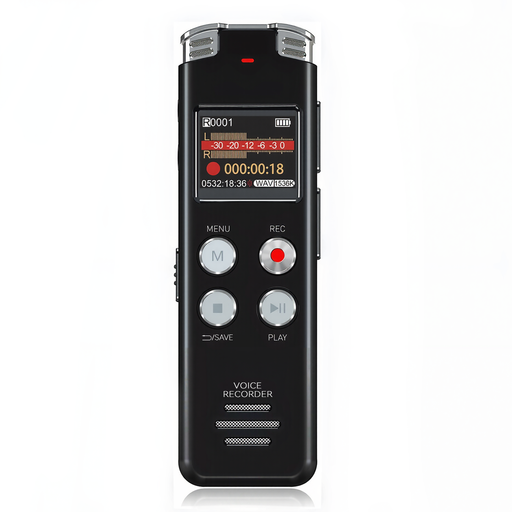
This Joybuy selection is a portable digital voice recorder for speech recordings. Check that its connections and operation suit the way you plan to record actors.
 No image available
Rexsun L357 portable digital voice recorder, 128 GB
For anyone who wants to record speech and find their files easily later.
Supports MP3 and WAV recording and has 128 GB of storage, A-B repeat and timestamped files. Recording is controlled with a single button.
View at Joybuy
Frequently asked questions
Will 32-bit float recording remove reverberation from my voices?
No. Recording format and room acoustics are two different things: according to Shure, a microphone can’t effectively separate direct speech from reflections. Focus first on microphone placement and finding a quieter recording space with fewer reflective surfaces.
How should I set up several microphones for a test recording?
Have each actor speak close to their microphone, then listen back to a short scene recorded with everyone together. RØDE also recommends a quiet room and careful microphone positioning when recording several people. This is manufacturer advice, not a guaranteed solution to microphone bleed.
Should I buy an extended warranty when purchasing in the Netherlands?
No, you already have a legal guarantee. According to the Government of the Netherlands, the seller must provide a solution if there’s a problem with a product. An additional warranty is only worthwhile if its terms give you extra rights.
Can I publish an audio drama using someone else’s text or music?
Not without permission. According to the Government of the Netherlands, you may only use copyright-protected texts and music with the creator’s permission. Check the rights for every work you use before publishing your audio drama.
What privacy checks should I make before publishing recorded voices?
If you publish recordings in which people can be identified and the GDPR applies, you need a valid legal basis for processing their personal data. Consent is one possible legal basis, but it isn’t the only one. The Dutch Data Protection Authority also notes an exception for purely personal or household use. Make sure your arrangements with participants reflect the purpose of the recording and how it will be published.


