
Cast in fixed positions
Suitable for performers who record from fixed positions and want to be able to edit voices individually afterwards. Count the microphone inputs and recording tracks you’ll need in advance.


For performers in fixed positions, a microphone placed close to each voice is a sensible starting point, provided the recorder has enough inputs and separate tracks. Lavalier microphones may suit performers who move around, but test for clothing noise and check which frequencies can be used at the recording location if you’re using a wireless system. None of these setups will remove the room’s reverberation.
Suitable for performers who record from fixed positions and want to be able to edit voices individually afterwards. Count the microphone inputs and recording tracks you’ll need in advance.
A wearable lavalier microphone may be a good fit when performers can’t stay by a fixed stand. Check how many performers will be recorded at once and test for clothing noise.
If you need clear dialogue, it’s worth assessing the distance from the microphone and the acoustics of the community centre with test recordings. A microphone won’t remove the room’s reverberation.
Start by working out how many performers will speak at once and whether they’ll stay in position. Then make a test recording in the room: both the distance from the microphone and the room itself affect how clear the dialogue sounds.
| Consideration | What should you check? | Who is this important for? |
|---|---|---|
| Clarity in a reverberant room | Test the planned speaking distance in the room; a cardioid pickup pattern won’t remove reverberation. | If I’m recording dialogue in a reverberant room, I want to know whether the words will remain clear at the intended distance. Around 36% of consumers prioritise clarity despite reverberation. |
| Recording voices separately | Count the performers speaking at the same time and check the number of microphone inputs and separate tracks. | When several performers speak at once, I want to be able to edit their voices separately. Around 29% of consumers prioritise separate recording tracks. |
| Freedom of movement | Check the number of transmitters and channels, and test the microphone for clothing rustle. | If performers move around during a scene, I want the microphone to move with them without distracting background noise. Around 21% of consumers place the greatest importance on this freedom of movement. |
| Subtle vocal detail in a fixed position | Compare test recordings and, if you’re using a condenser microphone, check that the input supplies the required phantom power. | When the room and speaking distance are manageable, I want to be able to assess subtle vocal details. Around 14% of consumers prioritise vocal nuance in a fixed position. |
A shotgun microphone doesn’t zoom in on sound. Reflections can also affect the sound indoors.
First, make a test recording in the community centre with the microphone close to the performer, then compare it with the boom setup you have in mind.
A failed dialogue recording can mean extra recording time.
The number of transmitters in a kit, along with a recorder’s inputs and tracks, limits how many voices can be recorded separately at once.
Count the performers speaking at the same time and map out the complete signal path for each voice before choosing your equipment.
A larger cast may need additional microphones, inputs, recording tracks or cables.
The Audio-Technica AT2020 is an XLR model that requires 48 V phantom power; the USB version is a different model.
Before buying, check the full model name, connection and power requirements.
You may need a suitable recorder or interface and an XLR cable to use it.
The SM58 is a wired option for dialogue recorded at close range from a fixed position.
The AT2020 is a wired cardioid condenser microphone for a fixed recording position.
Wireless PRO may suit up to two performers who move around and use lavalier microphones.
The MKE 600 is a boom option to test at close range and aimed towards the sound source in a scene.
These product picks focus mainly on wireless microphones for performers who move around, as well as a central conference speakerphone. Check whether each model suits the number of speakers and the equipment you use.
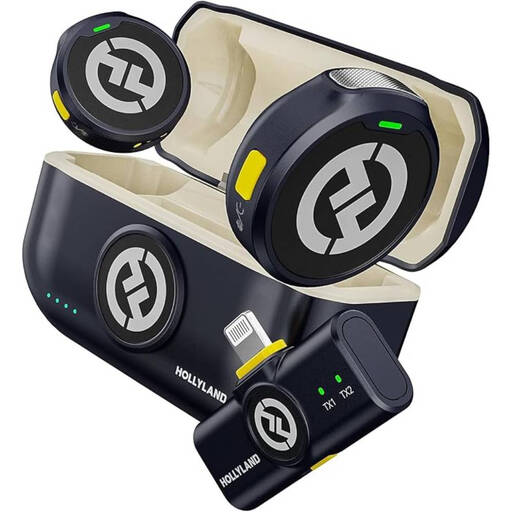 No image available
A wireless lavalier microphone system to consider for performers who move around during a scene.
Listed audio: 48 kHz/24-bit; transmitter weight: 9 g; stated transmission range: 300 m.
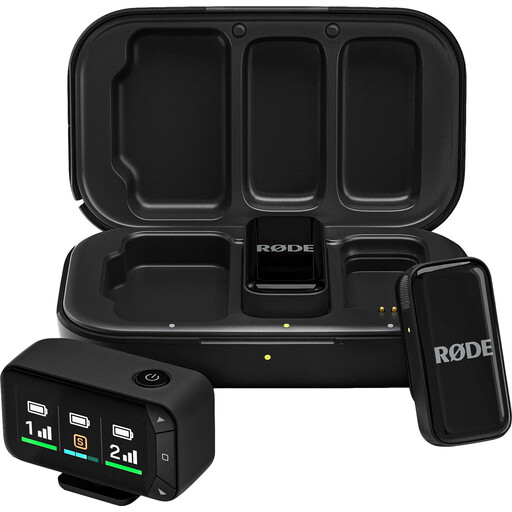 No image available
A wireless kit to consider if you need two microphones and receivers for a camera and smartphone.
The product name lists two microphones, a camera receiver, a smartphone receiver, a charging case and USB-C.
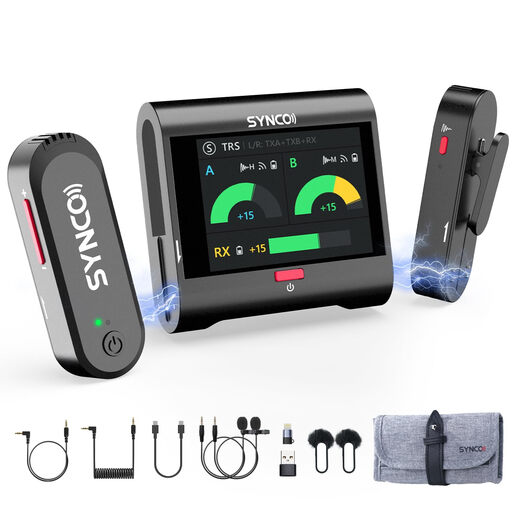 No image available
A wireless lavalier microphone system to consider for scenes with performers who move around.
The product name lists 2.4GHz and two lavalier microphones.
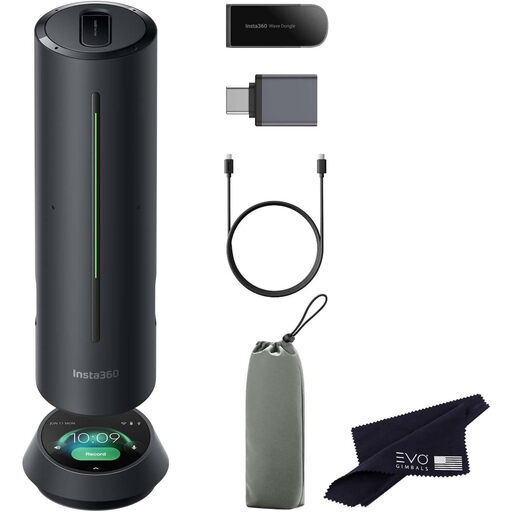 No image available
This is a Bluetooth conference speakerphone. Make a test recording to see whether a central setup suits the dialogue in your scene.
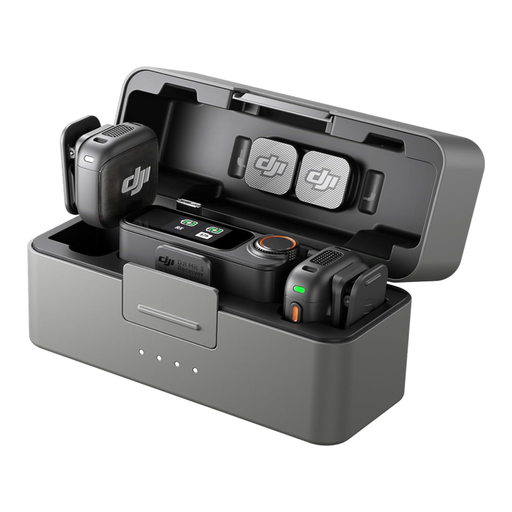 No image available
A wireless system to consider for scenes with two people speaking at the same time.
The product name lists two transmitters, one receiver and a charging case.
Don’t count on it: even a directional microphone doesn’t bring distant sound closer. Test your planned setup in the room, as distance and reflections can affect clarity.
First, count how many performers need a separate track at the same time, then choose a recorder with enough microphone inputs and recording features. Zoom lists four XLR microphone inputs and separate tracks for the PodTrak P4; check the specifications of the device you’re considering.
Ask the performer to move around in costume, then listen to a test recording for rubbing against the microphone or cable. Shure recommends testing the placement and cable fastening to reduce clothing noise.
That depends on the frequency and the applicable conditions of use. According to the Dutch Authority for Digital Infrastructure, the available UHF frequency spectrum varies by location, and a licence is required for some other frequency bands. So check the specific system and recording location before use.
According to the Dutch Data Protection Authority, a sound recording in which someone can be identified may contain personal data. If the GDPR applies to the processing, you’ll need a valid legal basis; consent is one possible basis, but it isn’t automatically the only one. Whether a particular recording or publication is permitted depends on the circumstances.