What should you look for?
First decide whether you’ll mainly be recording one voice up close, editing several simultaneous voices separately, or capturing ambient sound in the scene. Then choose a connection and recording chain that suit the way you work.
Dynamic USB microphone for one voice
Choose this setup if: you can speak close to the microphone and want to record directly via USB.
Bear in mind: you’ll need to keep a fixed speaking position; recording via USB won’t, by itself, prevent room reverberation.
Separate XLR microphones
Choose this setup if: several performers are speaking at once and you want to record or edit their voices separately.
Bear in mind: each microphone needs a suitable input and careful positioning; also check how many recording tracks are available.
USB condenser microphone for audible ambience
Choose this setup if: you’re recording one performer and the room sounds right for the scene after a test recording.
Bear in mind: the microphone won’t remove reflections; listen to the balance between the voice and room sound in your own space.
| Consideration |
What to look for |
Who should prioritise this |
| Clear speech despite reverberation |
Make a test recording from the intended speaking distance and consider placement, polar pattern and any features that help reduce plosives. |
If I’m recording dialogue in a reverberant room, I want to keep the voice close and clear without expecting the microphone to fix the room. Around 36% of consumers prioritise speech clarity. |
| Separate voices when performing together |
Check how many performers will be speaking at once and how many separate inputs and recording tracks your recording chain can handle. |
For simultaneous dialogue, I want to be able to edit each role separately later. Around 29% of consumers give top priority to voices that can be recorded separately. |
| Connection and monitoring while recording |
Check whether the microphone uses USB or XLR, which inputs are available and whether there’s a headphone output. |
If I want to record easily via a computer and perhaps expand my setup later, I’m looking for a connection that suits my equipment. Around 21% of consumers prioritise connectivity and expandability. |
| How much of the room you hear in the scene |
Record a short dialogue and an ambience test in the same location, then listen to both through headphones. |
For a scene where the room should be audible, I want to decide how much ambient sound becomes part of the story. Around 14% of consumers prioritise deliberately recorded ambience. |
Joybuy products for voice recording
This selection includes wireless microphone systems and USB microphones for voice recording. For performers recording together, check that your recording chain supports the separate inputs and tracks you need.
 No image available
DJI Mic Mini 2S (2 TX + 1 RX + Charging Case)
The set with two transmitters may suit you if you want to record two performers using separate transmitters; check that your recording chain supports the tracks you need.
View on Joybuy
 No image available
DJI Mic 3 (2 TX + 1 RX + Charging Case)
The product name lists two transmitters and one receiver, making this set worth comparing for dialogue between two performers. Check the connection to your recording equipment in advance, and make sure you can record separate tracks.
View on Joybuy
 No image available
Razer SEIRÉN V3 MINI Quartz USB Microphone with Tap-to-Mute
The USB connection and tap-to-mute feature make this an option worth comparing for a simple one-voice recording. Check that the connection suits your recording device, then listen to a test recording.
View on Joybuy
 No image available
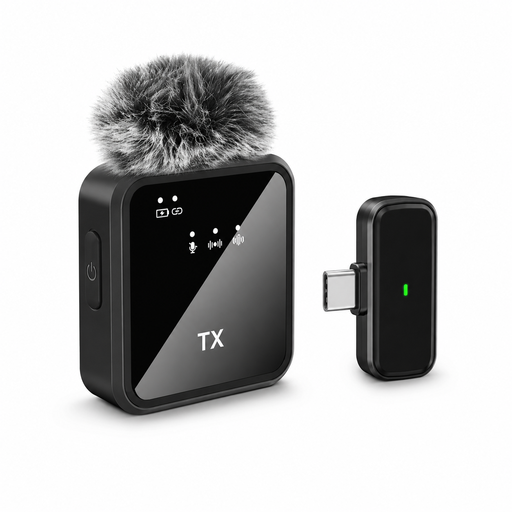
Verbex K9-Black Wireless Mini Microphone with Type-C Interface
A wireless lapel microphone may suit solo dialogue. The product name lists a Type-C interface; check that it works with your recording device, then make a test recording in the intended location.
View on Joybuy
 No image available
Verbex ST5 Single-Mic Wireless Lapel Microphone
This set with one wireless lapel microphone may suit a solo recording. Before use, check that the interface works with your recording device and that the microphone captures the intended voice clearly from your chosen position.
View on Joybuy
Frequently asked questions
Can one microphone record everyone around a table?
You can try it as a test setup, but in an untreated room, differences in distance and reflections will affect the sound. If you want to adjust simultaneous voices separately, you’ll need suitable microphones, inputs and recording tracks; check for bleed between microphones, too.
How should I position the microphone and check my recording?
Point the microphone towards the intended performer, place it as close as is practical and record a test scene with dialogue and movement. Shure’s SM58 manual also recommends paying attention to reflective surfaces; use an available headphone output to check the recording.
Do I need anything else with an XLR microphone?
Yes, you’ll need a suitable microphone input on an interface, mixer or recorder. If performers are speaking at the same time, check how many separate inputs and tracks your chosen recording chain can handle, and which cables you’ll need.
What are my rights when buying a microphone online in the Netherlands?
When you buy from a business online, you generally have 14 days to change your mind, according to the Rijksoverheid (Dutch Government); exceptions and the specific terms of purchase still apply. In addition, if a product doesn’t do what you could reasonably expect during normal use, the seller must put it right free of charge, according to ACM ConsuWijzer.
Can I publish an existing story or someone else’s music in my audio drama?
Buying a microphone doesn’t give you the rights to use other people’s work. The Rijksoverheid says that, in principle, you may only use copyright-protected texts and music with the creator’s permission; check the rights for the specific work and intended publication.


