First, decide how many aubergine rolls you want to prepare per batch and whether your oven dishes will fit. A built-in oven with several usable shelf positions could suit larger batches, provided you have a suitable housing unit. If you don’t, a freestanding oven is an option, although you may need to cook in more batches. The capacity in litres alone won’t tell you whether your dish will fit or how many baking trays are included.
Who is this buying guide for?
Workshop host preparing large batches
You want to prepare plenty of aubergine slices or stuffed rolls without the oven shelf dictating the pace for the group. Check that your trays and dishes will fit and look at the available shelf positions, rather than relying on capacity in litres alone.
Organiser without a built-in housing unit
You use a temporary or shared kitchen and are looking for a freestanding oven that will fit in the available space with your oven dish, when set up according to the placement instructions.
Cook who wants to follow the recipe
You want to be able to select the required heating mode and prepare the slices and stuffed rolls in successive stages. The temperature setting depends on the oven mode you use.
What should you look for when choosing?
Built-in fan oven
Choose this option if: you have a suitable housing unit and want to use several dishes that fit in the oven per batch.
Bear in mind: the installation requirements and housing unit dimensions; the stated number of shelf positions doesn’t guarantee that your dishes will fit.
Freestanding fan oven
Choose this option if: a built-in oven isn’t possible or isn’t what you want, and the usable baking space suits your portions.
Bear in mind: the worktop space required, the placement instructions and the possibility of needing extra batches.
Freestanding baking and toast oven
Choose this option if: you want to weigh up a freestanding model with top/bottom heat and a fan against the space available.
Bear in mind: having several shelf positions doesn’t automatically mean that several suitable baking trays are included.
| What to consider |
What should you check? |
Who is this important for? |
| Baking space and batches |
Measure your largest dish and check how many suitable trays and shelf positions you can actually use. |
When I’m running a workshop, I want to know how many rolls will fit in my own dishes per batch. Around 36% of consumers prioritise baking space and the number of batches. |
| Placement and connection |
For a built-in oven, compare the housing unit with the installation diagram; for a freestanding model, check the placement instructions and connection requirements. |
When I’m using a shared or temporary kitchen, the oven needs to fit in the available space, either freestanding or built in. Around 29% of consumers prioritise placement and connection. |
| Heating mode and recipe |
Check that the model offers the mode you want, and bear in mind that fan cooking may require a different temperature. |
When I want to follow the recipe steps, I need to be able to select the right oven mode and check the dish as it cooks. Around 21% of consumers prioritise heating mode and following the recipe. |
| Energy use and cleaning |
Where available, compare energy use per cycle alongside the oven capacity, and check which cleaning method suits the way you’ll use it. |
When the oven will be used often after workshops, I want to consider in advance whether its energy use and cleaning requirements suit the way I’ll use it. Around 14% of consumers prioritise energy use and maintenance. |
Voedingscentrum advises setting the temperature around 10% lower when converting a conventional recipe for fan cooking. It gives 190 °C for conventional cooking and around 170 °C for fan cooking as an example. Also follow the recipe instructions and check the dish while it cooks.
Avoid common buying mistakes
-
Assuming the capacity in litres means there’s room for all your workshop portions
Oven capacity and the accessories supplied are two different things. Having several shelf positions also doesn’t guarantee that your dishes will fit or be included.
Measure your largest dish and work out how many trays you’ll actually need per batch.
Limited usable space could mean extra batches; you may also need to buy suitable extra dishes or trays.
-
Using a conventional oven temperature unchanged for fan cooking
The temperature setting may need to change when you switch oven modes. Voedingscentrum advises setting it around 10% lower when converting a recipe for fan cooking.
Check which mode the recipe calls for, adjust the setting if needed and keep an eye on the dish as it cooks.
-
Focusing only on the energy label or extra features
ANWB points out that a larger oven with a better energy label can still use more electricity than a smaller oven with a less favourable label.
Where available, compare energy use per cycle alongside capacity. For a built-in model, also check the housing unit dimensions and any accessories you’ll need.
Oven brands to consider
Bosch
Built-in ovens to compare for shelf positions and fan cooking alongside conventional heating modes.
- Bosch lists the HBA534BB3 as having a 71-litre capacity, top/bottom heat and 3D Hotair for up to three shelf positions.
- Check the housing unit dimensions and accessories; these specifications aren’t a baking test using aubergine rolls.
Inventum
Freestanding fan ovens to consider if your kitchen doesn’t have a suitable built-in housing unit.
- Inventum lists the OV457B as having a 45-litre capacity, six programmes and one baking tray included.
- Measure your dish and follow the placement instructions for the exact model; the capacity doesn’t guarantee that several dishes will fit at once.
Severin
Freestanding baking and toast ovens where you can weigh up the heating modes against the worktop space available.
- Severin lists the TO 2058 as having a 42-litre capacity and four shelf positions; top/bottom heat and fan cooking can be used separately or together.
- Check the internal dimensions and which suitable trays are included; four shelf positions don’t mean four trays are supplied.
Siemens
Built-in ovens to compare for multiple shelf positions and cleaning functions, alongside your kitchen dimensions.
- Siemens lists the HB534ABR3 as having a 71-litre capacity and 3D hotAir for up to three shelf positions.
- Check the housing unit dimensions and accessories separately; these specifications don’t prove it will give better results for this recipe.
AEG
Built-in ovens with extra features to compare if cleaning after repeated use is a consideration.
- AEG lists the BP7200B as having a 71-litre capacity, fan cooking and pyrolytic cleaning.
- Check that the built-in dimensions and cleaning function suit your kitchen and how you’ll use it; this isn’t proof of an advantage when baking aubergine rolls.
Ovens at Joybuy
The products below are Bosch built-in fan ovens for workshop kitchens with a suitable housing unit. Compare each model’s features with your baking trays and dishes before choosing.
 No image available
Bosch HBA514BB3 double oven, 71 l, built-in oven
A built-in model to consider if you have a suitable housing unit and want to weigh up using several dishes per batch.
The product name lists a 71 l capacity, 3D Hotair, easy cleaning and a stainless steel finish. Check the housing unit dimensions and which accessories are included.
View at Joybuy
 No image available
Bosch HBF133BR0 built-in oven, 66 l
A built-in model to compare if you have a suitable housing unit and want the listed programmes to suit your workshop needs.
The product name lists a 66 l capacity, five cooking programmes, ecoClean, rapid preheating and a stainless steel/black finish. Check the installation dimensions for your kitchen.
View at Joybuy
 No image available
Bosch HBA534BB3 Series 4, 71 l, built-in oven
An option to compare if you have a suitable built-in housing unit and want to consider fan cooking for your batches.
The product name lists a 71 l capacity, 3D HotAir, EcoClean Direct and a black finish. Check the housing unit dimensions and the accessories included with your chosen version.
View at Joybuy
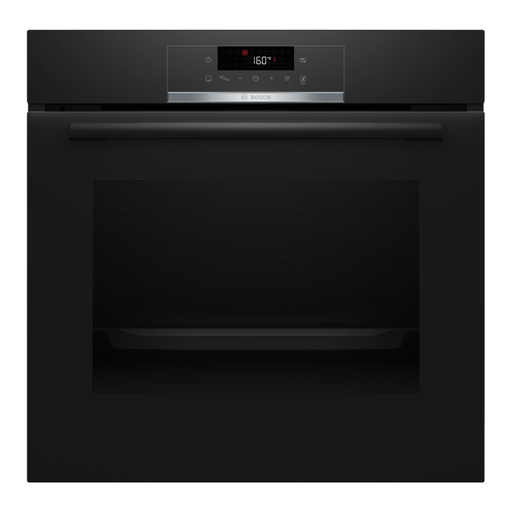 No image available
Bosch HQG572EB3, 71 l, electric built-in oven
A built-in model to consider if your kitchen has a suitable housing unit and you want to compare the listed heating and cleaning features.
The product name lists a 71 l capacity, Air Fry, steam cooking and pyrolytic cleaning. Check the installation dimensions and whether the features suit the way you’ll use it.
View at Joybuy
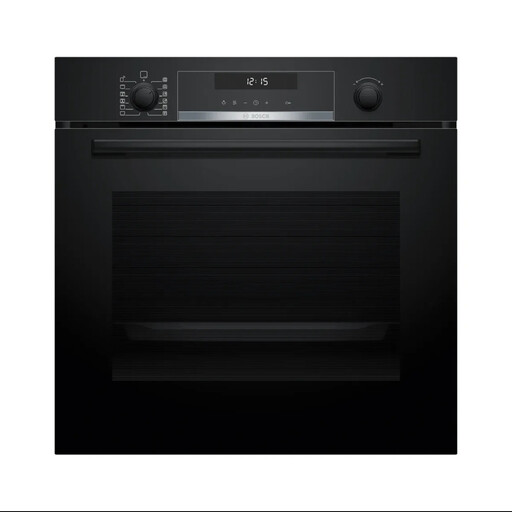 No image available
Bosch HBG578EB7, 71 l, electric built-in oven
A built-in oven to compare if you have a suitable housing unit and the extra features suit your cookery workshops.
The product name lists a 71 l capacity, Air Fry, Home Connect and pyrolytic cleaning. Check the installation dimensions and whether the features suit the way you’ll use it.
View at Joybuy
Frequently asked questions
Should I choose a fan oven for aubergine rolls?
Not necessarily; choose the oven mode that suits the recipe and the number of dishes you’re cooking. Voedingscentrum says fan cooking is handy when using several oven dishes at once and advises setting the temperature around 10% lower when converting from a conventional oven temperature.
How do I set up a freestanding oven safely?
Follow the placement and connection instructions for the exact model. Brandweer advises plugging high-power appliances directly into a socket rather than using a cable reel or extension block; this is safety advice, not a universal legal requirement established for every oven.
What should I consider when it comes to an oven’s energy use?
Where available, compare energy use per cycle alongside the oven’s capacity. ANWB notes that a larger oven with a better energy label can still use more electricity than a smaller oven with a less favourable label, so compare models on a like-for-like basis.
What does the manufacturer’s warranty mean for my rights as a buyer?
For consumer purchases in the Netherlands, statutory rights apply alongside a manufacturer’s or seller’s warranty. According to ACM ConsuWijzer, if a product doesn’t perform as you could reasonably expect under normal use, the seller must offer an appropriate solution free of charge. If you’re buying for commercial workshop use, check which terms and rights apply to that purchase.
Do food safety rules apply if I run cookery workshops?
That depends on the activity. NVWA states that anyone selling food or drink to consumers must comply with food safety rules; its guidance also outlines additional registration and planning requirements when sales take place several times a year. The term ‘cookery workshop’ alone doesn’t establish that these rules apply to a particular workshop.


