
Making small batches of dip
You want to purée a small amount of roasted aubergine for one participant or a small group, without having to wash a large blender jug.


For small batches of soft, roasted aubergine, a hand blender is usually the most practical choice. A blender jug may suit a larger, wetter batch, while a food processor makes sense if you also want to chop ingredients. Choose based on the amount you’ll make in each batch, the texture you’re after and which parts you’ll need to clean between workshop sessions: a larger jug isn’t automatically convenient for a small, thick dip.
You want to purée a small amount of roasted aubergine for one participant or a small group, without having to wash a large blender jug.
You’re preparing several portions at once and comparing the usable capacity of a blender jug with the different bowls of a food processor.
You let people use the appliance in turn and want to be able to clean its parts and accessories carefully between preparations.
The Netherlands Nutrition Centre describes puréeing aubergine into a smooth sauce using a food processor or hand blender. The Consumers’ Association notes that a blender may be less suitable for small or thick batches. So first decide how much dip you’ll make in each batch and what texture you’re after.
When to choose it: you want to purée small amounts of soft flesh, potentially straight in a suitable bowl.
The trade-off: a compact choice for small batches, but thick mixtures can be difficult to blend and the result may be less even.
When to choose it: you want to purée a sufficiently large, relatively wet batch in a lidded jug.
The trade-off: the jug helps contain splashes, but is less suitable for small or thick batches and often takes up more space and creates more washing-up.
When to choose it: you also want to chop ingredients for other workshop recipes and can match the bowl to the batch size.
The trade-off: different bowls give you more options, but need extra storage and cleaning space.
| What to consider | What to check before buying | Who is this most relevant to? |
|---|---|---|
| Small, thick batches | Check that the blending shaft fits in your bowl and see which beaker or chopper comes with the exact model. | When I make a small batch of soft aubergine, I want to purée it straight in a suitable bowl rather than wash a large jug. Around 36% of consumers say small, thick batches are their main reason for buying. |
| Usable capacity per batch | Compare the volume of your recipe with the processing capacity. Magimix lists a total capacity of 2.6 l and a processing capacity of 1 l for the CS 3200 XL. | When I’m cooking for a group, I want to know how much dip I can really make in each batch, not just how large the bowl looks. Around 29% of consumers prioritise having enough capacity for several portions. |
| Texture you’re after | Choose a control that lets you stop part-way through. The Netherlands Nutrition Centre describes puréeing aubergine into a smooth sauce. | If the dip needs to be smooth, I want to be able to stop as soon as the texture is right; for a chunkier dip, a fork or masher may be enough. Around 21% of consumers base their choice on the texture they want. |
| Cleaning between batches | Check the instructions for each part. The Consumers’ Association advises detaching the attachments and unplugging the appliance before cleaning a hand blender. | When an appliance is shared, I want to be able to clean its parts according to the instructions and use clean equipment between batches. Around 14% of consumers prioritise cleaning between workshop sessions. |
The Consumers’ Association notes that blenders may be less suitable for small batches and thick ingredients.
Start with the smallest amount you want to make in each batch, then compare it with what a hand blender or a suitably sized small bowl can handle.
Magimix lists a total capacity of 2.6 l and a processing capacity of 1 l for the CS 3200 XL; these are different measurements.
Compare the stated processing capacity of the exact model with your recipe, so you can plan your batches accordingly.
If the processing capacity is lower than you expected, you may need to make the dip in more batches.
Cleaning instructions can vary between parts and models.
Check the instructions for each part before cleaning it.
A part that isn’t dishwasher-safe will need to be washed by hand; cleaning it against the instructions could damage it.
Details such as power or colour can vary between product descriptions for the same model.
Before buying, check the full model identity, the included accessories and any specifications that are important to your choice.
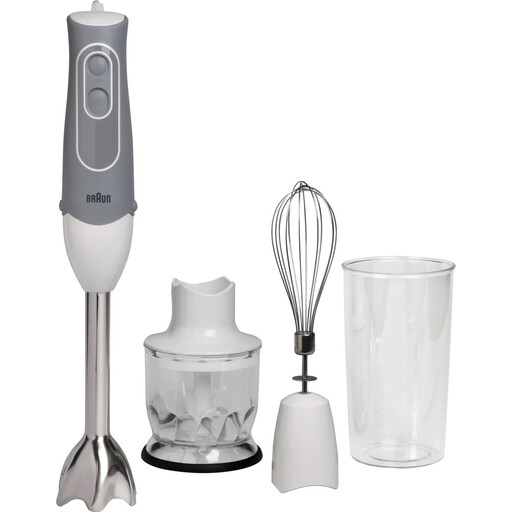
MultiQuick hand blenders are one option for small batches. Braun lists a 350 ml chopper and a beaker for the MQ 50201 M.
Bosch offers the ErgoMaster MSM8M930 hand blender and the VitaPower MMB6172S jug blender as two different types of appliance.
The CS 3200 XL food processor is an option if you also want to chop ingredients as well as purée them, and would like to use different bowls.
The HR2685/00 from the 5000 Series is a hand blender, making it an alternative in this appliance category for this recipe.
These Joybuy product picks focus on hand blenders for small batches of aubergine dip. Check which accessories are included with each version and how its parts should be cleaned.
 No image available
A hand blender set for small batches; the product name also lists a chopper and whisk.
 No image available
A hand blender for puréeing small amounts of aubergine; the product name lists 220 V, 600 W and 2 speeds.
 No image available
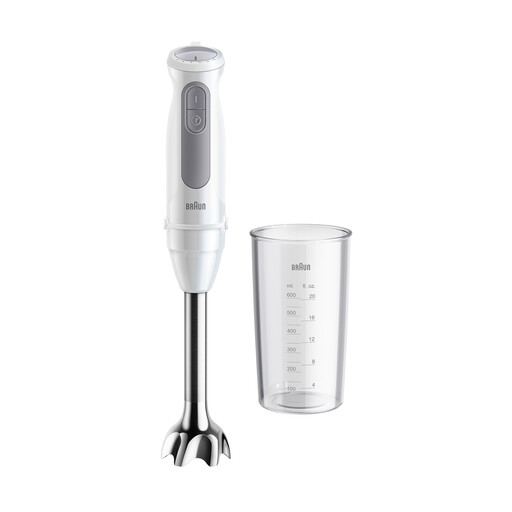
A hand blender for puréeing small batches of aubergine; check which parts are included with this version.
 No image available
A hand blender for small batches of dip; check that the version supplied suits the way you want to make your dip.
 No image available
A hand blender for small batches of aubergine; the product name lists 800 W, stainless steel and variable speed.
Let hot ingredients cool slightly first. The Consumers’ Association warns that steam can escape and the appliance may overheat; also check the temperature guidance for the specific jug or blending shaft.
Unplug a hand blender before detaching and cleaning its parts. Check the instructions to see which parts are dishwasher-safe, and use clean equipment to prevent cross-contamination.
Cover leftovers, let them cool and put them in the fridge within 2 hours of preparation. The Netherlands Nutrition Centre recommends setting your fridge to 4 °C.
Check the ingredients and let participants know if the dip contains sesame, where relevant to your workshop. The Netherlands Food and Consumer Product Safety Authority (NVWA) lists sesame seeds as an allergen that must be declared when offering unpackaged food in the circumstances it describes; the applicable requirement depends on how the food is offered at the workshop.
If the activity involves preparing, processing or selling food professionally, the NVWA describes a requirement to follow a HACCP food safety plan or an applicable approved hygiene code. Whether this applies to a particular workshop depends on how it is organised.