
Vandaag of morgen in huis

Kwaliteit gegarandeerd

Welkomstaanbiedingen ontgrendelen: GRATIS bezorging | Tot 80% korting | Gratis 30 dagen JoyPlus-proefperiode
Download de app
Fancy Asian vegetarian snacks, but unsure whether to choose vegetarian meat, a spicy soya protein snack or Korean seaweed snacks? There is a huge range to choose from, and packaging often focuses mainly on flavour terms such as “barbecue”, “spicy” or “meaty”. These terms do not automatically tell you anything about the ingredients, nutritional value or whether a product suits your diet.
As a Joybuy Product Recommendation Officer, I filter the most important product information according to three points: what you are actually buying, how to use it and what to look out for before placing your order.
A snack made with wheat gluten or soya may be vegetarian, but that does not automatically make it vegan. Check the ingredients list for milk, egg, fish, shellfish, honey and other ingredients of animal origin. Extra care is needed with blended flavourings.
Products may also contain traces of ingredients such as fish, shellfish or sesame. If you follow a strict vegan diet or have an allergy, it is sensible to check the current packaging alongside the online product information.
“Vegetarian meat”, “vegetarian chicken” and “vegetarian beef jerky” usually refer to the shape and texture. Nutritional value varies according to the recipe. Some snacks consist mainly of wheat gluten, while others are made with soya protein, oil, sugar and flavourings.
It is therefore worth comparing the protein content per 100 grams. For example, Wuxianzhai Fresh Pepper Vegetarian Meat contains 22.5 grams of protein per 100 grams, while the Sichuan version from Wuxianzhai lists 28 grams. This makes these products interesting if you are specifically looking for a plant-based protein snack, but it says nothing about the overall quality of your diet.
A spicy vegetarian snack can vary considerably in flavour. Fresh chilli delivers an immediate heat, while Sichuan pepper adds an aromatic, slightly numbing taste. Check the salt content too. Wuxianzhai Vegetarian Beef Barbecue, for example, lists 3.3 grams of salt per 100 grams.
Also pay attention to the serving size. An 80- or 90-gram pack is different from a multipack containing small portions. Small bags of Korean seaweed snacks are convenient for eating on the go, while a larger pack of rice cake is intended to be prepared and shared.
The main ingredients in this range are:
In the EU, the 14 major allergens must be clearly stated. Check the label for soya, cereals containing gluten, sesame and mustard, among others. Mustard and sesame are listed as allergens in Bibigo Crispy Seaweed Snack Wasabi. Wuxianzhai products generally contain wheat and/or soya.
Use the nutrition table to compare products fairly:
“Ready to eat” means that, according to the product information, you can eat the product straight from the packaging. Different storage advice may apply after opening. Fresh Pepper Vegetarian Meat must be refrigerated after opening and consumed quickly. Always follow the instructions on the packaging.
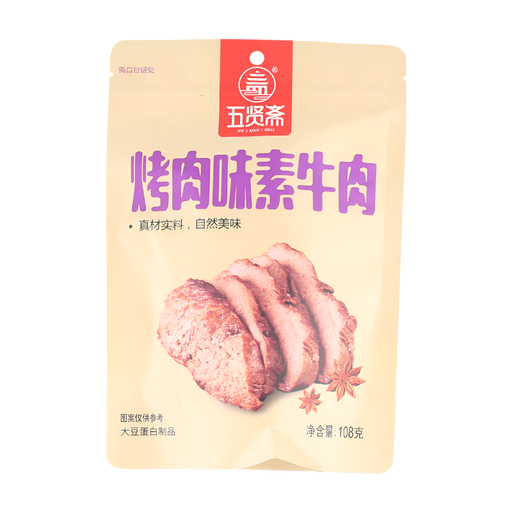
Why it suits this profile: An accessible introductory product for anyone trying vegetarian beef jerky or a savoury barbecue flavour for the first time.
The product information lists wheat gluten, the 108-gram serving and the nutritional values. You can therefore base your choice on specific information rather than just the name.
Barbecue flavour, meaty texture and 16.8 grams of protein per 100 grams. Ready to eat and easy to take with you.
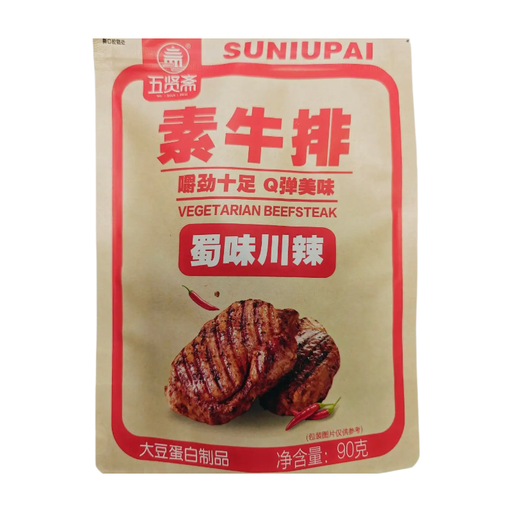
Why it suits this profile: Ideal for lovers of bold Chinese flavours, soya protein and a firm bite.
The flavour is described specifically with chilli and Sichuan pepper. Soya, gluten, 28 grams of protein and 2.55 grams of salt per 100 grams are also listed.
Made with puffed soya products and ready to eat. The pack contains 90 grams.

Why it suits this profile: Convenient for the office, travelling or a short snack break, thanks to three individual portions of Korean seaweed with wasabi seasoning.
The packaging and ingredients list seaweed, oil, wasabi seasoning, mustard and sesame. This makes it clear that it is a crispy snack, not a high-protein meat substitute.
Three 5-gram portions, a crispy texture and a distinctive wasabi flavour. Store in a cool, dry place.
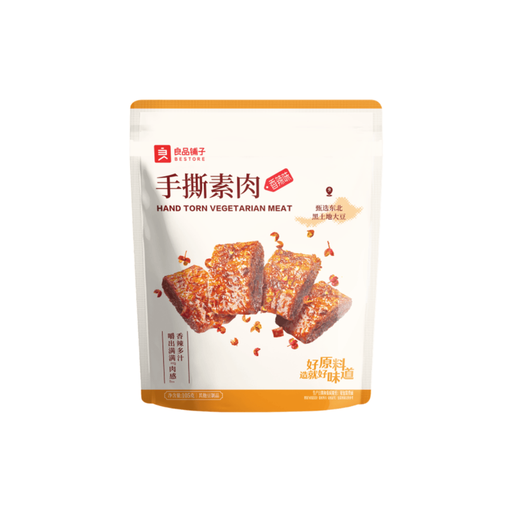
Why it suits this profile: The pack contains seven small bags, making it convenient for portioning, sharing or enjoying at different snack times.
The product details list soya and wheat, a 105-gram serving and 20 grams of protein per 100 grams. Check these allergens before buying.
Fibrous, hand-shredded texture, chilli and cumin flavour, and seven small packs.
We have put together a complete, up-to-date list of products that fully meet these strict selection criteria and the applicable European safety regulations.
For a snack without a meaty texture, Korean seaweed snacks are a practical option. Kimnori Original Seasoned Seaweed Snack consists of three 4-gram bags. Chung Jung One Seaweed Snack with olive oil comes as 4.5 grams x 12 and can also be used as a topping for salads or soups.
If you are looking for something to prepare at home, A+ Chopped Rice Cake and HYHS Korecipe Rice Cake Topokki are suitable bases for tteokbokki. These rice cakes are not ready to eat. The A+ version lists rice as its main ingredient and none of the 14 major EU allergens. However, check the sauce and additional ingredients: gochujang, fish substitute or fish cakes may contain separate allergens.
Healthy Boy Soybean Paste is not a snack to eat straight from the jar either. It is a Thai soya bean paste containing 9.6 grams of salt per 100 grams, intended for stir-fries, sauces and marinades. Use this product as a flavouring, not as a plant-based protein snack.
Products such as Wuxianzhai Vegetarian Beef, Wuxianzhai Vegetarian Steak, Bestore Hand-Shredded Vegetarian Meat and Yuxiniang Vegetarian Chicken are sold as ready-to-eat Asian snacks. Check the usage instructions and storage advice on the packaging. Rice cake, rice noodles and soya bean sauce must be prepared or processed first.
Seitan is made from wheat gluten and is known for its firm, chewy texture. A soya protein snack uses soya protein or puffed soya products as its base. Both can resemble vegetarian meat, but they differ in allergens, protein content and texture. Seitan is not suitable for people with a gluten allergy.
Store unopened snacks according to the product information, usually in a cool, dry place away from direct sunlight. After opening, some products should be consumed immediately, while others need to be refrigerated. Seal packs securely to limit moisture and contamination. Always check the best-before date and the label for the specific product.
