
Vandaag of morgen in huis

Kwaliteit gegarandeerd

Welkomstaanbiedingen ontgrendelen: GRATIS bezorging | Tot 80% korting | Gratis 30 dagen JoyPlus-proefperiode
Download de app
Asian pickled vegetables quickly add acidity, heat and texture to rice, noodle, stir-fry and soup dishes. However, not every jar or pouch is the same. The differences are not limited to flavour, but also include preparation method, salt content, serving size, allergens and storage instructions.
When buying Asian pickled vegetables online, shoppers most often encounter three common pitfalls.
Kimchi and other fermented vegetables are often presented as a single product category. In reality, a product may be pickled with vinegar, preserved in salt or described as fermented on the packaging. This affects both its flavour and how it should be used.
For Korean kimchi, the product description usually lists cabbage, radish, chilli, garlic and a fermentation process. With Chinese pickled vegetables, such as mustard stems or radishes, the emphasis is often on a salty, sour or spicy flavour. Always check the ingredients and usage instructions rather than relying solely on the front of the packaging.
A brand’s lower-salt claim is not a universal guarantee that a product suits your diet. According to Bestore’s own product information, its pickled bamboo shoots contain 20% less salt than traditional recipes. However, the nutritional information still lists 3.1 grams of salt per 100 grams. Always check the nutrition table.
Other products may also contain considerable amounts of salt. Jixiangju Pickled Mustard, for example, lists 6.5 grams of salt per 100 grams, while Wei Jiu Te Preserved Mustard Stems contain 4.6 grams of salt per 100 grams.
A 500- or 700-gram jar may look appealing, but pickled vegetables often lose quality more quickly after opening. Some products must be refrigerated once opened and consumed promptly. For one person or occasional use, individual portions can be more practical than a large jar.
Read the full ingredients list, especially for kimchi and mixed Asian side dishes. Some varieties may contain fish or shellfish ingredients. The product description for JONGGA Kimchi Napa Cabbage Cutted, for example, states that it may contain fermented anchovy or shrimp sauce.
Also look out for:
Always check the physical label before consumption. The packaging may contain more detailed or different information than the online product page.
Sliced kimchi is convenient as a noodle topping. For stir-fries, bamboo-shoot slices or crisp mustard stems can add more texture. A whole pickled radish may require additional preparation, while a ready-to-serve side dish can be served immediately.
Consider how you plan to use the product:
Many products can be stored unopened in a cool, dry place. Instructions vary after opening. Aroy-D Bamboo Shoot Slices advises consuming the product immediately after preparation. For several kimchi and vegetable products, the recommendation is to seal the packaging securely and refrigerate the product or use it promptly.
Look out for damaged packaging, a bulging lid, leakage or an unusual smell. Do not use the product if the packaging is damaged or if the best-before information on the label does not permit consumption.
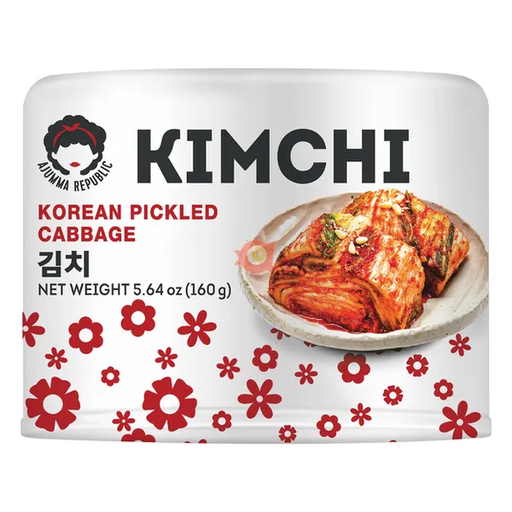
Why This Fits Their Persona: A compact portion for trying Korean kimchi without committing to a large jar. According to the product description, it is suitable as a side dish or in fried rice, soups and noodles.
The 160-gram portion helps minimise waste if you are still discovering how much kimchi you use. Do check the label for storage instructions and allergens.
160 g pack; according to the product information, 1.9 g of salt per 100 g; ready to serve.
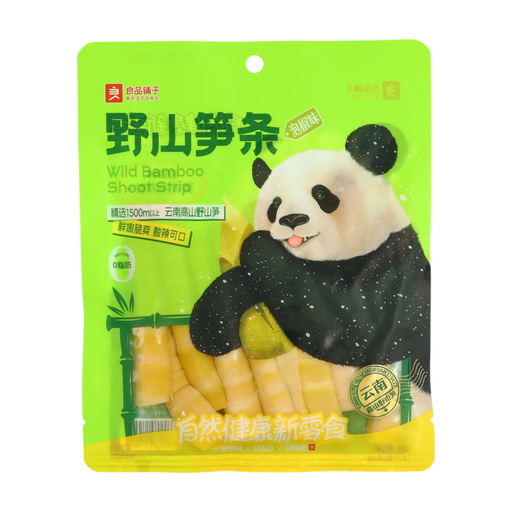
Why This Fits Their Persona: Ideal for anyone looking for a crisp, spicy snack that can also be served with rice or soup. It comes in a compact 90-gram pack.
The packaging states the salt content clearly: 3.1 g per 100 g. Claims such as “20% less salt” come from the brand’s marketing and do not replace checking the nutrition table.
90 g portion; according to the product information, 18 kcal and 0 g of fat per 100 g; ready to eat.
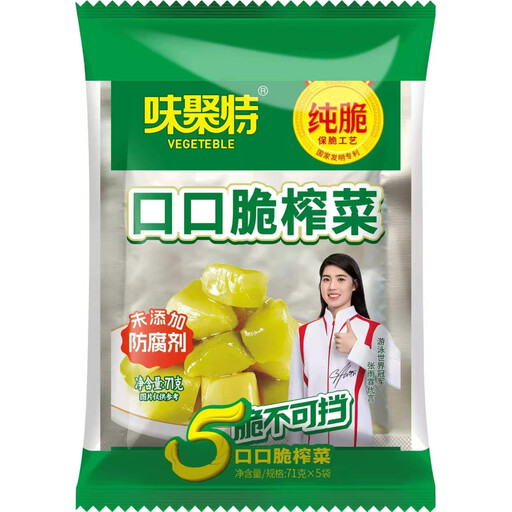
Why This Fits Their Persona: Five individual portions are ideal for households that regularly serve pickled vegetables with congee, rice, noodles or steamed buns.
The individual pouches reduce the need to repeatedly open one large pack. Do check the allergens: the ingredients list includes mustard, sesame and soy.
5 x 71 g; ready to use; according to the product information, the pack contains 90% mustard stems.
For stir-fries and soups, Aroy-D Bamboo Shoot Slices 540 g are a practical choice: according to the product description, the slices can be added directly to stir-fries, tom kha or curry dishes and contain bamboo shoots and water. If you are looking for Chinese pickled vegetables to serve with rice or noodles, consider Jixiangju Open-Flavor Pickled Mustard 350 g or Chuannan Appetizing Cowpeas 330 g. With these products, keep an eye on the salt, soy, wheat and sweeteners listed on the label.
For a milder option, consider Green Dragon Sour Pickled Green Mustard 350 g. According to the product description, it contains 85% mustard greens and is suitable for vegan dishes. Here too, check the label for sulphites and mustard.
Explore a current selection of spicy pickled vegetables and compare portions, ingredients, uses and storage instructions.
No. Kimchi is generally a seasoned cabbage or vegetable product whose packaging mentions fermentation. Other pickled vegetables may primarily be preserved in salt, vinegar or a seasoned liquid. Check the ingredients and product description for each variety.
It varies by product. Some packs recommend refrigeration and prompt consumption, while others are individually portioned. Always follow the instructions on the label and keep opened packaging tightly sealed.
Not necessarily. Some kimchi varieties may contain anchovy or shrimp sauce. Other products may not list fish, but could still contain soy, sesame, mustard or sulphites. Always check the full ingredients list and allergen information.
