
Vandaag of morgen in huis

Kwaliteit gegarandeerd

Welkomstaanbiedingen ontgrendelen: GRATIS bezorging | Tot 80% korting | Gratis 30 dagen JoyPlus-proefperiode
Download de app
Asian sweets stand out for their unusual shapes, bright colours and flavours you don’t always find in a British sweet shop. Think Japanese grape-flavoured gummies, Korean white peach sweets, Chinese jelly sweets and fruit gummies to share. But eye-catching packaging doesn’t tell you much about the flavour, texture or whether a product is right for you.
If you’re buying Asian sweets online, it’s worth looking beyond words such as “fruity”, “pure” or “soft”. Always check the ingredients, nutritional information, allergen details, portion size and warnings on the product page and packaging.
Some products list concentrated fruit juice, but also contain mainly sugar, glucose syrup or maltose syrup. The percentage varies considerably from one product to another. For example, COZZO Peach Gummy Candy contains 3% peach juice, while ENNJOI Peeling Gummy 2.0 Peach Flavor contains concentrated peach juice, added in an amount equivalent to 50% pure fruit juice according to the product information.
So compare the order of ingredients. Ingredients are generally listed from highest to lowest quantity. Check the nutritional information per 100 grams too, rather than relying only on words on the front of the pack.
Gummies, jelly sweets and marshmallow-like sweets may feel soft or chewy, but that doesn’t remove the risk of choking. Several products carry advice that children should eat under supervision and chew thoroughly. Also check the stated minimum age.
Some products containing colourings such as E102 and E129 must carry a warning about possible effects on children’s activity and attention. Follow the information on the label and choose another option if you’re unsure.
A 240- or 300-gram bag might seem ideal for a party, but check how it’s packaged. Individually wrapped sweets are easy to share or take with you, while an opened bag can absorb moisture more quickly. Compare the price per 100 grams, number of portions and how long the product keeps after opening.
Read the full ingredients list before you check out. Many Asian gummies contain gelatine. This may be important if you’re vegetarian, looking for halal options or avoiding animal-derived ingredients. Other products contain milk, soya, peach or sulphites.
Examples from the range:
A description such as “natural flavour” doesn’t automatically mean the sweets are low in sugar or made entirely from fruit.
Choose a type that suits the occasion:
A larger pack is handy for sharing. If you’re trying Japanese, Korean or Chinese sweets for the first time, a smaller bag may be a better choice.
Values vary considerably. COZZO Fruit Jelly Sticks lists 104 kcal and 26 grams of carbohydrate per 100 grams, while several soft sweets contain around 330 to 380 kcal per 100 grams. This difference is partly down to water content and the gelling agents used.
Use nutritional information as a comparison point, not as a health claim. Sweets are still a treat. If a product contains polyols such as sorbitol or E420, check the manufacturer’s warning: excessive consumption may have a laxative effect.
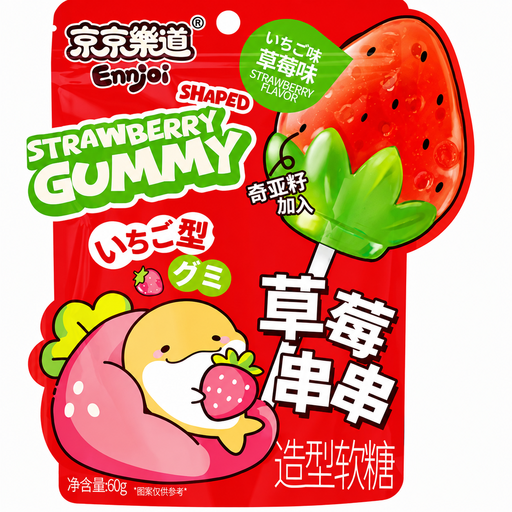
Why it suits this shopper: A compact 60-gram pack with strawberry shapes and fruity flavour is an easy introduction for anyone trying Asian gummies for the first time.
The product information lists ingredients, allergens and warnings, so you don’t have to rely on the packaging alone.
60 grams, strawberry shapes, a soft gummy texture and concentrated strawberry juice as an ingredient.
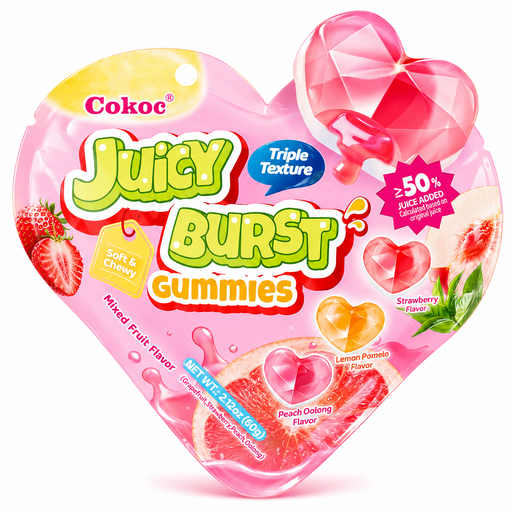
Why it suits this shopper: Ideal if you’re looking for more than fruity flavour and want different layers and a varied bite too.
The description specifies 10% concentrated fruit, and the nutritional information lists 47 grams of sugar per 100 grams.
Three layers, several fruit flavours, gelatine as a gelling agent and a 60-gram pack.
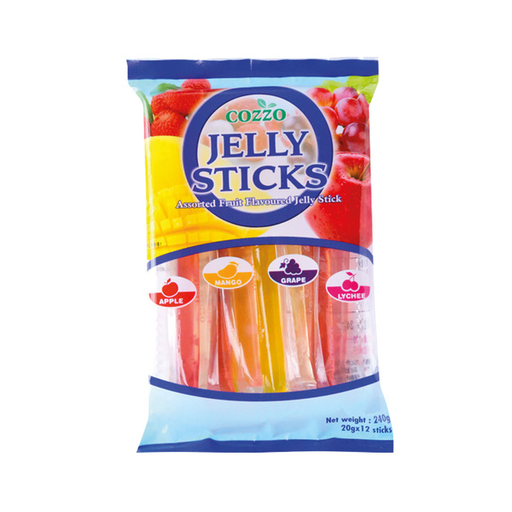
Why it suits this shopper: The 12 individually wrapped sticks are handy for parties, the office, travelling and sharing.
The pack is divided into 20-gram sticks, so you don’t have to take a large opened bag with you each time.
240 grams, four fruit flavours, individually wrapped and, according to the product information, 104 kcal per 100 grams.
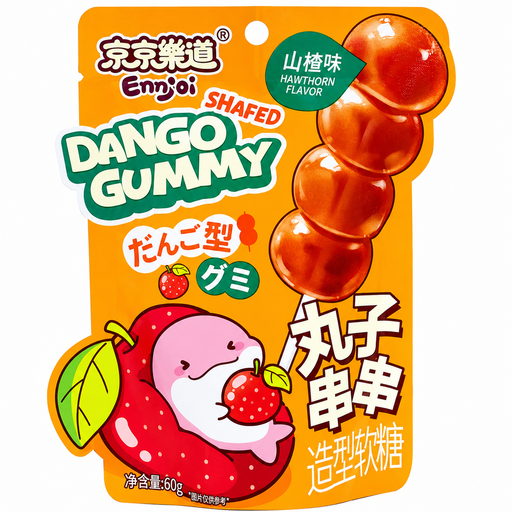
Why it suits this shopper: The dango shape and hawthorn flavour offer something different from standard fruit sweets or fruit-flavoured sweets.
The ingredients list specifies 20% hawthorn, making the flavour choice more specific than a general claim about fruit.
60 grams, dango shape, hawthorn listed as a main ingredient and 15.5 grams of sugar per 100 grams according to the product information.
We’ve put together a complete, up-to-date list of products that meet these strict selection criteria and current European safety requirements.
It depends on the product. Check the minimum age, shape and texture. Look out for warnings about E102 and E129, and supervise young children. Make sure children chew sweets thoroughly and always follow the instructions on the packaging.
Store opened products in a cool, dry place, away from direct sunlight, heat and moisture. Reseal the packaging securely. Individually wrapped sweets are handy for taking with you, but remember to check the best-before date and the condition of the packaging too.
Compare the net weight, price per 100 grams, ingredients, allergens, gelatine, nutritional information and storage advice. For imported products, also check whether product information is available in Dutch. This will help you choose between Japanese gummies, Korean sweets, Chinese sweets and other options in the range.
