
Vandaag of morgen in huis

Kwaliteit gegarandeerd

Welkomstaanbiedingen ontgrendelen: GRATIS bezorging | Tot 80% korting | Gratis 30 dagen JoyPlus-proefperiode
Download de app
Buying Asian snacks may seem simple, but the wide range of options makes comparing them difficult. Are you looking for Japanese snacks to enjoy with tea, Chinese snacks to share or Korean snacks for a meal? You’ll come across products with appealing claims, large packages and different storage-life information.
The three most common pitfalls are:
Check the following before ordering:
A claim such as “less sugar” needs to be read in context. According to the product information, the HSU FU CHI Pineapple Cake contains 26% less sugar than the original recipe. That does not automatically mean the product is low in sugar. Check the table as well: it lists 16.1 grams of sugar per 100 grams.
Individual packaging is practical for work, school, travelling or sharing with others. It also makes it easier to divide portions after opening the pack. A multipack may offer better value for a family or party, but check that you’ll use the contents quickly enough.
Examples:
Read the storage instructions before choosing a product. Castella, baumkuchen cake and other Asian sweets are often ready to eat, but the recommended storage method varies from product to product.
According to the product information, the Sakuraseika cake should be refrigerated. The Atom Japanese Milk Baum Cake and Chinese sachima, on the other hand, should be stored in a cool, dry place. The Wu Fang Zhai meat pastries are a different type of product: they must be kept frozen at -18 °C or below and heated in an oven or air fryer before consumption.
Also pay attention to the difference between:
The date on the packaging takes precedence, as stock and delivery times may vary.
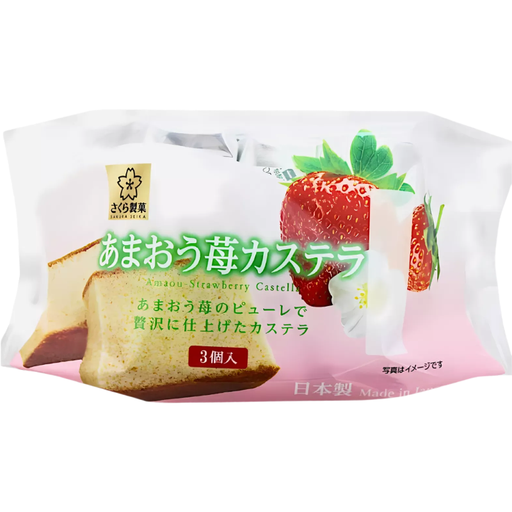
Why it suits this profile: Three individually wrapped pieces make it easy to try a Japanese cake without buying a large pack.
The total weight and number of portions are clearly stated. The ingredients list mentions Amaou strawberry purée and identifies egg and wheat allergens.
Three individually wrapped pieces; soft castella texture according to the product description; keep refrigerated.
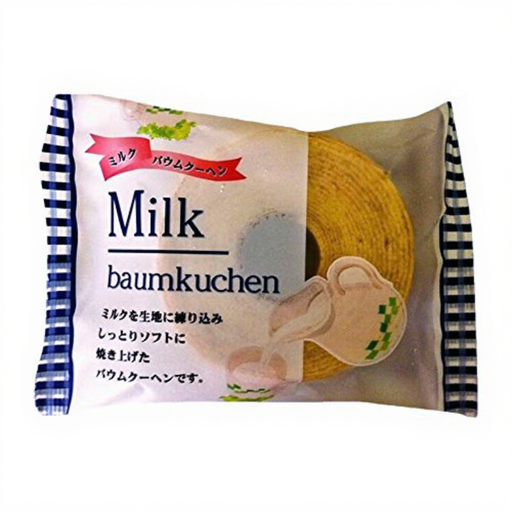
Why it suits this profile: The ring-shaped baumkuchen cake is ideal as a refined snack with coffee or tea and comes in a compact 80-gram portion.
The product information clearly lists the ingredients and allergens: wheat, egg, milk and soya. This shows that “milk flavour” is not separate from the product’s full composition.
Layered cake with milk as a flavour highlight; individually wrapped; according to the product information, free from artificial colourings and preservatives.
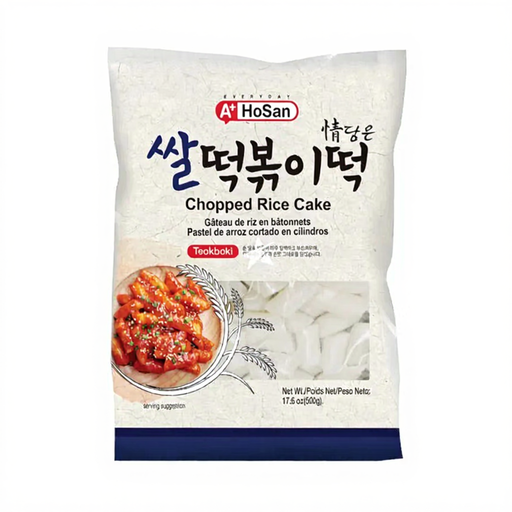
Why it suits this profile: For anyone who wants to prepare Korean snacks rather than simply eat sweets. The rice cakes are suitable for teokbokki with sauce, vegetables and other additions.
This is not a ready-to-eat snack: the preparation steps are provided. This means you can take cooking time, sauce and additional ingredients into account before ordering.
500 grams of rice cakes; 98.9% rice according to the ingredients list; none of the 14 major EU allergens listed.
We’ve put together a complete, up-to-date list of products that fully meet these strict selection criteria and the applicable European safety requirements.
If you want to buy Asian snacks, the easiest way to organise the range is by occasion:
Pay attention to translations and product names. “Japanese cake” or “castella cake” says something about the style or product type, but not necessarily about the origin of every ingredient. So check the stated origin, ingredients and responsible supplier.
When comparing Asian snacks online, focus particularly on the product information, contents, allergens, storage and shelf life. A category page is useful for viewing Japanese, Chinese and Korean products side by side. Then use the product page to check the full ingredients list and preparation instructions.
This varies by product and packaging. Dry cake, sachima and pineapple cake can often be stored in a cool, dry place, while some castella products need to be refrigerated. The best-before date and instructions on the packaging take precedence. Once opened, the recommended consumption period may be shorter.
Not without checking. Many products contain wheat, egg, milk or soya. The A+ teokbokki rice cakes list none of the 14 major EU allergens, but other products in the range do. Read the current labelling before buying and contact the supplier if you’re unsure.
