
Vandaag of morgen in huis

Kwaliteit gegarandeerd

Welkomstaanbiedingen ontgrendelen: GRATIS bezorging | Tot 80% korting | Gratis 30 dagen JoyPlus-proefperiode
Download de app
Asian snacks come in all sorts of varieties: from crispy seaweed snacks and Thai snacks to cassava chips, plantain chips and spicy options. That wide range makes choosing fun, but also tricky. A striking packet doesn't tell you much about the taste, portion size or suitability for allergies. With these practical checks, you can avoid a bad buy and find snacks for home, on the go or to share.
Words like wasabi, sriracha and tom yum give you a clear direction, but the intensity can vary from product to product. A wasabi snack might taste mainly savoury, while another variety has a stronger, tingling effect. A tom yum snack can also contain prawn powder alongside spices, for example.
So look at the ingredients list, not just the front of the packet. With Thai snacks, keep an eye out for chilli, pepper, lime, prawn powder, soy sauce and flavour enhancers.
Some product descriptions use terms like "low-calorie", "healthy" or "guilt-free". Such wording isn't a reason to skip the nutritional information. According to HAO BA SHI's own information, the konjac snack contains 68 kcal per 100g, but also 3.1g of salt per 100g. With other snacks, oil and salt can make up a large part of the composition.
So compare the nutritional values per 100g and check the portion size. A small bag isn't automatically low in energy, fat or salt.
Seaweed, tempura and vegetable chips react strongly to moisture. An opened bag that isn't sealed properly can quickly go soft. With products like okra chips, the product information recommends eating them shortly after opening or storing them airtight.
Also check the packaging when you receive it. Don't use a snack if the bag is damaged, and store opened products in a cool, dry place away from direct sunlight.
First, choose the texture that suits the occasion:
The 14 main EU allergens must be clearly stated on the label when they are present. Always check the current packaging, as composition and labelling can change.
Examples from this range:
A mention like "suitable for vegetarians" or "no major allergens" comes from the product information. If you follow a strict diet, always check the packaging and warnings for possible traces.
A 32g bag is handy for on the go, while a 250g pack of cassava chips is better suited to sharing. Individually wrapped rolls or snacks are practical for a lunchbox, office or travel.
Also pay attention to the net weight, the number of portions and the storage instructions. For example, the Taokaenoi Big Roll Crispy Seaweed Durian Flavor consists of nine separate rolls of 2.1g each, totalling 18.9g. That's a different buying experience from one large bag.
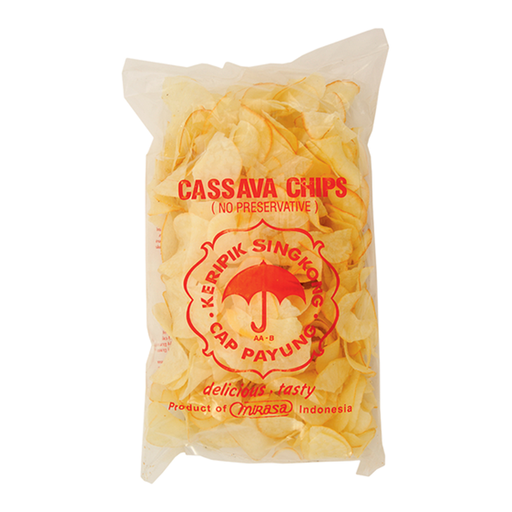
Why this fits the profile: A large pack of cassava chips is practical for trying at home or sharing with several people. The flavour is easier to place than pronounced wasabi or durian.
The product clearly lists cassava, vegetable oil, salt and flavour enhancer. This makes the composition easy to check.
250g net weight; according to the product information, none of the 14 main EU allergens.
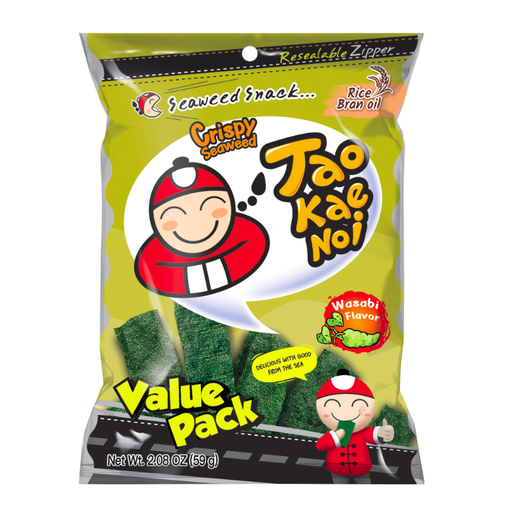
Why this fits the profile: This variety combines thin, roasted seaweed sheets with a pronounced wasabi sauce. That suits anyone looking for umami, crunch and a spicy kick.
The product information describes the texture and wasabi sauce specifically, so you don't have to rely on the flavour name alone.
59g; thin crispy seaweed sheets; from Thailand.

Why this fits the profile: The individually wrapped portions are handy for work, travel or a snack on the go. The Sichuan pepper gives a spicy, aromatic kick.
The packaging is divided into individual portions, making opening and storing easier than with one large bag.
50g; ready-to-eat; individually wrapped; contains soy and sulphites according to the label.
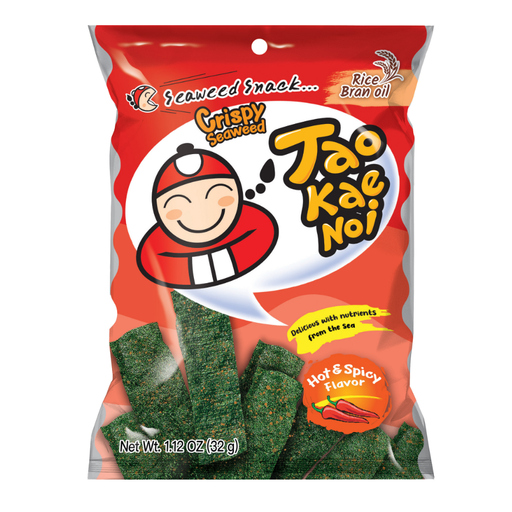
Why this fits the profile: The combination of seaweed, chilli powder and white pepper suits fans of a clear spicy flavour without tempura batter.
The product information mentions 85% Porphyra yezoensis seaweed and 2% chilli powder. Always check the current label, though.
32g; suitable for vegetarians according to the product information; none of the 14 main EU allergens listed.
We've put together a full, up-to-date list of products that fully meet these strict selection criteria and current European safety regulations.
That depends on the flavour and recipe. Roasted seaweed products without prawns or other animal ingredients can be suitable, but tempura and tom yum varieties sometimes contain egg, crustaceans or prawn powder. So always check the full label and don't choose based on the product name alone.
Store unopened snacks in a cool, dry place away from direct sunlight. Seal an opened bag well or use an airtight container. Moisture makes thin seaweed, tempura seaweed and okra chips go soft more quickly. Always follow the specific instructions on the packaging.
Not always. The price depends on factors such as the brand, net weight, import costs, packaging and special ingredients. So compare the price per 100g and look at the amount of edible snack. An individually wrapped snack can be more expensive per gram, but it's more convenient for on the go or dividing into portions.
